
Disclaimer: This analysis is based on the Claude Code Agent Teams research preview as of February 2026. Features and pricing may change before general availability.
You're building an AI-powered product. Your LLM costs are climbing, debugging sessions stretch for hours, and you're wondering if there's a smarter way to parallelize development work.
Should you invest in Claude Code's new Agent Teams feature? Stick with traditional subagent patterns? Or go with an open-source framework like OpenClaw or LangGraph?
This isn't a simple "buy the shiniest tool" decision. The choice affects your token budget, debugging complexity, and the degree of control you retain over your AI workflow.
TL;DR - Quick Decision Guide
🤝 Multiple perspectives debating? → Agent Teams
⚡ Sequential tasks, results-only? → Subagents
🔓 Must survive model API changes? → OpenClaw
📊 Need audit trails & determinism? → LangGraph/CrewAI
💰 Watching every token dollar? → Subagents or Single Session
The Core Question: Orchestration Philosophy
Before comparing features, understand that these approaches represent fundamentally different philosophies about how AI agents should collaborate.
Hub-and-Spoke (Traditional Subagents & OpenClaw): One main agent spawns workers, assigns tasks, and synthesizes results. Workers report back to the parent but generally don't talk to each other. Clean, predictable, cheaper.
Peer-to-Peer Mesh (Agent Teams): Agents communicate directly with each other, share task lists, and self-coordinate. More flexible, significantly more expensive, harder to debug.
Graph-Based (LangGraph, AutoGen): Explicit state machines where you define every transition. Maximum control and maximum setup time require engineering investment.
Head-to-Head Comparison
Factor | Claude Code Agent Teams | Traditional Subagents | OpenClaw | LangGraph/CrewAI |
Setup Time | Minutes (natural language) | Minutes | Hours (self-hosted) | Days (code setup) |
Token Cost | 2.5-4x base (up to 7x with plan mode*) | 1.5-2x single session | Variable | Framework-dependent |
Agent Communication | Direct peer messaging | Report to the coordinator only | Parent-child delegation ( | Graph edges |
Context Isolation | Full (200K default, 1M optional**) | Full (results summarized) | Full | Configurable |
Session Resumption | Limited (experimental) | Standard | Standard | Standard |
Best For | Multi-perspective analysis, competing hypotheses | Sequential tasks, results-only scenarios | Model-agnostic deployments | Enterprise pipelines |
*Plan mode requires teammates to submit implementation plans for approval before execution, adding significant token overhead.
**1M context incurs higher pricing ($6/$22.50 per MTok).
When Claude Code Agent Teams Make Sense
Agent Teams shine in specific scenarios where "brainstorming" and parallel execution are more valuable than raw efficiency.
Competing Hypotheses (Debugging)
You have a production bug. Instead of one agent going down a rabbit hole and burning tokens on a wrong theory, spawn three teammates with different assumptions:
Teammate A: "Assume it's a race condition."
Teammate B: "Assume it's a memory leak."
Teammate C: "Assume it's a configuration error."
Let them investigate in parallel, challenge each other's findings, and debate. The lead synthesizes. This "Scientific Debate" pattern converges on root causes faster than sequential investigation.
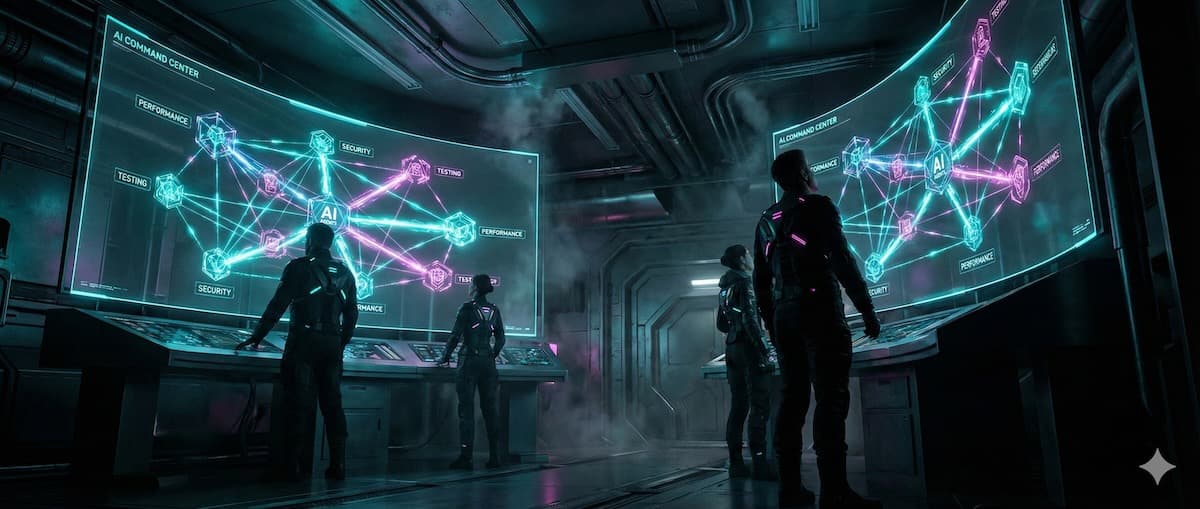
Multi-Perspective Code Review
One agent reviewing a PR will miss things. Three specialists won't:
Security reviewer: OWASP Top 10, auth logic, injection vulnerabilities.
Performance analyst: N+1 queries, blocking I/O, algorithm complexity.
Test coverage validator: Edge cases, assertion quality, integration gaps.
Each reviewer maintains a fresh 200K-context window focused on their domain, preventing context pollution.
Cross-Layer Feature Development
Building a user dashboard? Assign each layer to a different teammate:
Frontend teammate: React components in src/components/dashboard/
Backend teammate: API routes in src/api/dashboard/
Testing teammate: Unit tests in src/__tests__/dashboard/
Each teammate owns their directory exclusively, coordinates in parallel, and updates the shared task list. Wall-clock time drops dramatically because there is no file ownership conflict.
When to Avoid Agent Teams (Or Can't Use Them)
Agent Teams are experimental. Before using them, understand when simpler patterns work better, or when the feature's limitations block your use case entirely.
1. Experimental Feature Constraints
Agent Teams carry several hard limits you must know before deployment:
No nested teams: Teammates can spawn subagents, but not sub-teams.
One team per session: You must clean up the current team before starting a new one.
Fixed lead agent: You cannot transfer leadership mid-session.
No recovery for teammates: If a teammate crashes, session resumption doesn't restore them; you must spawn a replacement manually.
2. Sequential Dependencies
If step B requires step A's output, Agent Teams add coordination overhead without parallel benefit. Use standard subagents or a single session.
3. Same-File Edits
Teammates will overwrite each other. Agent Teams do not support native file locking. You'll need Git worktrees (via the "Clash" tool) or strict file ownership rules.
4. Cost-Sensitive Workflows
Agent Teams use 3-7x more tokens than single sessions. Every message consumes tokens in both the sender's and receiver's context. Broadcasts multiply by team size. If you're watching closely, stick with subagents.
The Token Math
Let's be concrete about costs using a heavy refactoring task as an example.
Claude Sonnet 4.5 Pricing (Feb 2026):
Input: $3.00 per million tokens
Output: $15.00 per million tokens
Single Session (2-hour refactoring task):
~8M input, ~300K output (Context-heavy analysis & changes)
~$25-30 total
Agent Team (3 teammates, same task, NO plan mode):
4x context loading (teammate spawn overhead)
~24M input, ~800K output
~$85-100 total
Result: Completed in 30-45 minutes instead of 120 minutes.
Agent Team (3 teammates, WITH plan mode):
Includes approval workflow overhead and inter-agent debate.
~35M input, ~1.2M output
~$125-150 total
Note: These estimates assume efficient workflows. Real-world sessions typically add 20-30% more tokens due to inter-agent communication, dead-end exploration (especially in debugging), and task coordination overhead. Budget conservatively.
The trade-off is velocity, not savings. You're paying 4-6x more to finish 3-4x faster.
Warning: Parallel agent usage can consume tokens rapidly. One documented case showed 887K tokens/minute during aggressive subagent parallelization. Claude Max subscribers (5-hour rolling limit) can exhaust their quota in 15 minutes with heavy Agent Teams usage.
OpenClaw: The Model-Agnostic Alternative
OpenClaw is often compared to Agent Teams, but the architectures differ. OpenClaw uses a multi-agent coordination pattern via sessions_spawn and sessions_send.
This is closer to traditional subagents than Agent Teams' peer-to-peer mesh. In OpenClaw, spawned sessions report back to their creator rather than messaging each other directly.
Advantages:
Mix models: Use Claude for the lead, GPT-5 for workers, and DeepSeek for coding.
Self-hosted: No vendor lock-in.
Open source: Fully customizable.
Disadvantages:
Higher setup complexity: Requires self-hosting and configuration.
Security concerns: Credentials may be exposed in some deployment configurations.
No native IDE integration: Lacks the seamless flow of Claude Code.
LangGraph and CrewAI: When Engineering Investment Pays Off
LangGraph (from the LangChain ecosystem) treats multi-agent coordination as a state graph. You define nodes (agents), edges (transitions), and conditional logic in code. It is best when you need "if step A fails, retry with step B" determinism.
Trade-off: Significant setup time and tight framework coupling, but you get reproducible, auditable workflows perfect for CI/CD pipelines.
CrewAI uses role-playing abstractions: define agents as "Researcher," "Writer," or "Reviewer" and provide system prompts. It supports hierarchical delegation and is production-grade and LLM-agnostic.
Trade-off: More approachable than LangGraph, but still requires Python expertise.
Both require upfront engineering investment that Claude Code Agent Teams avoid through natural language setup. Choose these when workflow stability justifies the code maintenance burden.
Decision Framework
Use Claude Code Agent Teams when:
Multiple perspectives add value, and agents need to challenge/debate each other.
You're parallelizing tasks across distinct files/modules with minimal dependencies.
Velocity matters more than cost (and you are prepared for 3-7x token overhead).
You're prototyping or researching rather than implementing rigid production features.
Use Traditional Subagents when:
Only the final result matters (verbose logs can be discarded).
Tasks are clearly sequential.
Cost is a primary constraint.
You need to isolate tool execution (e.g., tests or file operations) so the main agent doesn't see verbose output.
Use OpenClaw when:
Model flexibility is non-negotiable (we need to mix Claude, GPT, and DeepSeek).
You're building long-term infrastructure that must survive API changes.
Self-hosting is preferred or required for compliance.
Use LangGraph/CrewAI when:
You need deterministic, auditable workflows.
CI/CD integration and state tracking are required.
The workflow is stable enough to justify the investment in code.
Cost Guardrails for Agent Teams
Because Agent Teams can burn budget rapidly, implement these safety measures immediately:
Set Workspace Limits: Configure hard spending limits in your Claude Code settings.
Monitor
/cost: Check usage every 15 minutes during active team sessions.Start Small: Begin with a max of 2 teammates. Add more only after benchmarking token usage.
Require Plan Approval: For implementation tasks, force agents to present a plan. It costs more upfront but prevents expensive "hallucinated code" spirals.
Time-Box: Give instructions like "Finish in 30 minutes or report progress" to prevent runaway sessions.
Define File Ownership: In spawn prompts, explicitly state which directories each teammate owns: "You are responsible for src/api/* only. Do not edit files outside this directory."
The Bottom Line
Claude Code Agent Teams are a velocity multiplier, not a cost reducer. They excel at research, review, and parallel exploration where multiple perspectives add value.
For sequential tasks, cost-sensitive projects, or production pipelines, stick with traditional subagents or invest in deterministic frameworks like LangGraph. The feature includes an experimental plan, fallback workflows, and spending limit settings.
If your bottleneck is thinking time and you can absorb the token overhead, Agent Teams will change how you work. If your bottleneck is budget, they'll blow through it.
Choose accordingly.
Worried about that 3-7x token multiplier?
PromptMetrics helps you track per-agent token consumption, set anomaly alerts when teammates burn through budget, and identify which coordination patterns actually justify their cost.
See exactly where your Claude Code Agent Teams spend goes with prompt-level breakdowns and teammate attribution. Many teams find that 20-40% of their agent tokens are spent on redundant coordination, duplicate context loading, unnecessary back-and-forth messaging, or agents waiting for one another.