

5 Most Common Problems
The Invisible Cost Spiral (Token Inflation)
The "Green Dashboard" Fallacy (Silent Degradation)
The Debugging Black Hole (Latency & Tracing)
Compliance Paralysis (The "Shadow AI" Risk)
Version Chaos (The "Un-Rollbackable" Bug)
You finally shipped. Your AI agent is in production. It's handling customer tickets or generating internal reports.
Then, three things happen:
The Bill: Your CFO slacks you, asking why the OpenAI invoice just tripled.
The Bug: A user complains that the agent is hallucinating, but your logs show "200 OK."
The Panic: You realize you can't roll back the specific prompt that caused the issue because it's hardcoded in a repository somewhere.
If this sounds familiar, you aren't alone. Gartner predicts that 40% of Agentic AI projects will be canceled by 2027, not because the AI isn't smart enough, but because the operational costs and risks become unmanageable.
At PromptMetrics, we talk to CTOs every day who are moving from "cool demos" to real engineering. They all hit the same wall: running an LLM in production without observability is like running a high-end restaurant kitchen without recipes or a ledger. You know money is leaving the bank, but you don't know which dish is draining the budget or why the soup suddenly tastes wrong.
Below, we break down the five most common problems engineering teams face when scaling Agentic AI, along with the architectural fixes required to address them.
1. The Invisible Cost Spiral (Token Inflation)
The Problem:
Traditional software costs scale with usage. AI costs scale with complexity and verbosity.
The most dangerous issue we see is "Tokenizer Drift" and "Thinking Tokens."
A developer might tweak a system prompt to be "more polite." Suddenly, that prompt adds 300 tokens to every request. On a reasoning model (like o1 or Claude 3.5 Sonnet), that politeness triggers internal "chain of thought" tokens that you pay for but never see.
We've seen cases where a minor prompt change increased unit costs by 300% overnight. Because standard monitoring tools only track total API spend, you don't see this until the end-of-month invoice.
The Fix:
You must move from tracking "Total Spend" to tracking "Unit Economics per Prompt."
Isolate Costs: You need a layer that tags every request with metadata (User ID, Feature ID, Prompt Version).
Monitor Token Ratios: Track the Input-to-Output token ratio. If a specific prompt version suddenly spikes in output tokens without better performance, you have a token leak.
Cache Aggressively: Implement semantic caching for repetitive queries. If 40% of your user queries are identical, you shouldn't be paying for inference every time.

2. The "Green Dashboard" Fallacy (Silent Degradation)
The Problem:
In traditional DevOps, if the server is up and returning a 200 OK status code, the dashboard is green, and the team is happy.
In AI Ops, a "200 OK" means nothing.
The model can successfully return a response that is factually incorrect, toxic, or completely irrelevant. This is silent degradation. We call it the "Green Dashboard Fallacy." Your infrastructure looks healthy, but your product is failing. Users churn because the AI is "dumb," while your engineers celebrate high uptime.
The Fix:
You need to monitor Semantic Health, not just System Health.
LLM-as-a-Judge: Use a smaller, cheaper model to score a sample of production outputs for relevance and groundedness.
User Feedback Loops: Integrate a simple "thumbs up/down" UI element and correlate that data directly with the prompt that generated it.
Drift Detection: Monitor for "Concept Drift." If the way users ask questions changes, your static prompt might stop working. You need to see that drop in quality immediately.
3. The Debugging Black Hole (Latency & Tracing)
The Problem:
When a traditional API is slow, you check the database query or the network.
When an Agentic AI is slow, it could be anything.
Did the retrieval step (RAG) take too long?
Did the model loop on a "tool call" error?
Is the "Time to First Token" (TTFT) slow because of high server load, or is the "Time Per Output Token" (TPOT) slow because the context window is full?
Without granular tracing, engineers spend 40% of their time just trying to reproduce a failure. They are guessing, not engineering.
The Fix:
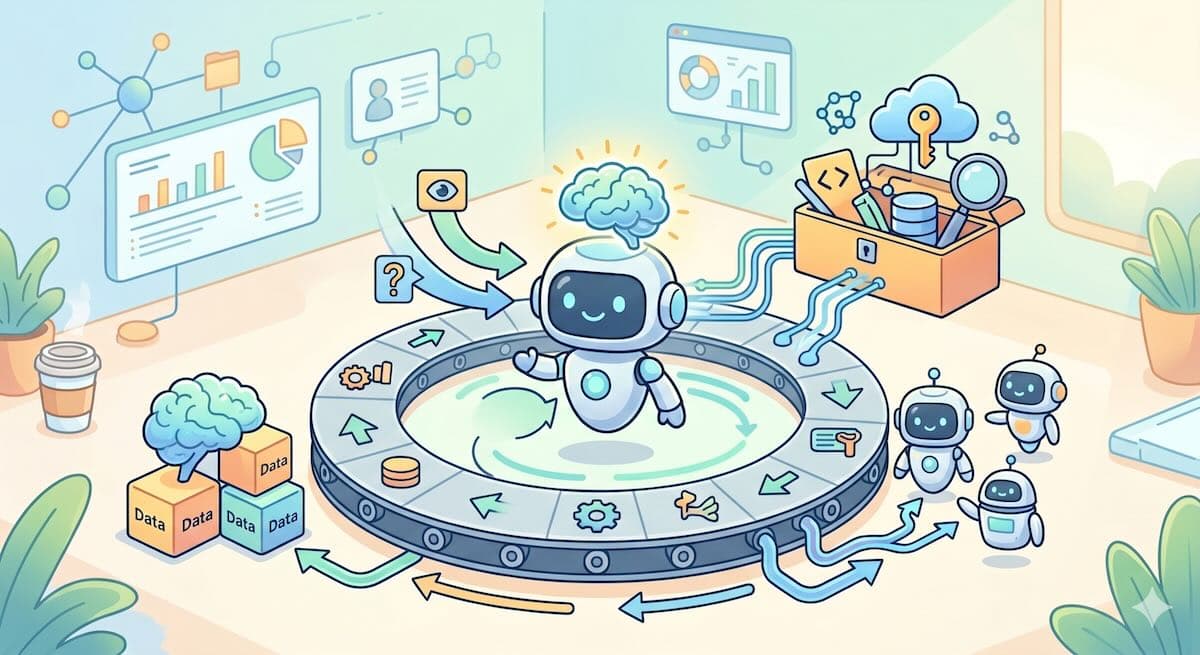
Implement Distributed Tracing for Agents.
You need a visual trace that shows the full "chain of thought":
User Input
Retrieval (Duration + Documents fetched)
System Prompt (The exact version used)
Tool Execution (Success/Failure)
Final Generation
If you can't click on a failed request and see exactly which step broke the chain, you aren't ready for production.
4. Compliance Paralysis (The "Shadow AI" Risk)
The Problem:
The EU AI Act is here. GDPR is still here. SOC 2 is waiting.
Many teams are building "Shadow AI" engineers using their personal API keys, testing prompts in ChatGPT web interfaces, or logging sensitive PII (Personally Identifiable Information) directly into the LLM context.
When a regulator or a frantic CISO asks, "Who changed this prompt? And did we send customer credit card data to OpenAI?", the answer is usually a terrifying silence.
The Fix:
Centralized Governance and Audit Logging.
PII Scrubbing: Implement a middleware layer that detects and redacts PII before it hits the model provider.
Immutable Logs: Every prompt change must be versioned, timestamped, and attributed to a user.
Data Residency: Ensure your observability stack keeps data within your required region (e.g., AWS Frankfurt for EU companies).
5. Version Chaos (The "Un-Rollbackable" Bug)
The Problem:
How do you manage prompts today?
If the answer is "They are hardcoded strings in our Python/TypeScript files," you have a massive problem.
To change a prompt, an engineer has to:
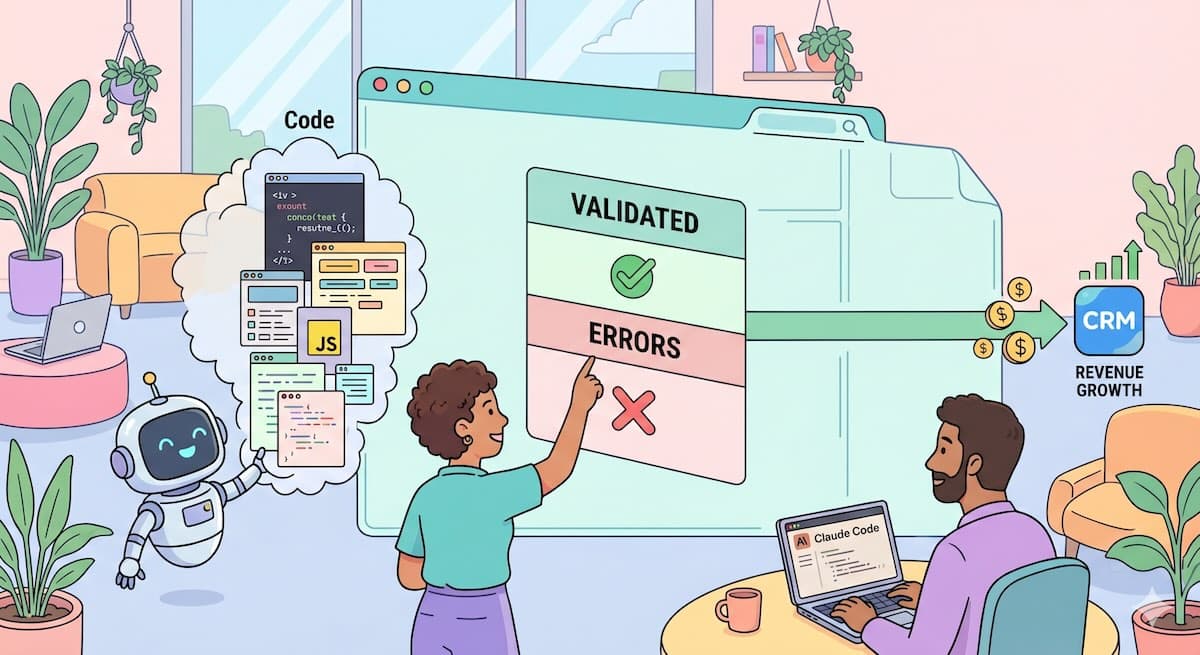
Edit the code.
Open a Pull Request.
Wait for review.
Deploy the build.
This is too slow. Worse, if that deployment causes the AI to start hallucinating, you have to redo the whole process in reverse to roll back. In the meantime, your users are seeing bad data.
The Fix:
Treat prompts as Content, not code.
Adopt a Prompt Management System (CMS for Prompts).
Decoupling: Store prompts outside the codebase. Fetch them via SDK/API.
Instant Rollbacks: If v12 breaks production, you should be able to switch back to v11 in one click, instantly, without a code deploy.
Non-Technical Collaboration: This allows Product Managers and Domain Experts to tweak prompts in a playground environment without needing an engineer to commit code.
Is PromptMetrics Right For You?
We believe transparency builds trust. While we solve the problems listed above, PromptMetrics is not the right fit for everyone.
You might not need us if:
You are a hobbyist: If you are spending <$100/month on API credits, our enterprise features are overkill. Tools such as Langfuse (open-source) or standard logging are likely sufficient.
You want a "No-Code Bot Builder": We are a developer tool for engineering teams. If you are looking for a drag-and-drop interface to build a chatbot without writing code, you need a tool like Voiceflow or Stack AI, not an observability platform.
You require 100% Air-Gapped / On-Prem: While we support secure cloud environments (AWS EU), we do not currently offer a self-hosted "on-metal" version for completely offline defense/intelligence sectors.
Stop Flying Blind
The difference between a failing AI experiment and a profitable AI product is observability.
You can keep guessing why your costs are up, and your quality is down. Or, you can turn on the lights.
Ready to gain control?
Expected Payback: <30 days based on cost recovery alone.
Critical Path: Integrate SDK (15 mins) → Identify Cost Outliers → Optimize Prompts → Automate Compliance.
Start your free trial today (No credit card required) or use our ROI Calculator to see how much "Zombie Spend" you could recover this month.