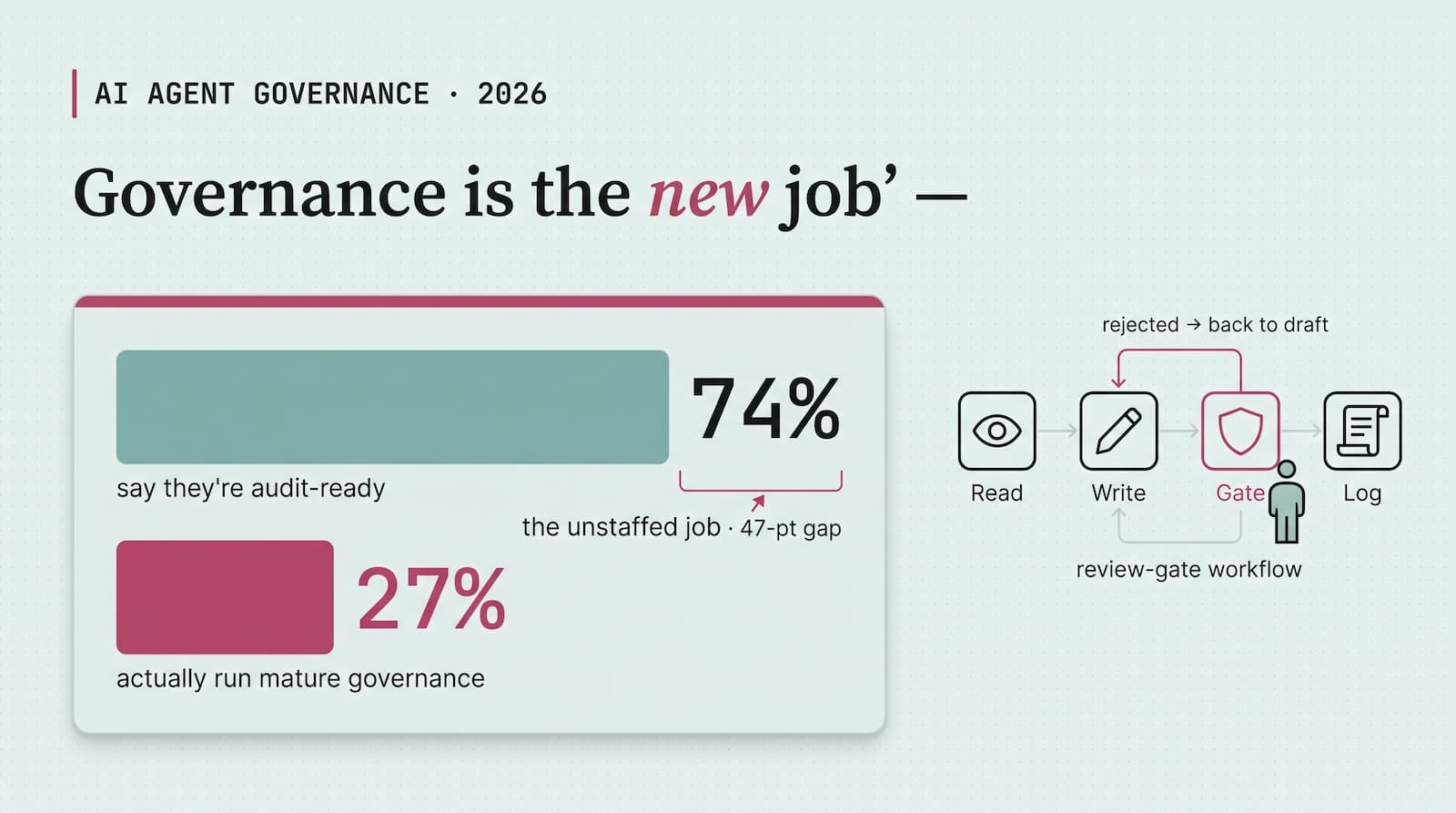


48.6% of companies haven't begun meaningful preparation for the EU AI Act. That is a terrifying statistic when you realize the deadline for high-risk systems is August 2, 2026, and penalties can reach €35M or 7% of global turnover.
But if you think this is just a legal headache for Big Tech, you are miscalculating. The immediate threat isn't a fine from Brussels; it's a rejection from your next enterprise customer.
Enterprise buyers are already shifting their procurement frameworks. Security questionnaires are expanding to include AI-specific compliance sections, and we are already seeing deals stall as a result. One startup recently had a $15M contract blocked from deployment simply because they couldn't demonstrate sufficient regulatory readiness.
This isn't FUD. It's math. If you are running an AI startup in Europe with €5–30K/month in LLM spend, 12–24 months of runway, and investors asking uncomfortable questions, you need to understand exactly what you are up against.
Misconception #1: "We Are Low-Risk" (The Profiling Trap)
For the past year, founders have relied on early estimates from the European Commission suggesting that only 5-15% of AI systems would be "high-risk."
Those estimates are proving optimistic. Independent surveys of AI startups now suggest that 33-50% of products actually fall into high-risk categories.
Why the discrepancy? It comes down to profiling.
While Article 6(3) offers exceptions for systems performing "merely procedural tasks," those exceptions vanish the moment your system performs "profiling of natural persons." If your AI personalizes content, scores leads, ranks candidates, or adapts interfaces based on user behavior, you are likely profiling. If you are profiling, you are at high risk.
This catches almost the entire HR tech sector (ranking, filtering, task allocation), fintech (credit scoring, insurance risk), and edtech (personalized learning paths).
Misconception #2: The "Provider" Trap (Hiding Behind OpenAI)
A common myth is that if you are "just wrapping" GPT-4 or Claude, the compliance burden falls on OpenAI or Anthropic.
The AI Act explicitly contradicts this assumption.
If you are a Berlin-based startup putting a recruitment tool into the market using the OpenAI API, the EU AI Act classifies you, not OpenAI, as the "provider." You are responsible for the system's output, its risk management, and its registration in the EU database. You cannot outsource your liability to your model vendor.
Misconception #3: The Timeline (You Are Already Late)
The most critical misconception among founders is that compliance is a documentation sprint you can do in Q2 2026.
Research indicates that bringing a high-risk AI system into compliance requires a 12 to 18 months of lead time for an average engineering team. If you plan to meet the August 2, 2026, deadline, you should have started yesterday.
For a typical seed-stage startup, total compliance costs are estimated at € 160 K- € 330 K per system. These costs reflect the development of a Quality Management System (QMS) that covers at least 12 documented components, from risk management to incident reporting.
Complicating matters, the standards lag behind the law. The harmonized standard (prEN 18286) only entered public enquiry in October 2025 and won't be finalized until late 2026. You are effectively being asked to comply with requirements that don't yet have official implementation guidance.
Misconception #4: Human Oversight is "Human-in-the-Loop"
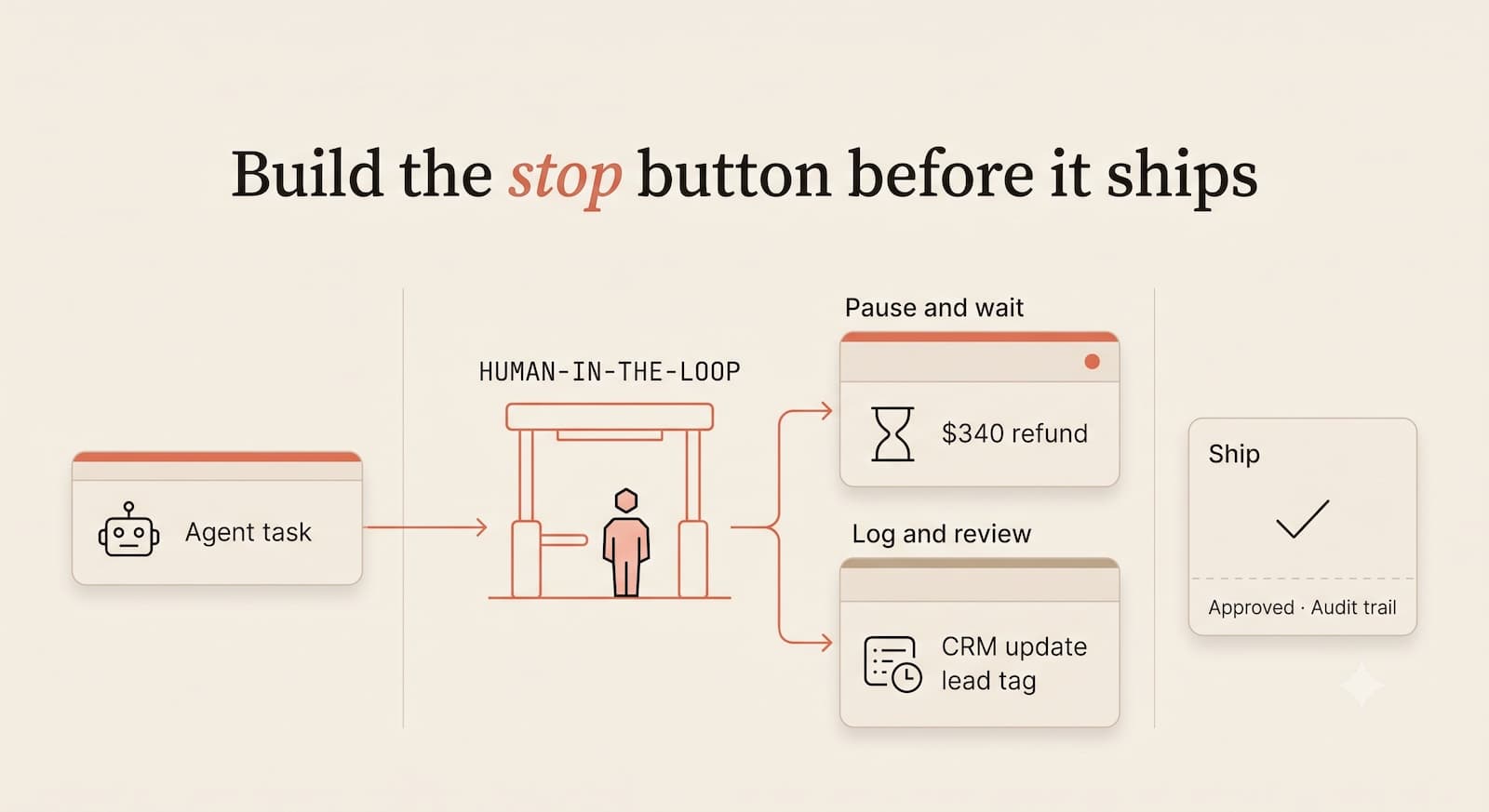
Article 14 demands "human oversight," but this is an architectural requirement, not a workflow suggestion. The law requires that human overseers must be able to:
Fully understand the system's capabilities and limitations.
Monitor for anomalies.
Override or reverse outputs.
Intervene with a "stop" mechanism.
This requirement breaks the architecture of many autonomous agents. If your value proposition is fully automated decision-making, such as auto-approving loans, you may need to fundamentally re-architect your product to enable state-aware human intervention.
Engineering teams consistently report that retrofitting human oversight mechanisms is substantially more expensive than architectural planning from day one.
Misconception #5: "We Don't Have Training Data"
"We use RAG (Retrieval-Augmented Generation), so we don't have training data liabilities."
This is another dangerous assumption. Article 10's data governance requirements apply even if you aren't pre-training models. For RAG systems or fine-tuned models, the requirements attach to your testing and evaluation datasets.
Your validation data must meet strict standards for quality, representativeness, and bias examination. This creates an operational headache: the AI Act requires 10-year retention of system documentation, while GDPR requires rapid deletion of personal data. You need retention policies that balance both considerations when architecting data governance from the start.
The Immediate Threat: Article 4 is Live Now
While the heavy lifting for high-risk systems hits in 2026, Article 4 (AI Literacy) is enforceable right now.
As of February 2025, companies must ensure that their staff possesses sufficient AI literacy. This applies to your developers, your sales team, and your operators. Ignoring this low-hanging fruit creates immediate liability and signals to investors that your governance is sloppy.
The Silver Lining: Compliance as a Moat
This reality check looks grim, but there is a massive opportunity hidden in the regulation. We are seeing a pattern that mirrors the adoption of SOC 2. Just as 70% of VCs prefer investing in SOC 2-compliant companies, AI compliance is becoming a signal of maturity.
Furthermore, the EU offers specific benefits for SMEs. Article 62 provides priority access to regulatory sandboxes. Evidence from the UK FCA sandbox shows that participants received 6.6x higher investment and 40% faster market authorization than comparable non-sandbox startups.
If you are already pursuing ISO 42001 (AI Management Systems), you also have a significant head start, as it covers substantial ground toward the required Quality Management System.
Infrastructure is Compliance
Stop hoping for a delay. The "Brussels Effect" is real; these standards will likely propagate globally. But you shouldn't solve this with legal paperwork alone; you need engineering infrastructure.
This is where specialized infrastructure transforms compliance from a burden into a competitive advantage. Systems like PromptMetrics provide:
Article 12-compliant immutable logging that captures every prompt, response, and decision point.
EU data residency that satisfies Article 10 data governance requirements.
Human oversight dashboards that operationalize Article 14 obligations.
For startups with €5-30K monthly LLM spend, the ROI calculation is straightforward: €400-2,000/month for compliance infrastructure versus €160K-€330K to build it yourself plus the 12-18 months of engineering time you don't have.
The startups that survive 2026 won't be the ones that hired the most expensive lawyers. They'll be the ones who treated compliance as a product-architecture building system that enterprise customers trust enough to bet their businesses on.
Next Step: Use the EU AI Act Compliance Checker. If you process personal data, assume you are High-Risk until proven otherwise.