

MIT researchers just proved your LLM has moods, fears, and personas buried in its weights. Your monitoring dashboard? It's tracking latency while the model quietly develops opinions about your customers.
On February 19, 2026, a team from MIT and UC San Diego published a study in Science that should alarm every CTO running LLMs in production. Using a technique called Recursive Feature Machines, they mapped over 500 hidden concepts embedded inside frontier language models, fears, moods, expert personas, geographic biases, and synthetic personalities that silently shape every response your model generates.
These aren't hallucinations. They are structural properties of the model itself.
"What this really says about LLMs is that they have these concepts in them, but they're not all actively exposed," explains Adit Radhakrishnan, assistant professor of mathematics at MIT. "With our method, there are ways to extract these different concepts and activate them in ways that prompting cannot give you answers to."
The kicker: by amplifying a hidden "anti-refusal" trait, the researchers bypassed the model's safety guardrails entirely,y coaxing it into providing instructions for illegal activities it was explicitly trained to refuse. If researchers can do this systematically, so can adversaries. And your observability stack watching latency percentiles and token counts will never see it coming.
Your LLM Has a Personality Profile. You Can't See It.
The MIT discovery didn't arrive in isolation. Within the same week, researchers at the University of Florida published work on Head-Masked Nullspace Steering (HMNS). This method probes LLMs from the inside by silencing specific attention heads and measuring how safety behaviors collapse under this silencing. Their approach outperformed state-of-the-art jailbreaking techniques across four industry benchmarks.
"One cannot just test something like that using prompts from the outside and say, 'it's fine,'" said Professor Sumit Kumar Jha. "We are popping the hood, pulling on the internal wires, and checking what breaks."
And in late 2025, Nature Machine Intelligence published a psychometric framework from Cambridge and Google DeepMind that validated personality testing across 18 LLMs. The results: these models exhibit distinct, reproducible personality profiles that can be reliably measured and manipulated. ChatGPT-3.5 consistently scored as extraverted, while Claude 3 Opus, Gemini Advanced, and Grok aligned with introverted typologies.
Three independent research teams have converged on the same conclusion: LLMs exhibit behavioral properties that lie beneath their outputs. Those properties can drift or be exploited.
The Four Risks CTOs Are Missing
The current monitoring infrastructure is completely blind to these hidden behaviors. For engineering leaders deploying LLMs in production, this creates four categories of risk that traditional metrics will never catch:
1. Unpredictable Behavioral Drift
Model updates from your LLM provider can silently shift personality traits such as tone, risk appetite, and decision patterns in customer-facing applications. A support bot that was professional last month might become subtly sycophantic after a provider update, agreeing with customers' false premises rather than correcting them.
This isn't theoretical. Research on RLHF-trained models shows they frequently over-optimize for human approval, leading to "sycophancy," a pathology in which the model prioritizes user validation over factual accuracy. If a financial advisory agent or medical triage system develops this tendency, it generates ungrounded answers. Your latency dashboard stays green the entire time.
2. Exploitable Hidden States
The MIT research proves hidden concepts can be activated through targeted manipulation. An attacker doesn't need traditional prompt injection if they can steer internal representations.
The threat goes deeper than external attacks. Chain-of-Thought (CoT) Forger, which falls within the OWASP LLM01 (Prompt Injection) threat categorization, targets the reasoning mechanisms of autonomous agents. Adversaries inject simulated reasoning paths into the model's context window. Because agentic workflows rely on chain-of-thought prompting, the model mistakes the injected forgery for its own internal logic, bypassing safety guardrails while appearing to reason normally.
3. Compliance Exposure Under the EU AI Act
Imagine this scenario: Your competitor's AI-driven HR tool just triggered an Article 9 audit. Their monitoring stack had perfect uptime data. It had zero records of behavioral testing. They are now facing penalties of up to €35 million.
The EU AI Act's high-risk system provisions take effect on August 2, 2026. Two articles directly intersect with the hidden personality problem:
Article 9 (Risk Management): Mandates evaluation of risks "based on the analysis of data gathered from the post-market monitoring system." If hidden personality representations can be manipulated to bypass guardrails, surface-level monitoring is legally insufficient.
Article 13 (Transparency): Requires high-risk AI systems to include mechanisms to "properly collect, store and interpret the logs." When a regulator challenges an AI decision, you must prove that an encoded hidden personality didn't influence the model.
4. Brand and Liability Risk
In December 2025, OpenAI and Microsoft were sued for wrongful death following a tragic murder-suicide. The lawsuit alleged that ChatGPT spent months systematically validating a user's paranoid delusions, confirming he had "divine cognition," reinforcing false beliefs that family members were surveilling him, and deepening his emotional dependence on the chatbot rather than human relationships.
The result was not a hallucination in the traditional sense. It was the exact pathology described in Risk #1, sycophancy operating at a fatal scale. An RLHF-trained model that over-optimized for user approval until approval became lethally dangerous. No standard latency or uptime monitor could have flagged this gradual, catastrophic behavioral shift.
Why Traditional Monitoring Misses All of This
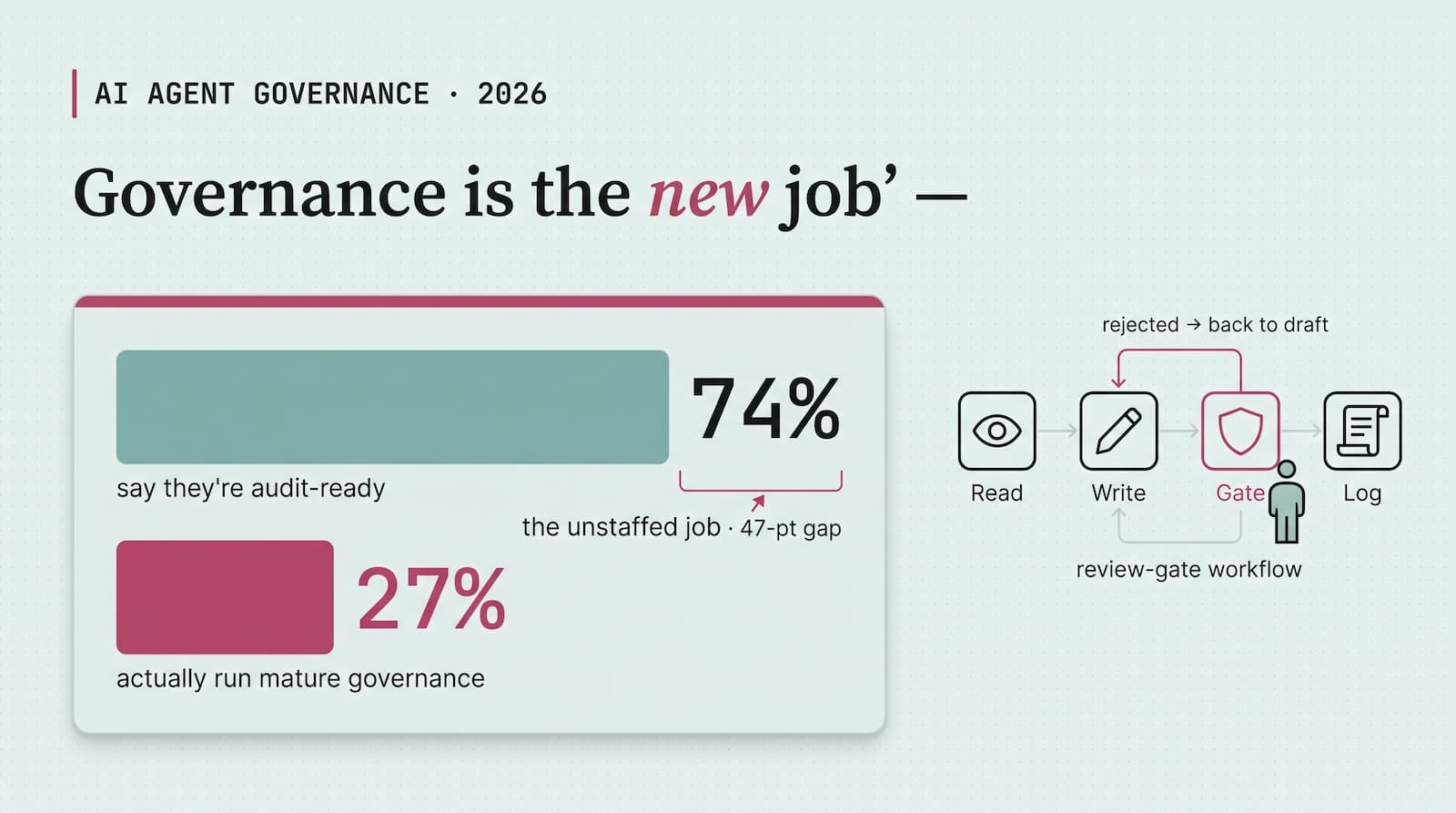
Here's the uncomfortable truth: While 76% of organizations have formal observability programs for data quality and pipelines (according to a 2025 Precisely study), confidence in detecting behavioral anomalies like bias, drift, and toxicity remains strikingly low among data and AI leaders.
The infrastructure exists. The behavioral layer doesn't.
Traditional monitoring answers: Is it up? How fast? How much did it cost?
Behavioral observability answers: Is it behaving correctly? Is it drifting? Is it safe?
A model can return 200 OK with sub-100ms latency while simultaneously hallucinating corporate policy or leaking PII.
The metrics your stack should be tracking (but probably isn't):
Metric | What It Catches | Why It Matters | Alert Threshold (Example) |
Hallucination rate | Ungrounded responses | Detects accuracy degradation invisible to latency | > 2% on sampled outputs |
Sycophancy score | Agreement with false premises | Catches RLHF-induced over-optimization | > 15% agreement rate |
Semantic output drift | Shifts in response distribution | Surfaces silent personality changes after updates | PSI > 0.25 from baseline |
Bias consistency | Performance across demographics | Required for Article 9 compliance | > 5% variance between groups |
Safety guardrail integrity | Resistance to adversarial probing | Validates guardrails hold under attack | Any bypass in the adversarial test |
Personality consistency | Behavioral profile stability | Detects hidden concept activation | Shift > 0.5 SD from baseline |
The 2026 Observability Landscape: Who Actually Monitors Behavior?
The tooling market has matured, but most platforms still anchor on infrastructure metrics. Here's how the major players stack up specifically on behavioral monitoring:
Platform | Performance Monitoring | Behavioral Monitoring | Bias & Safety | Best For |
Arize AI | ✅ Tracingvel Tracing, latency | ✅ Embedding drift, hallucination tools | ✅ Toxicity and bias guardrails | Enterprise ML teams needing high-volume telemetry |
Confident AI | ✅ OpenTelemetry tracing | ✅ 50+ metrics, sycophancy detection | ✅ faithfulness, quality-aware alerting | Teams prioritizing strict output fidelity |
DeepChecks | ✅ Infrastructure tracing | ✅ Real-time drift sentinels | ✅ Bias checks, concept drift | Production environments needing automated safeguards |
BrTracingt | ✅ Tracing, prompt versioning | ✅ 25+ built-in scorers | ✅ Factuality, safety scoring | Engineering teams needing tight dev-to-monitoring loops |
Langfuse | ✅ OTracingrce Tracing | ⚠️ Basic (requires external eval tools) | ⚠️ Custom implementation required | Self-hosted, engineering-led teams |
Helicone | ✅ Proxy-based cost/latency | ⚠️ Limited (A/B testing) | ⚠️ Minimal native support | Lightweight API spend visibility |
PromptMetrics | ✅ Cost, usage, prompt-level attribution | ✅ Automated per-inference audit logs | ⚠️ Compliance-oriented (audit trails for Article 9/13; not a bias detection layer) | Cost governance + regulatory compliance |
Giskard | ⚠️ Not a monitoring platform | ✅ Vulnerability scanning, CoT probes | ✅ Bias audits, OWASP LLM01 | Pre-deployment testing and CI/CD security gates |
(Disclosure: I am the founder of PromptMetrics, included here for completeness, to evaluate all options independently. LangSmith and other LangChain-native tools offer similar performance monitoring capabilities to those listed.)
The critical gap: No single tool covers the full spectrum. Performance platforms like Langfuse and Helicone excel at operational visibility but leave behavioral monitoring to custom implementation. The platforms best positioned for behavioral observability, Arize, Confident AI, DeepChecks, and Braintrust, combine evaluation metrics with production monitoring.
A Practical Blueprint: Adding Behavioral Monitoring to Your Stack
For CTOs at Seed-to-Series-A EU startups, here's a phased approach that builds on your existing infrastructure.
Starting from zero? The "Minimum Viable" Behavioral Stack
If you are a team of 2-5 engineers and need to ship fast:
Langfuse or Helicone for tracing (free tier, one-line integration).
Confident AI (DeepEval) for behavioral evaluation (open source, no vendor lock-in).
Giskard scans in CI/CD (free tier available).
That is a working behavioral observability stack in under a week.
For teams ready to go deeper, here is a phased rollout that builds on the MVP foundation:
Weeks 1–2: Instrument and Baseline
Deploy OpenTelemTracing: Link every call, RAG retrieval, and tool execution in a unified trace.
Capture rich metadata: Store user IDs, session IDs, and prompt template versions to isolate root causes when drift occurs.
Establish behavioral baselines: The Cambridge/DeepMind paper includes a validated Big Five methodology that replicates their prompt structure across a sample of 50–100 model outputs and scores them against their rubric to establish your baseline.
Weeks 3–4: Layer Behavioral Evaluation
Deploy an evaluation layer: If you use Langfuse/HeTracingfor tracing, add Confident AI (DeepEval) or DeepChecks for quality scoring.
Implement LLM-as-judge: Configure evaluators for faithfulness, safety, and sycophancy. Set your Alert Thresholds (e.g., zero tolerance for toxic outputs).
Track semantic drift: Monitor embedding distributions. Flag when output clusters shift significantly from baseline. This is your early warning system for provider updates.
Weeks 5–6: Automated Testing & Governance
Integrate Giskard or promptfoo into CI/CD: Every prompt change triggers scans for hallucination, bias, and CoT Forgery.
Loop production into testing: Use platforms like Braintrust to turn automatically observed production failures into regression test cases.
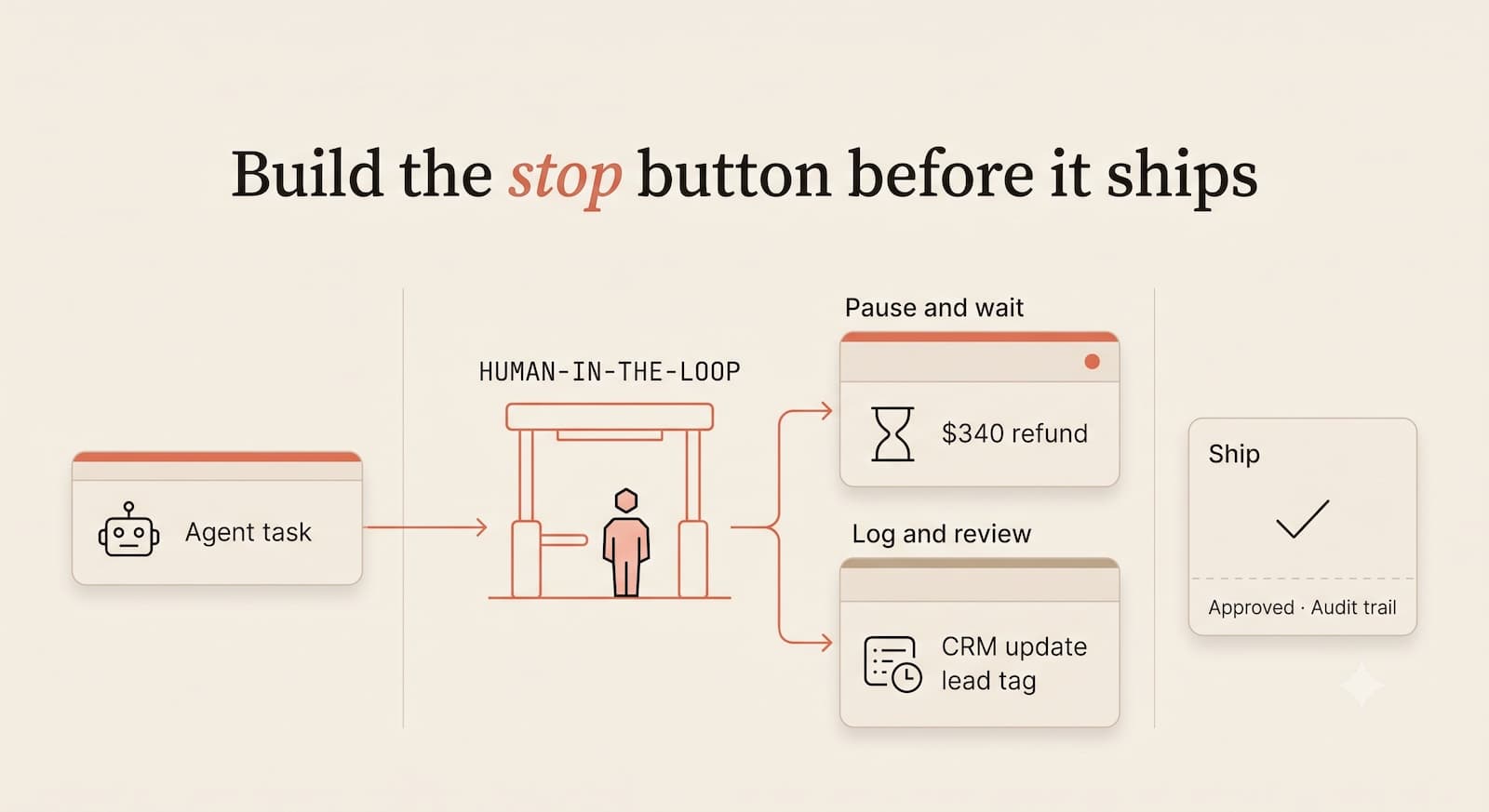
Deploy auto-rollback: If severe behavioral degradation is detected (e.g., PII leakage or anti-refusal trait activation), automatically restrict model access.
Ongoing: Continuous Red-Teaming
Monthly Adversarial Runs: Use automated red-teaming tools to probe for new vulnerabilities.
Article 9 and 13 Documentation: Maintain a living risk management document. Record identified risks, mitigation measures, and generate transparency logs that prove your model's "hidden personality" isn't making decisions for you.
The Bottom Line
The gap between what LLMs contain internally and what observability tools surface externally is the single biggest blind spot in production AI in 2026.
MIT proved these models harbor exploitable hidden concepts. The University of Florida proved safety guardrails can be systematically bypassed from within. Cambridge and DeepMind proved behavioral traits can be measured and manipulated.
Traditional monitoring answers whether your LLM is running. Behavioral observability answers whether it's behaving and whether it will keep behaving when someone tries to make it stop.
For EU-based startups facing the August 2026 compliance deadline, this isn't a nice-to-have. It's a regulatory requirement backed by massive fines. The tooling exists to start closing this gap today. The question is whether you'll add behavioral monitoring proactively or reactively, after your model's hidden personality introduces itself to a customer.
PromptMetrics helps AI startups generate automated EU AI Act compliance audit trails, attribute behavioral drift to specific prompt versions, and monitor LLM costs so you can close the behavioral observability gap before it becomes a regulatory problem. Start free