

TL;DR:
The Trap: Traditional APM tools (Datadog, New Relic, Splunk) treat LLM tags like custom metrics, triggering bills of €50k+/month for high-cardinality data.
The Landscape: The market has fractured into 4 categories: APMs, Gateways, Evals, and Native Platforms.
The Fix: A composed hybrid stack APM for infra, LLM-native platform for AI, plus an optional gateway costs ~€3k/month for observability at this scale.
The ROI: 45:1. (Based on ~€564k annual infrastructure savings + recovering ~€1.6M in engineering time/waste).
If you are an AI engineer or CTO, you have likely experienced "The Bill."
It's that moment at the end of the month when your CFO pings you on Slack: "Why did our infrastructure spend jump from €12k to €45k this month? And what exactly did we get for it?"
Here is the uncomfortable truth: That extra €33k likely isn't your OpenAI bill.
It's hiding in your observability stack.
When you pump massive, unstructured LLM logs into traditional APM tools, whether Datadog, New Relic, or Splunk, and tag them with high-cardinality data like user_id, you trigger what we call the "Observability Tax." You are effectively paying a 250% premium on top of your API bills to monitor your system.
But here is the deeper issue: you are likely using the wrong tool category entirely.
At PromptMetrics, we believe you shouldn't pay more to measure your software than you do to run it. In a healthy stack, APMs, gateways, and LLM platforms each do what they do best, rather than having one tool try to do everything poorly.
PromptMetrics is the LLM layer in that stack, not a replacement for your APM or gateway, but the missing piece that makes LLM costs, quality, and compliance visible.
This post is the definitive guide to the economics of LLM observability. We will cover the 4 distinct tool categories, the "Cardinality Trap" that wrecks budgets, and how to architect the modern hybrid stack for 2026.
The Short Answer: What Should It Cost?
For most startups building serious AI agents or copilots (post-PMF), a dedicated, purpose-built LLM Observability stack will cost between €12,000 and €60,000 per year.
For large enterprises with high-volume, consumer-facing applications, this scales to €150,000+ per year.
However, the "do nothing" cost is higher. Without optimization, the median AI-first startup wastes €2.3M–€4.5M annually on observability-driven cost inflation and inefficient prompts.
The 3 Hidden Cost Drivers (And How to Fix Them)
Why does the price range vary so wildly? It comes down to three technical factors: Cardinality, Storage Efficiency, and Evaluation Strategy.
1. The Cardinality Trap (Why Traditional APM Fails)
This is the number one reason engineering teams bleed money.
In traditional software, you might tag metrics with server_region (low cardinality). In AI, engineers want to tag traces with user_id, session_id, prompt_template_version, and model_name.
If you have 10 tag dimensions with 10 values each, you create 10 billion potential metric combinations. Traditional APM platforms charge per unique time series (Custom Metrics).
The Risk: A single engineer adding a user_id tag to your APM logs (Datadog, New Relic, etc.) can spike your monthly bill by €50k+ overnight.
The Fix: You need a tool that handles high-cardinality data natively via semantic aggregation, rather than indexing every single permutation as a new billing unit.
2. The Storage Problem: "Prompt Fingerprinting."
LLM logs are heavy. A single request includes the prompt (often 4k+ tokens), the RAG context (huge chunks of text), and the response. Storing this as raw text in a standard database is inefficient.
How PromptMetrics cuts storage costs by 98%:
When you use our Prompt Registry or SDK, we don't store every prompt as a unique piece of text. We use Prompt Fingerprinting:
Template Hashing: We store the heavy prompt template once.
Variable Storage: For each request, we store only the minimal variable bindings (e.g., the specific user input).
Metadata: We rely on hashes for aggregation.
This reduces 1.6TB of raw prompt logs down to ~3GB of metadata. You get full cost attribution ("Which prompt drove the most spend?") without the massive storage bill.
3. The "Judge Tax" Myth
A common misconception is that "Observability doubles your cost because you have to run a Judge model on every request."
This is a category error. You should never run full LLM-as-a-judge evaluations on 100% of production traffic.
Staging: Run comprehensive, expensive evals here against golden datasets.
Production: Use Smart Sampling.
100% of Errors: If it breaks, trace it fully.
1% of Successes: Sample a tiny fraction for baseline quality checks.
Heuristics: Use cheap signals (P95 latency spikes, token count outliers) to flag issues, not expensive LLM calls.
The 4 Categories of LLM Observability (And How to Choose)
The market has fractured into four distinct categories. Understanding the difference is the key to avoiding surprise bills.

Category 1: Traditional APM Tools
Examples: Datadog, New Relic, Splunk, Dynatrace.
Best For: Infrastructure monitoring (CPU, Memory, DB queries, Latency).
Fatal Flaw: Cardinality Pricing. These tools were built for servers, not probabilistic AI. They treat every user interaction as a unique metric.
Verdict: Keep them as your infrastructure backbone (servers, DBs, queues). But in a modern AI stack, they should sit beside an LLM-native platform, not be your primary LLM observability tool.
Category 2: AI Gateways & Proxies
Examples: Helicone, Portkey, Bifrost, Cloudflare AI Gateway.
Best For: Fast integration and caching. Helicone and Portkey are often the fastest way to get basic observability and a 20–30% cost reduction via caching, without touching your codebase.
Fatal Flaw: Depth. Gateways excel at routing and caching, but they generally don't address prompt versioning, deep debugging, or compliance workflows (such as EU AI Act reporting).
Verdict: In most mature stacks, gateways sit in front of an LLM platform, not instead of one. They are the first line of cost defense, while the LLM platform is the source of truth for prompts, traces, and compliance.
Category 3: Evaluation & Quality Tools
Examples: Arize Phoenix, Galileo, TruLens.
Best For: Academic research, RAG debugging, and pre-production testing. If your main pain is RAG quality and hallucinations rather than cost or compliance, tools like Arize Phoenix or Galileo are a strong first purchase.
Fatal Flaw: Operations. These tools focus on "Is the AI smart?" rather than "Is the AI expensive/compliant?" They often lack the real-time operational logging needed for production support.
Verdict: Teams that care deeply about RAG quality typically run an eval tool in staging plus an LLM platform in production, and still rely on their APM for low-level infra metrics.
Category 4: LLM-Native Platforms
Examples: PromptMetrics, LangSmith, Langfuse.
Best For: The full stack: Cost tracking, prompt versioning, compliance, and debugging in one place.
Differentiation:
LangSmith: Best if your stack is 100% LangChain-native.
Langfuse: Best for teams with DevOps capacity who want open-source/self-hosting.
PromptMetrics: Best for EU compliance, PM collaboration, and non-LangChain stacks.
Fatal Flaw: They aren't infrastructure monitors; you'll still pair them with an APM for servers/DBs.
Verdict: For post-PMF scale-ups, the standard stack is an LLM-native platform + an APM for infra + optionally a gateway for caching. These tools are complements, not replacements.
The Math: Why APM Alone Is a Trap (Datadog Example)
CTOs often ask, "Why can't I just use the APM I already have?"
Here is the math for a Series B Fintech App handling 5 Million requests/month with high-cardinality tagging (e.g., tracking costs per User ID).
Cost Driver | Datadog (Standard List Price) | PromptMetrics (Purpose-Built) |
Log Indexing (15-day retention) | 5M events × €1.27/million = ~€7 (Negligible) | Included in platform fee |
Ingestion (100GB logs) | 100GB × €0.20 = ~€20 (Also Negligible) | €1,500 (Ingestion Only)* |
Custom Metrics (The Killer) | 1M active series (User IDs) × €0.05 = €50,000 | Included (Semantic Aggregation) |
MONTHLY TOTAL | ~€50,027 | ~€1,500* |
Annual Savings | €564,000+ (vs full platform cost) |
*Note: €1,500 reflects the metered ingestion cost for 5M traces. The full platform cost (including retention, compliance, and seats) is ~€3,000/month. See the "Growth Breakdown" below for the complete itemization.
The Takeaway: Datadog's ingestion and indexing fees are deceptively low. They function as a "loss leader." The trap snaps shut when you add user_id tags, triggering the €50,000 Custom Metrics bill. PromptMetrics handles high-cardinality tags natively without the markup. The same pattern holds for other APMs with similar pricing models; in a hybrid stack, you keep them for infra and move LLM logs into an LLM-native platform.
Decision Framework: Which Tool Should You Choose?
If you aren't sure which category fits your stage, use this framework.
If You Need... | Choose... | Why? |
Just cost tracking + caching. | Helicone, Portkey | Fastest integration (change 1 URL). Suitable for 20-30% API savings via caching. |
Deep LangChain debugging | LangSmith | Tightest integration with chains, agents, and callbacks. |
Self-hosting + Open Source | Langfuse | Zero SaaS fees, complete control over data. Ideal if you have excess DevOps capacity. |
EU Compliance + PM Collab | PromptMetrics | Built-in EU AI Act audit logs, PII redaction, and a Prompt CMS designed for non-engineers. |
"One tool for everything" | ❌ Does not exist | You will almost always run a hybrid stack: at least an APM + an LLM platform, and often a gateway and/or eval tool as you scale. |
The Modern Hybrid Stack (What Most Teams End Up With)
All of this boils down to one pattern that keeps showing up across teams and industries.

Layer | Tool Type | Examples | Primary Role |
Infra backbone | APM | Datadog, New Relic | CPU, DB, host and infra alerts |
AI system of record | LLM Platform | PromptMetrics, LangSmith | Prompts, traces, costs, compliance |
Optimization layer | Gateway | Helicone, Portkey | Caching and routing for 20–30% API savings |
Quality lab (optional) | Eval Tool | Arize, Galileo | Deep RAG and quality evaluation in staging |
If your current architecture doesn't roughly map to this, you are either overspending, flying blind, or both.
Spend-Based Stack Suggestions
< €500/mo LLM Spend: Keep it lean. Use your existing APM for infra and a free gateway for caching. PromptMetrics (Free Tier) serves you well here if you want to stop hard-coding prompts and start collaborating, but you don't need the heavy compliance stack yet.
€500 – €5,000/mo LLM Spend: The Hybrid Baseline. You are now spending enough to bleed money efficiently. Use APM for infra + PromptMetrics as your system of record (to catch cost spikes, attribute spend to users, and manage versions) + an optional gateway for caching.
> €5,000/mo LLM Spend: The Full Hybrid Stack. At this scale, compliance and data residency are non-negotiable. Use APM + PromptMetrics (for EU AI Act audit logs, strict PII redaction, and EU residency) + Gateway + Eval tool.
Build vs. Buy: The "Weekend Project" Fallacy
We hear it all the time: "I could build a logger in a weekend with Postgres."
You can build the logger in a weekend. You cannot build the platform in a year.
Here is the Total Cost of Ownership (TCO) nobody puts in the spreadsheet:
The Real Cost of "Free" Engineering Time
Cost Category | "Building It Yourself" (Internal Tool) | Using PromptMetrics |
Engineering Maintenance | €80k - €120k/year. (One Sr. Engineer at 50% capacity to patch DBs, scale UI, and manage migrations). | Included |
Observability Tax Risk | High. Without prompt fingerprinting, your storage costs can exceed your LLM API costs by 2-5x. | Low. Built-in deduplication and fingerprinting. |
Compliance Automation | Extreme Risk. You must manually build the PII redaction, GDPR deletion, and Article 19 audit log pipelines. | Included. GDPR, and EU AI Act workflows are ready on Day 1. |
UI/UX Debt | High. Internal tools have poor UX. PMs won't use them, forcing engineers to run SQL queries for every question. | Low. Collaborative Prompt CMS is designed for PMs. |
The EU AI Act Premium: Are You Ready for August 2026?
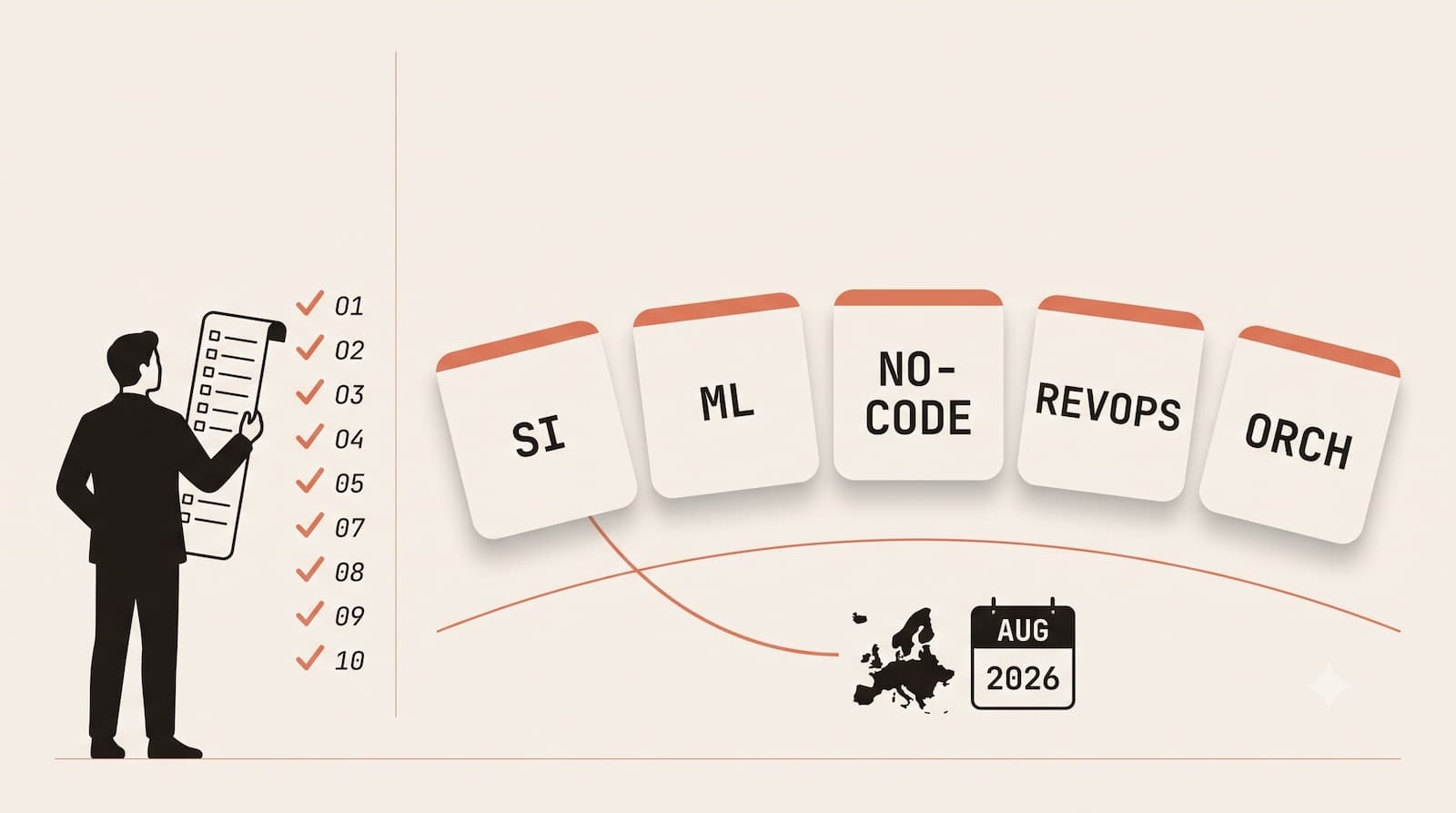
If you have customers in the EU, the clock is ticking. The EU AI Act compliance deadline is August 2, 2026, just months away.
This introduces a massive regulatory conflict:
GDPR: "Delete personal data immediately when the purpose ends."
EU AI Act (Article 19): "Retain audit logs and technical documentation for up to 10 years."
If you build this yourself, you need an architecture that separates PII (auto-delete) from audit traits (long-term retention).
The Cost of Getting It Wrong:
GDPR Penalty: Up to €20M or 4% of global turnover.
EU AI Act Penalty: Up to €35M or 7% of global turnover for prohibited AI practices.
For a €10M ARR company, non-compliance exposure is ~€700k. A platform with EU Data Residency (AWS Frankfurt) and automated compliance reporting is the cheapest insurance you can buy.
Real-World Pricing Scenarios
To provide transparency, here is what a typical "Growth" Scale-Up (Series A/B, 20 engineers, 5M requests/month) actually spends with PromptMetrics.
The "Growth" Breakdown:
Component | Cost Driver | Monthly Cost Estimate |
Platform License | Team Workspace (collaborative features) | €300 |
Ingestion | 5M requests (Metered Trace Volume) | €1,500 |
Retention | 30-day hot + 90-day cold storage | €800 |
Compliance | EU Residency + Automated PII Redaction | €400 |
TOTAL | ~€3,000 / month |
Note: This includes unlimited seats per workspace, so you don't pay extra to add your Product Manager or Compliance Officer. The effective ingestion rate here is €0.30 per 1k requests, which aligns with our standard range of €0.30 to €2.00 depending on volume.
5-Minute Architecture Audit
Do you have a cost problem right now? Check your current setup:
[ ] Do you log full prompts and responses to Datadog or Elasticsearch?
[ ] Do your logs include high-cardinality tags (user_id, session_id)?
[ ] Is your log retention set to >7 days for everything?
[ ] Do you run LLM-as-a-judge evals on >10% of production traffic?
[ ] Can you answer "Which prompt template costs the most?" in <5 minutes?
If you checked "Yes" to 3 or more, you are likely wasting €30k–€200k/year on the "Observability Tax."
Stop Flying Blind
The most expensive cost in AI isn't the software you buy, it's the waste you don't see.
What's Your Next Move?
Exploring: Calculate your current waste → (No email required)
Evaluating: Start for free → (5k traces/month, no card)
Buying: Book a 20-min ROI demo → (We'll build your CFO deck)