

For years, "prompt engineering" meant manual tweaks, personas, and tone hacks. For teams operating at scale under EU compliance timelines, that era is rapidly coming to an end.
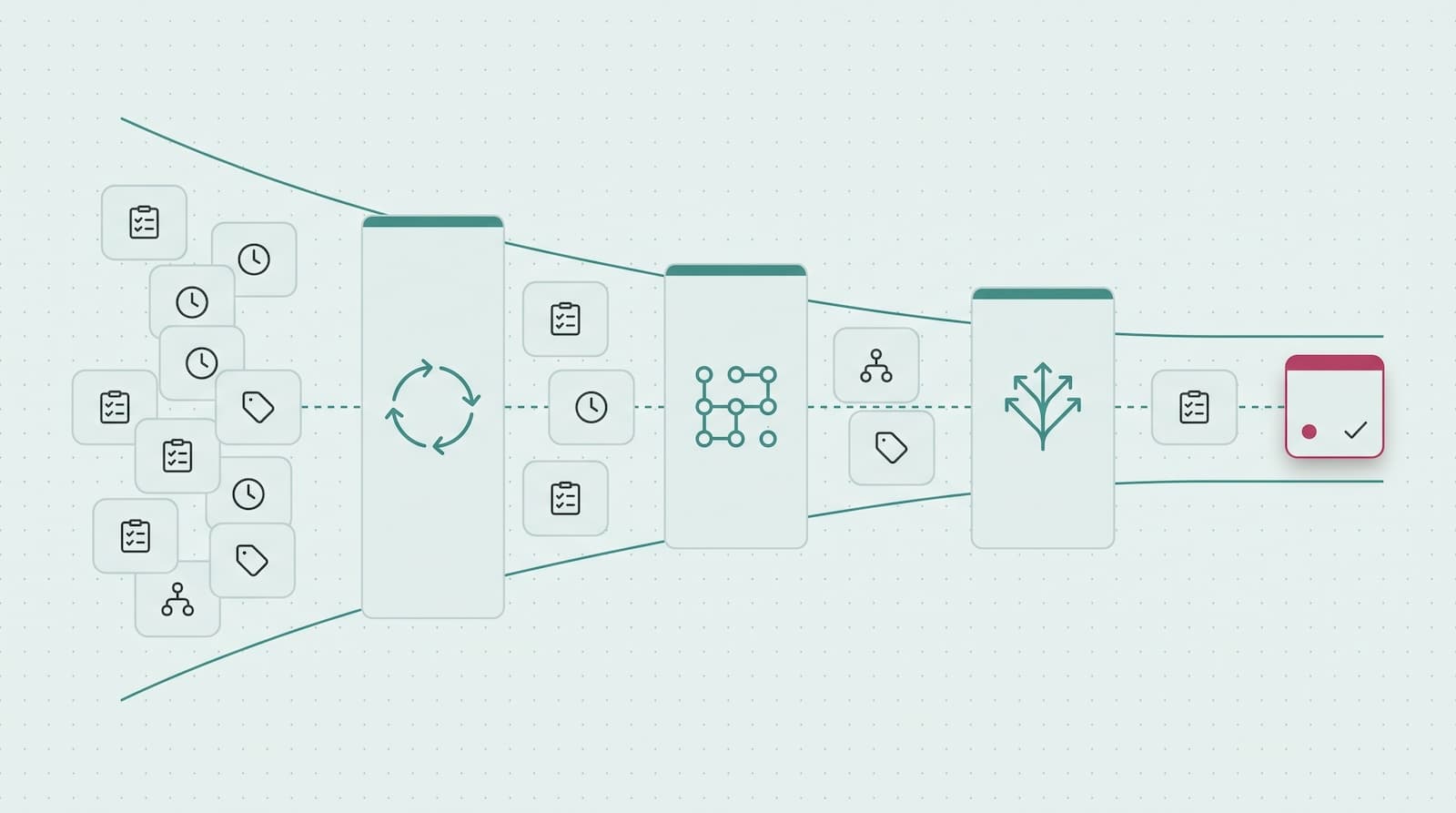
Modern high-performing teams now treat LLM apps like distributed systems:
Algorithms instead of handcrafted instruction novels (prompt compilation).
Routers instead of direct model API calls.
Evaluations instead of static pre-release checks (continuous semantic monitoring).
Governance generated from runtime traces instead of docs written at audit time.
That shift dictates who succeeds under real load, budget pressure, and looming compliance deadlines.
Failure modes we see most in production:
Context evaporation: Massive tool definitions and long histories loaded on every call cause models to "forget" the primary objective.
Degraded adherence: As context windows grow and become more complex, the model's ability to strictly follow formatting and behavioral constraints drops sharply.
Pattern #1: Control Planes Over Prompt Chaos
The most important architectural move today is centralizing inference through an orchestration or control plane.
With Anthropic commanding a reported 40% share of enterprise spend (not consumer, compared to OpenAI's 27% (per the Menlo Ventures mid-year 2025 update), relying on a single vendor is a massive risk. Multi-model routing has become critical.
The Architecture Fix
Force all production inference through a single gateway layer defined by a strict "Control Plane Contract." Your gateway should capture and evaluate:
Inputs: Raw prompt, context payload size, user tier, and workflow ID.
Routing: Model target (e.g., Claude 3.5 Sonnet vs. local model), fallback sequence, and assigned budget.
Reason-codes: Define exactly why a route was chosen. Steal this baseline list: cost-tier-downgrade, latency-slo-override, risk-high-flagged, tool-call-required, context-budget-exceeded, provider-outage-fallback.
Logs: Make your contract tangible by standardizing your routing records:
JSON
{
  "timestamp": "2026-02-28T10:00:00Z",
  "workflow_id": "wf-invoice-parse",
  "tier": "standard",
  "model_selected": "claude-3.5-sonnet",
  "reason_code": "tool-call-required",
  "context_tokens": 4050
}
Hardware: Don't ignore local inference. Reported benchmarks show that modern 2-bit quantization (IQ2) can enable 30B-parameter models to run at 100 tokens per second on consumer GPUs—though this is highly hardware- and kernel-dependent. Always measure your traffic and set a baseline.
Pattern #2: Prompt Governance = Algorithmic Compilation, Not Human Intuition
The old model of prompt governance—patching edge cases by appending increasingly specific constraints until prompts become a contradictory, fragile mess—is an anti-pattern.
The most significant evolution in prompt engineering is Automated Prompt Optimization (APO). The best teams use frameworks like DSPy and GEPA to compile prompts algorithmically. In this paradigm, prompts become parameters optimized against a golden dataset and an evaluation function in CI. You compile prompts the same way you compile code.
The Playbook
Stop manually guessing what a model wants through trial and error.
Define your evaluation metrics and let an optimizer compile the optimal prompt against your specific success criteria.
Expect measurable improvements; algorithmic compilation routinely boosts tasks like code agent performance by 4% to 8% over human-written baselines.
If prompt edits are not versioned, tested, and compiled like code, production drift is guaranteed.
Pattern #3: Silent Regression Detection as a First-Class SRE Concern
Traditional monitors don't catch semantic quality collapse. You can have healthy p95 latency and 200 OK responses, yet still ship broken outcomes to users.
It is time to transition from "vibes-based" manual spreadsheet evaluations to rigorous Semantic Unit Testing within your CI/CD pipelines using LLM-as-a-judge.
Core Metrics to Adopt (Start with these initial defaults):
Validity: % Schema-Valid Outputs (hard floor for JSON/structured data adherence).
Groundedness: Minimum acceptable score (e.g., >0.85) against your golden set.
Drift: Delta Alert Threshold to trigger PagerDuty if prediction confidence distributions shift by more than 10%, sprint-over-sprint.
Cost: Cost per Successful Task (not just cost-per-token, but the true cost to achieve a verified outcome).
Uptime is necessary, but correctness drift is where user trust dies.
Pattern #4: RAG vs Fine-Tune + Context Budgets
Context evaporation and massive payloads are exactly what burn startup budgets. Even as token prices fall, waste compounds rapidly.
The Golden Rule: Use RAG to supply facts; use fine-tuning to enforce behavior when prompts + validation can't. Mixing these two is a primary driver of wasted spend and context bloat.
How to Implement This
Remove formatting rules from your retrieval context payloads immediately.
Lazy-load your tool registries. Using the Model Context Protocol (MCP) reduces initial context overhead by up to ~85%.
Enforce maximum prompt-size budgets by workflow to prevent runaway concurrency costs.
A team that meticulously controls context payloads will routinely outmaneuver teams that chase cheaper API rates.
Pattern #5: Multi-Agent by Contract, Not by Hype
Multi-agent orchestration improves throughput and specialization, but only when strict boundaries are enforced. Without contract-based handoffs, you suffer context contamination, contradictory actions, and compounding hallucinations.
The Architecture Fix
Isolate: Strictly separate your planner, retriever, executor, and reviewer agents.
Type: Pass structured payloads between agents, never free-text dumps.
Track: Ensure all intermediate outputs carry the provenance metadata of how they were generated.
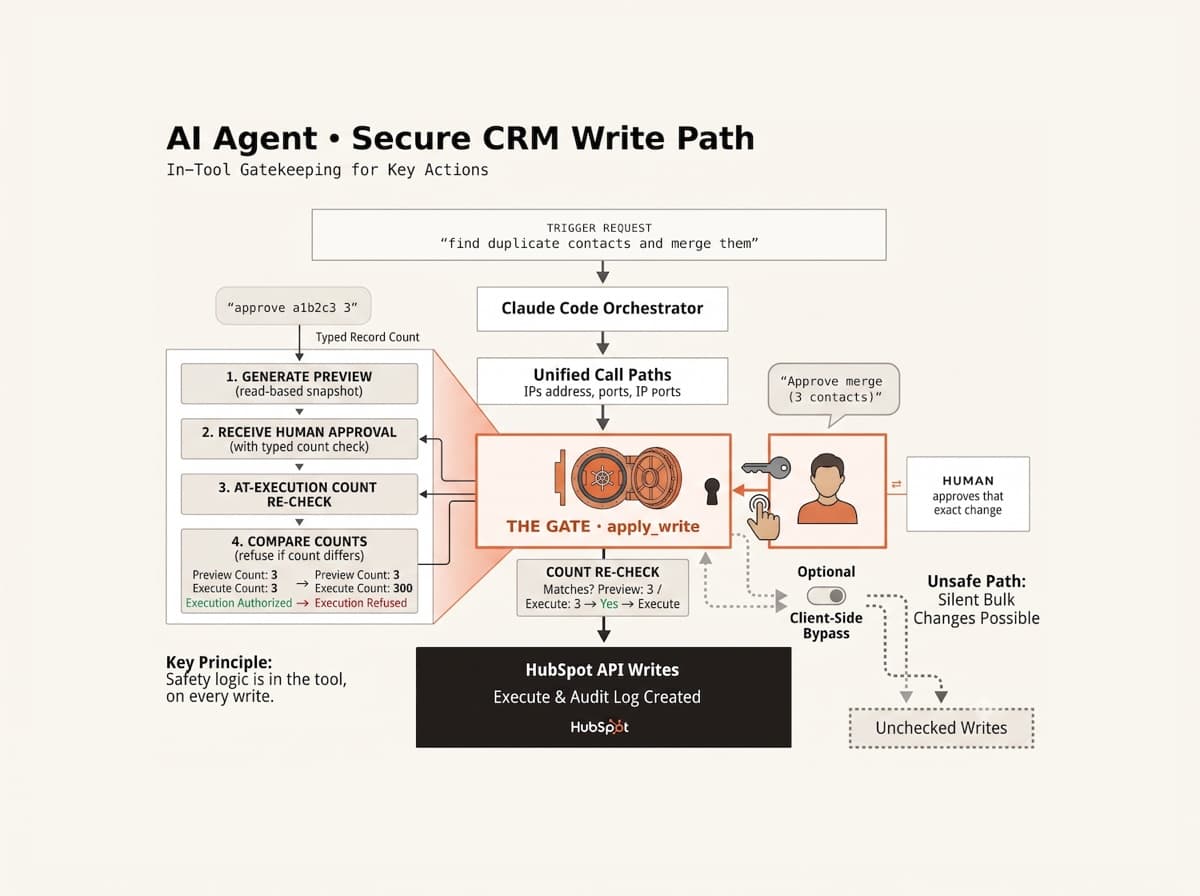
Gate: Mandate an explicit review step before any external action (like sending an email or updating a database) is executed.
The best multi-agent stacks feel boring because every single component relies on explicit input/output contracts.
Pattern #6: Engineering-Led EU AI Act Readiness
For EU teams, governance cannot be deferred to legal review. The European Commission already missed the February 2026 deadline for Article 6 guidelines, leaving policy ambiguity in its wake.
However, the critical enforcement cliff for Annex III high-risk systems is August 2, 2026. Engineering teams need evidence-ready operations built directly into the runtime today.
The Compliance Playbook
Log: Capture all retrieval calls immutably. Under Article 6(3), your ability to argue non-high-risk exemptions (or to pass audits) collapses without runtime evidence.
Capture: Record model versions, contexts, and policy checks dynamically at inference time.
Trace: Ensure human overrides include actor identity and precise timestamps.
Generate: Build pipelines to auto-create your compliance documentation directly from these runtime traces.
80/20 Execution Plan for Seed–Series A Teams
Week 1 — Stop the bleeding & capture the baseline
Gateway: Put all LLM calls behind a control plane.
Observability: Instrument basic tracing (this is the foundation for your golden datasets).
Caching: Set up a Redis-backed semantic cache (teams report 20-40% hit rates for high-repeat workloads; measure on your traffic and set a baseline).
Limits: Enforce environment-specific keys and daily spend caps.
Month 1 — Build stability loops
Baselines: Establish "Golden Datasets" with CI/CD gates based on the RAG Triad.
Evals: Stand up continuous semantic monitoring on sampled production traffic.
Alerts: Instrument drift alerts targeting schema conformance and confidence distributions.
Context: Lazy-load tools using MCP to slash overhead.
Quarter 1 — Become governance-ready
Risk: Classify all AI workflows against the August 2026 Annex III deadlines.
Audit: Add immutable decision and override trails for Article 6(3) compliance.
Routing: Fully automate model selection based on real-time cost/latency SLOs.
Reporting: Publish one executive scorecard tracking value, risk, and control health.
What This Means Strategically
The winning posture in 2026 is not "best model." It is the best-operated system.
You're not buying intelligence; you're operating a probabilistic production substrate under strict cost and compliance constraints. That requires orchestration discipline, algorithmic prompt governance, automated quality control, and rigorous evidence gathering.
Nail those four, and every new model release becomes an immediate advantage. Miss them, and every model update is a new source of critical instability.
At PromptMetrics, this shift from "vibes-based" evaluations to strict semantic monitoring is exactly what we spend our days building. Let's get your production environment more governance-ready before August.