
Most AI teams are no longer failing because their models are weak. They're failing because their production systems are fragile.
Think "one uncapped agent loop + bank holiday = surprise €8k bill." That's where the money goes—and where incidents and audits start.
For EU startups running €2k–€50k/month in LLM spend, the baseline has shifted. In 2025, the goal was to prove that an AI feature could work. In 2026, the goal is to prove it can be operated reliably.
Based on recent interviews with EU startup engineering leaders and analysis of live deployments, the teams that have survived past pilot mode are moving away from raw prompt hacks. They're standardizing around controlled costs and measurable quality—and the things that keep you up at 3 am, like that one flaky agent and the next compliance audit.
Here is the operator playbook for what to ship this quarter.
Best Pattern #1: Route Everything Through a Gateway
Direct provider calls embedded in application code are a massive liability—you can't change your mind about models without touching half the codebase. Every time we found routing sprinkled through app code, we also found a graveyard of slightly different prompts and spend rules across services.
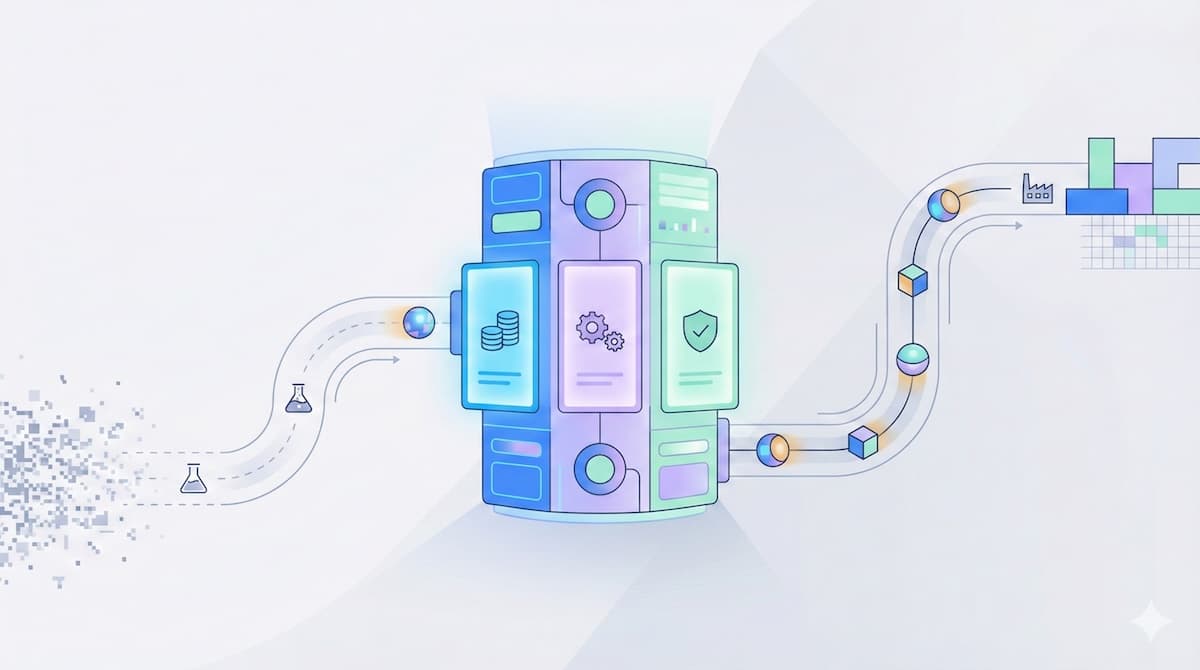
The highest-performing teams route all traffic through a centralized gateway or control plane.
(Note: This can be as simple as a small internal service that proxies all LLM calls today; you don't need to adopt a full-blown vendor on day one. Yes, it adds a few milliseconds of latency, but the control is worth it.)
What to copy this week:
Define routing tiers: Instead of hardcoding models, categorize requests by intent and budget.
Fail fast on budget ceilings: Implement hard cutoffs when spend limits are hit. Do not let costs slide.
Enforce a single path to production: Centralize model routing, semantic caching, and guardrails. Here's a minimal policy-style config for how that might look in a homegrown gateway:
YAML
routes:
- intent: "summarize_internal_docs"
primary: "gemini-3.0-flash"
fallback: "claude-3-haiku"
cache_ttl: 3600
max_budget_daily: 15.00 # EUR, fail fast if breached
- intent: "complex_customer_support"
primary: "gemini-3.1-pro"
fallback: "gpt-4o"
max_retries: 2
Best Pattern #2: Evaluate Live Traffic, Not Just Static Datasets
Static pre-release evaluations are necessary, but they aren't enough. Static evals kept passing green while users quietly hit edge cases that the test set never covered. Systems drift in production as user behavior, retrieval contexts, and external tool dependencies shift.
What high-performing teams do:
Score continuously: A simple starting target is to score 5–10% of production traffic using a simple rubric (Correct / Partial / Incorrect is enough to start). And yes, running LLMs to evaluate LLMs costs tokens. Consider it an insurance premium against waking up to a broken workflow nobody noticed for two weeks.
Isolate components: Evaluate retrieval quality, tool selection, and policy compliance separately.
Alert at the component level: Set an alert to fire when "Incorrect" responses exceed a threshold for any specific component. When quality drops, you need to pinpoint a retrieval failure immediately, rather than spending two sprints debating hallucinations when it was the retriever all along.
Best Pattern #3: Track Cost Per Outcome, Not Token Totals
Token pricing tables are a commodity. They are not your unit economics.
Teams in the €2k–€50k bracket consistently burn budget on predictable mistakes: oversized context windows for simple tasks, redundant queries, and uncapped agent loops. In one team's postmortem, roughly 70% of a surprise €7k bill came from a single, runaway agent.
We've seen teams ship a "smart" agent that calls three tools, loops until it's "confident," and has zero guardrails on max iterations. That's not smart. That's a blank check.
What to copy:
Track cost per resolved task: Connect optimization directly to business value. Pick a unit your CFO cares about: ticket resolved, lead qualified, document shipped.
Implement semantic caching: Set clear similarity thresholds and TTL policies (for example, ~0.85 cosine similarity and 24–72h TTL for non-time-sensitive work). Teams doing this effectively are chopping double-digit percentages off their redundant token spend.
Cap fanout: Strictly limit tool-call iteration depth and retry loops.
Isolate environments: Use separate API keys with hard, daily spend limits to prevent non-prod traffic from hitting paid infrastructure.
Best Pattern #4: Treat Prompt Injection as a Runtime Reliability Issue
Security cannot be a post-processing afterthought. And it's not just a filter. It must be an architectural layer.
This is critical for agentic systems, where a single successful injection can trick an LLM into executing unauthorized downstream actions. The best agentic architectures layer their defenses: gateway-level input filtering, strict, scoped permissions for all external tools, continuous monitoring of generated content, and aggressive data minimization so that models never touch secrets they don't explicitly need.
What to copy this week:
First thing to copy: Lock down tool permissions to the least privilege and log every tool call with the prompt that triggered it.
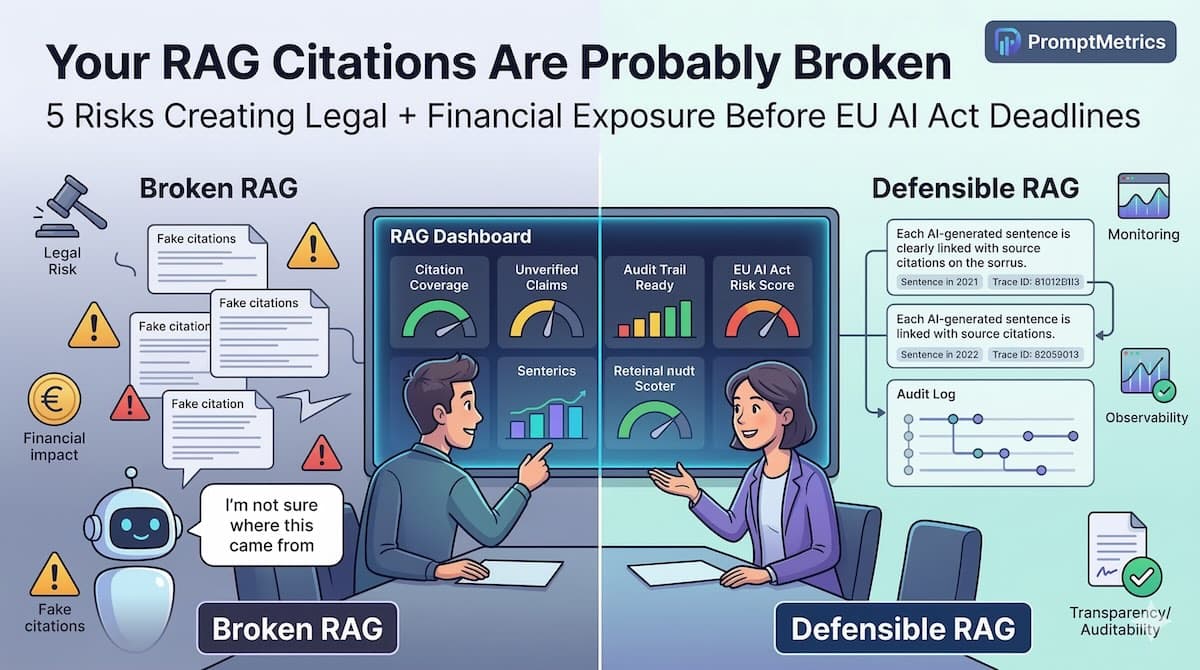
Best Pattern #5: Build Compliance Evidence into the Traces
The EU AI Act Reality Check (Updated Feb 2026)
Let's address the elephant in the room: The Digital Omnibus on AI proposed in November 2025 might delay the high-risk compliance deadline by up to 16 months.
But remember, it's still just a proposal. If it slips or gets bogged down in Brussels, the original August 2026 deadline technically remains in effect, even if enforcement is chaotic. Using that potential delay to pause governance engineering is a trap. Teams that treat compliance documentation as a manual, end-of-quarter afterthought are losing massive velocity, and their enterprise sales motions are stalling in procurement.
Here's how that regulatory reality translates into engineering work. You need a system that can explicitly explain what happened, why it happened, and who approved it. In the EU market, this is no longer just legal overhead—it is core shipping infrastructure.
What to copy:
Auto-generate lineage: Derive decision lineage and compliance evidence automatically from runtime traces.
Log the overrides: Store policy-check outcomes and human-in-the-loop overrides per decision.
Make it immutable: Use append-only logs for high-impact or sensitive workflows.
The 80/20 Execution Plan for Seed–Series A Teams
Week 1: Stabilize Control
Turn off all direct OpenAI/Anthropic/Gemini calls from app code (or whichever providers you're using) and point them at a single internal gateway endpoint. Behind that gateway, you can still hit any provider you want. Split keys by environment and enforce daily spend caps.
Month 1: Stabilize Quality & Cost
Launch sampled production evaluations and turn on semantic caching. If you don't know the cost per resolved ticket or use case by the end of Month 1, your observability isn't wired yet.
Quarter 1: Stabilize Governance
Risk-classify your workflows and start auto-generating compliance evidence from your logs. If your execs can't see an AI scorecard next to their usual revenue and churn charts—cost per outcome, error rate, incident count, and a simple quality trend—you're still in science-fair mode.
The startups pulling ahead right now aren't winning because they have a better prompt. They are winning because they made their AI systems predictable.
Build your AI so that when finance or compliance asks "what did it do and why," you can pull it up in one query, not a week of log archaeology.
If you can't do that today, that's your Q1 architecture goal.