
Key Takeaways
Decentralized prompts aren't a tooling gap. They're product logic hiding as strings in your codebase, and that mismatch is what causes the blame.
High-risk AI obligations under the EU AI Act become enforceable August 2, 2026 , with penalties up to €15 million or 3% of global turnover ( European Commission AI Act Service Desk ). If you can't show who approved a prompt change, that's the gap.
The fix isn't a tool you buy. It's a governance pattern, one workflow with one human approval gate, that we build with your team instead of selling you a shortcut.
It's 9:40 on a Tuesday. Your Head of Product pings you directly, not a channel: "The bot told a customer to delete their account data as a troubleshooting step. Did anyone touch the support prompt?"
You didn't. You check anyway. Git shows nothing in eleven days. The prompt is still a string sitting inside support_ agent.py , exactly where it was last sprint.
Someone changed it. It just wasn't in the place anyone would look.
That's the moment we keep hearing about from founders and ops leads running lean teams: not a hallucination problem, not a latency problem, a who-touched-this problem . Nobody owns the prompt. Everybody can edit it. And when it breaks, three people have three different stories about what it was supposed to say.
Why this keeps happening
It's not because your team is careless. It's because of one wrong assumption: we're treating prompts like code when they're actually product decisions.
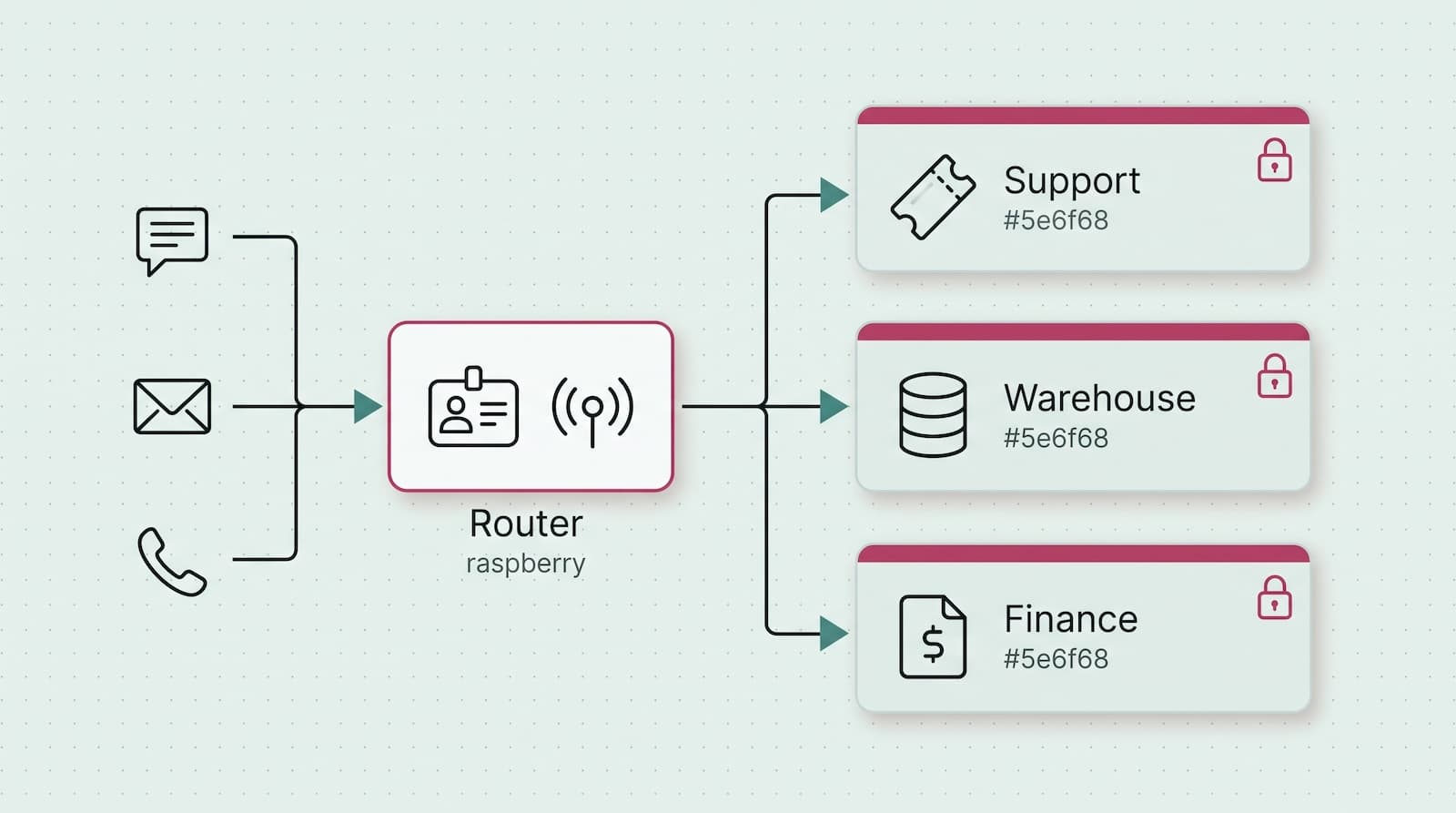
A prompt is a policy. It decides what your AI will and won't say to a customer, a candidate, a patient. But it's stored like a config value: a string in a Python file, copied into three services, edited by whoever's closest to the keyboard when something breaks.
That produces three specific failure modes, and if you've built with LLMs for more than a quarter, you've lived at least one of them:
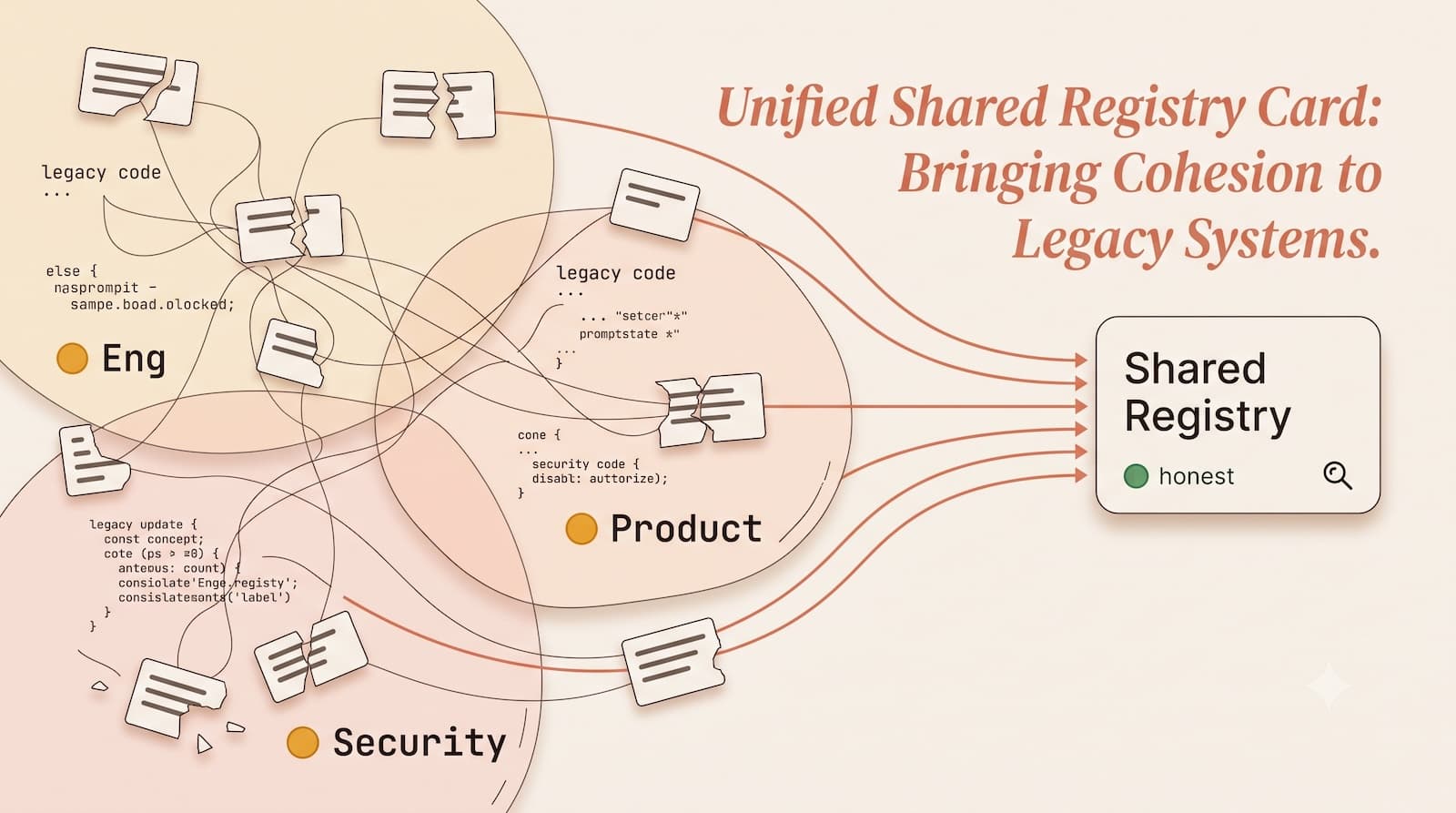
The telephone game. Someone drafts the intent in a doc. Someone else translates it into code. By the time it's in production, the doc and the code have quietly diverged, and nobody notices until a customer does.
The grep nightmare. Before you can fix anything, you have to find it. Run grep -r "system_prompt". in your own repo right now. If you get more than a handful of hits scattered across services, you already have this problem. You just haven't been burned by it yet.
The shadow work. A one-line wording fix shouldn't need a full deploy cycle. But if the prompt lives in code, it does: PR, review, CI, deploy, for a sentence.
None of this is a skills problem. It's an architecture problem, and it's the same one we walk into on almost every AI implementation we do.
The fix isn't a tool. It's a role split.
We're not going to tell you to buy a prompt registry. Plenty of vendors will sell you that, and a few of them are fine products. What actually resolves the blame game is simpler than buying anything: separate who owns the words from who owns the release, and put a human between every prompt change and production.
That's it. That's the whole architecture. Three things need distinct owners:
Content. Whoever understands the customer (usually Product, sometimes the founder) should be able to edit and test a prompt without touching a line of code.
Release. Engineering controls what actually reaches production. Product can iterate freely in a staging environment; nothing ships without a review step.
Audit. Someone, even if that someone is you wearing your third hat this week, can answer "who changed this, when, and why" in minutes, not by reconstructing it from memory and old Slack threads.
Whether that separation lives in a $20/month tool, a spreadsheet with version history, or a proper registry depends on your stack and your risk level. We don't default to the same answer for every client. The pattern matters more than the product:
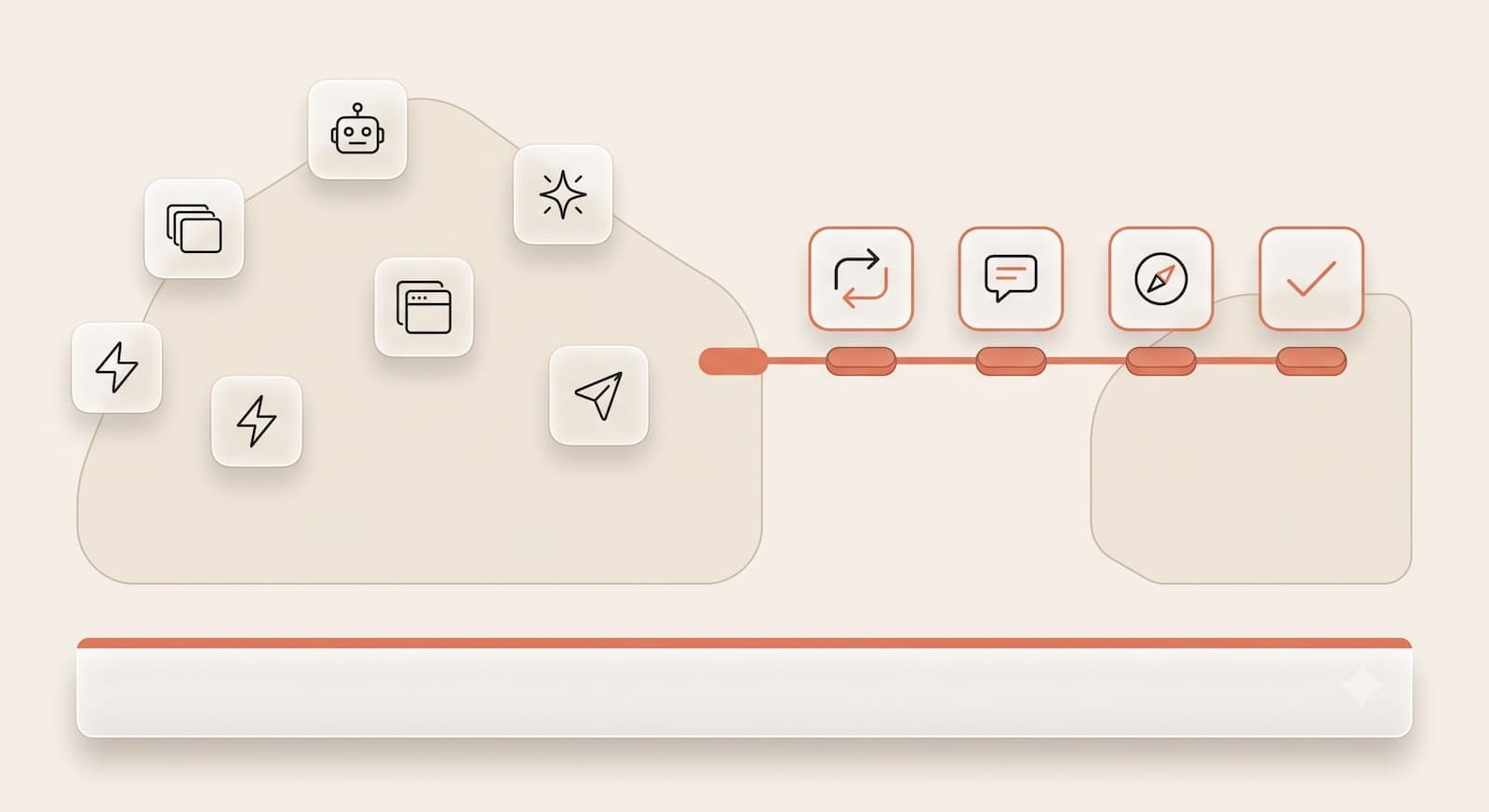
The shape of it, regardless of tool:
Prompts are fetched or loaded from a versioned source, not hardcoded.
A human-approved "production" label gates what actually runs.
Every version change is logged with who and why.
If your engineering team is worried about adding a runtime dependency, that's a fair worry, and it has a fair answer: bake prompts into your build at deploy time instead of fetching them live. You keep your normal PR workflow and your version history in Git, and you never introduce a single point of failure in production. We pick whichever pattern fits the client's actual resilience requirements. We don't sell the same architecture to everyone.
Where compliance actually fits: not a 10-minute report, a paper trail from day one
Here's the part most teams underbuild: obligations for high-risk AI systems under the EU AI Act become enforceable August 2, 2026 , with penalties reaching €15 million or 3% of global turnover, whichever is higher ( EU AI Act Service Desk ). That date isn't far off, and "high-risk" catches more categories than most teams expect: anything touching credit, employment, healthcare guidance, or safety-relevant decisions.
We won't tell you we can hand you a compliance report in ten minutes. We haven't measured that in a real client environment, and we're not going to invent a number to sound impressive. What we will say honestly: if the audit trail is built in from the first prompt change, the report is just an export. If it's bolted on after the fact, it's an archaeology project through six months of Git history and Slack.
Every approval gate, every "who changed this and why" log, is not a compliance checkbox for us. It's the same principle behind everything we build: the human stays in charge, and the system proves it. That's not a feature we added because a lawyer asked for it. It's the reason we build implementations this way in the first place.
How we'd actually roll this out with you
We don't sell a fixed rollout plan, because your riskiest prompt and your riskiest customer aren't the same as anyone else's. But the sequence we use with clients maps directly onto how we work:
Stage | What happens | What you get |
|---|---|---|
A free discovery conversation. We map your actual workflows and find the highest-friction one, usually not the one that feels most urgent. | A plan you can act on, not a slide deck you can't. | |
One workflow, one governed skill, built with your team in 1–2 weeks. Low-risk prompt first: an internal summarizer, not your customer-facing agent. | A working governance pattern, live, with a human approval step, that any developer on your team can read and maintain. | |
Once the pattern holds, we extend it to 5–10 operators or agents over 4–6 weeks, measured before and after. | Evidence: your numbers and not a benchmark we made up, on what changed. |
If that sounds slower than "install our SDK and you're done," that's deliberate. We measure your baseline before we touch anything, because a number we didn't measure in your environment isn't a number we're willing to put in front of you.
What this is actually costing you: run your own math
We're not going to hand you a formula with a made-up dollar figure attached to it. What we will give you is the formula itself, so you can run it on your own numbers:
(Engineer hours spent on prompt text edits × your loaded hourly rate) + (estimated token waste from unreviewed, bloated system prompts)
In our experience, teams consistently underestimate the second number more than the first. A prompt nobody has re-read in six months is usually carrying dead instructions that cost tokens on every single call. You won't know your real number until someone actually measures it. That's most of what a First Skill Sprint does in week one.
FAQ
Is a prompt registry the same thing as AI governance? No. A registry is one possible tool. Governance is the role split: who owns content, who owns release, who owns the audit trail, plus a human approval gate before anything ships. You can build that with a registry, a spreadsheet, or a lightweight internal tool. The pattern is what matters, not the SKU.
Do we need to worry about the EU AI Act if we're not in the EU? If any of your customers, employees, or decisions touch the EU, quite possibly. Obligations for high-risk systems are enforceable from August 2, 2026 ( European Commission ). The safest move is figuring out now whether any of your AI-touched workflows fall into a high-risk category, not after an audit request lands.
What's the fastest way to know if we have this problem? Run grep -r "system_prompt". (or your language's equivalent) in your codebase. More than a handful of scattered hits across services means the architecture problem already exists. You just haven't felt the cost yet.
Can we fix this ourselves without hiring anyone? Often, yes, for the first workflow. The role split above doesn't require new headcount, just a decision about who owns what. Where teams get stuck is doing it consistently across every agent once there's more than one. That's usually where a build-with-you engagement earns its cost.
The version that actually holds up
Decentralized prompts aren't a tooling problem you buy your way out of. They're an ownership problem, and ownership problems get solved by deciding, clearly and in writing, who owns the words, who owns the release, and who can prove what happened when something goes wrong.
That's the same governance layer, human-approval-gated, that we build into every implementation, whether it's a support agent, an internal skill, or something touching a regulated decision. Not because it's the safe answer to give a lawyer. Because the human staying in charge of the work is the actual point of building any of this in the first place.