
You've been there. It's 2 PM, and a customer support agent just hallucinated a refund policy that doesn't exist.
The engineering team is scrambling. Was it the model update? Did a PM change the system prompt in the codebase? Did a change to the RAG retrieval top_k? Does setting dilute the context?
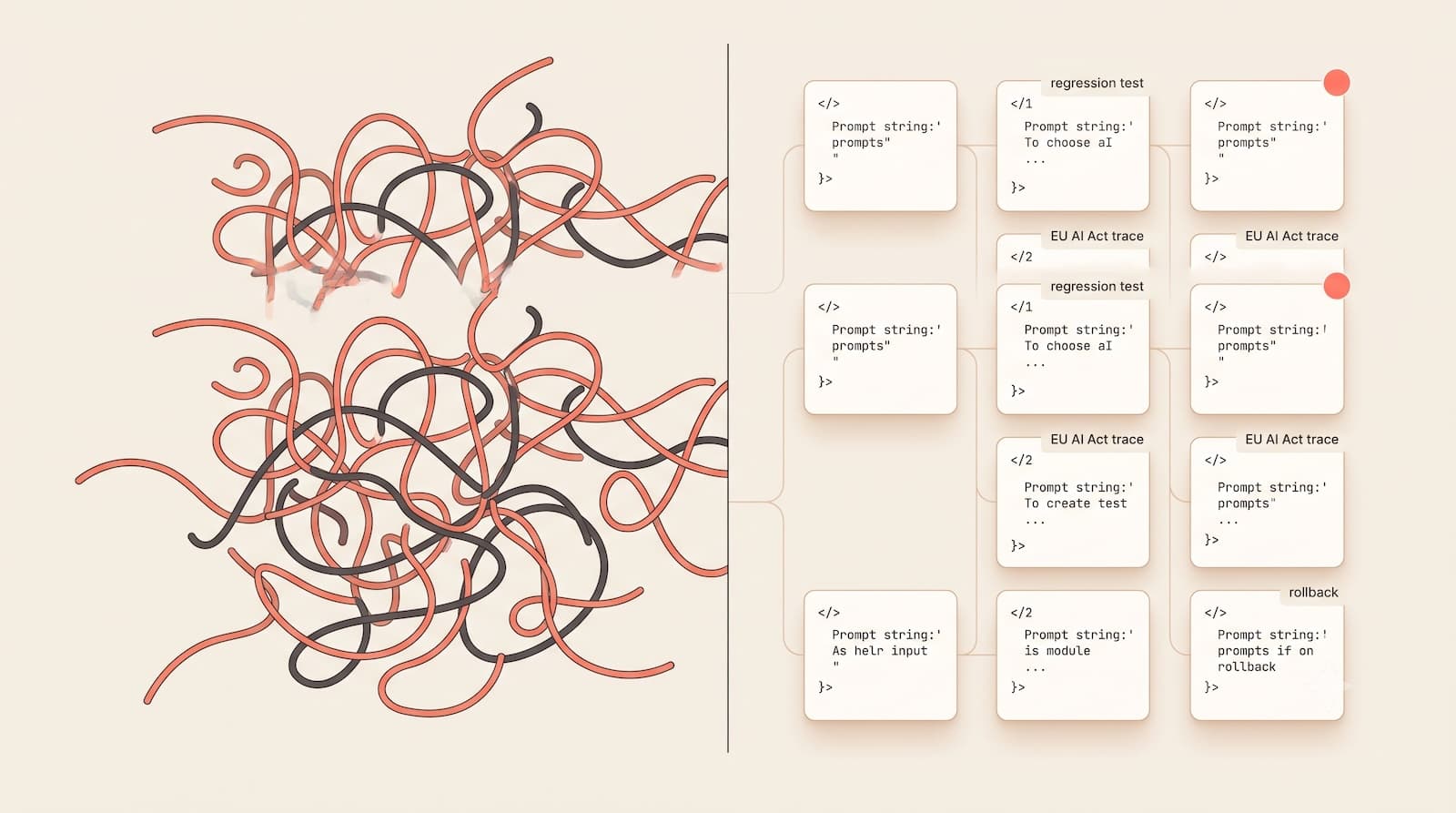
Because the prompt is hardcoded as a string in your Python app, you can't rollback instantly. You have to redeploy the entire service.
This is the "GenAI Divide." Organizations that succeed have stopped treating prompts as creative writing exercises. They treat them as production software components.
This is the operating framework for Prompt Engineering as Code (PEaC), the control plane that turns stochastic AI chaos into a reliable, versioned, and governable engineering discipline.
The Problem: The Collapse of Determinism
For the last 30 years, your job as a CTO has been to manage deterministic systems. If input A + code B = output C today, it would equal output C tomorrow.
LLMs broke that contract.
Generative AI introduces epistemic uncertainty. You don't fully know why the model answers the way it does. A prompt that works perfectly on Monday might drift on Tuesday because the provider updated weights behind the API.
If you are managing this uncertainty with "magic strings" hidden in your codebase, you are exposing your organization to three massive risks:
Regression Loops: Fixing a prompt for one edge case silently breaks ten others.
Denial of Wallet: Without architectural guardrails, recursive retry logic, or agentic loops, financial vulnerabilities become a reality. A single "runaway" agent can spike bills significantly in a single cycle.
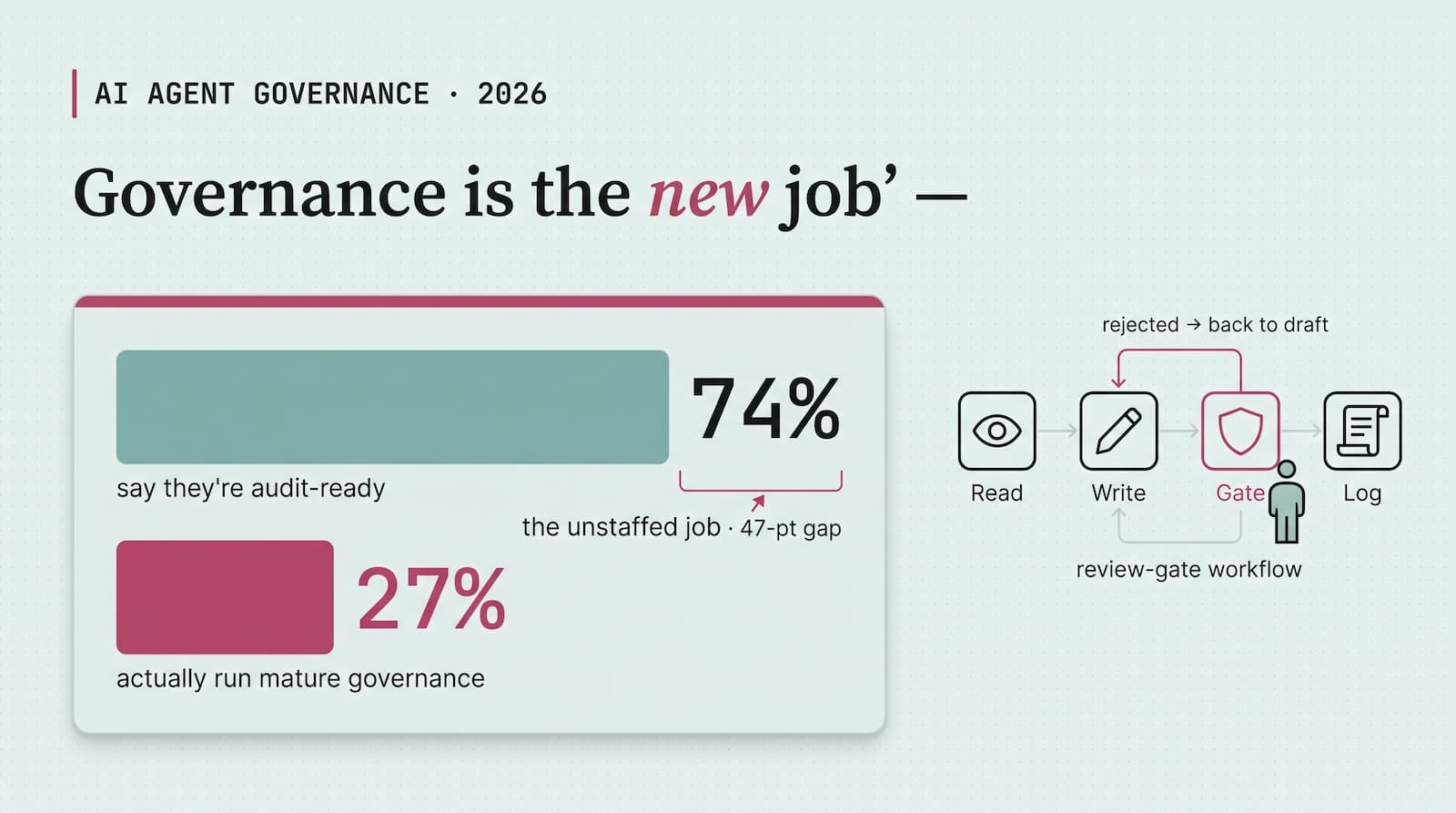
Compliance Failures: For High-Risk AI Systems (e.g., Annex III use cases such as credit scoring or hiring), you must maintain technical documentation and records. If you struggle to trace a specific output back to its configuration, you will struggle to meet record-keeping expectations in practice.
The solution isn't better prompt writing. It has better infrastructure.
What Is Prompt Engineering as Code (PEaC)?
PEaC is the practice of managing prompts as versioned, governable behavior artifacts rather than ad-hoc text strings. A "prompt" in this context is actually a bundle of logic: the text template, the retrieval configuration, the tool contracts, and the evaluation gates required to ship it.
It borrows the rigor of Infrastructure as Code (IaC). Just as you wouldn't manually SSH into a server to change configurations, you shouldn't manually edit prompts in production.
The Request Path
To visualize the control plane, think of the request path not as a direct API call but as a governed pipeline. Crucially, observability encompasses the entire process; logging occurs for every request, including those blocked by policy, to ensure auditability.

The Anatomy of a Prompt Artifact
To make this tangible, here is what a production-ready prompt artifact looks like in YAML format. Note that it encapsulates everything required to reproduce the behavior, including RAG settings, tool schemas, and evaluation rubrics.
YAML

prompt_id: "customer_refund_policy_v2"
version: "2.1.0"
metadata:
  owner: "support-engineering"
  risk_classification: "high"
  cost_center: "cx-ops"
config:
  provider: "openai"
  model: "gpt-4-turbo-2024-04-09" # Specific snapshot
  temperature: 0.3
  stop: ["User:", "###"]
retrieval:
  index: "knowledge-base-v4"
  reranker: "cohere-rerank-v3"
  top_k: 5
  citation_required: true # Behavior toggle to reduce hallucinations
  filters:
    tenant_id: "{{ tenant_id }}"
tools:
  - name: "check_refund_eligibility"
    description: "Queries the SQL database for order status"
    input_schema_strict: true # Enforces strict schema validation
evaluation:
  metric: "task_success_rate"
  rubric_id: "refund-policy-v2"
  passing_threshold: 0.95
  judge:
    type: "llm-as-judge"
    model: "gpt-4o"
    calibration_set: "s3://evals/refund-judge-calibration.jsonl"
    min_human_agreement_kappa: 0.6
template:
  system: |
    You are a support agent. Use the context below...
    Context: {{ context }}
  user: |
    Customer request: {{ user_query }}
Ordinary Regressions: This Prevents
By defining the entire behavior in one artifact, you prevent the most common "silent killers" of AI reliability:
Retrieval Drift: Caused by undocumented changes to index, top_k, or reranker settings.
Tool Drift: Caused by mismatches between the prompt's tool definition and the underlying API input_schema.
Provider Drift: Caused by routing to generic model aliases (e.g., gpt-4) instead of pinned snapshots.

Implementing the Control Plane
1. The Registry & Gateway: Governed Collaboration
The first anti-pattern to eliminate is hardcoding prompts.
The Fix: Centralize your prompts in a Prompt Registry. Product Managers can draft edits in a UI, but saving a change creates a Pull Request. The application consumes the prompt via the SDK using a Label (e.g., prod, staging), never a raw version ID, ensuring you can hot-swap behavior without code changes.
2. Version Control: Release Engineering for AI
In the probabilistic world of AI, rollback is your most important feature. If a new prompt version degrades performance, you re-point the prod label back to v1.2.0 in the registry.
3. The Operating Model: Who Owns What?
Technology fails without clear ownership. A mature PEaC operating model divides responsibility:
Product Management: Owns the Intent and the Golden Set Labels. They verify the "ground truth."
AI Platform Engineering: Owns the Gateway, Registry, and Eval Pipeline.
Security & Compliance: Owns the Red Team Packs and Audit Readiness.
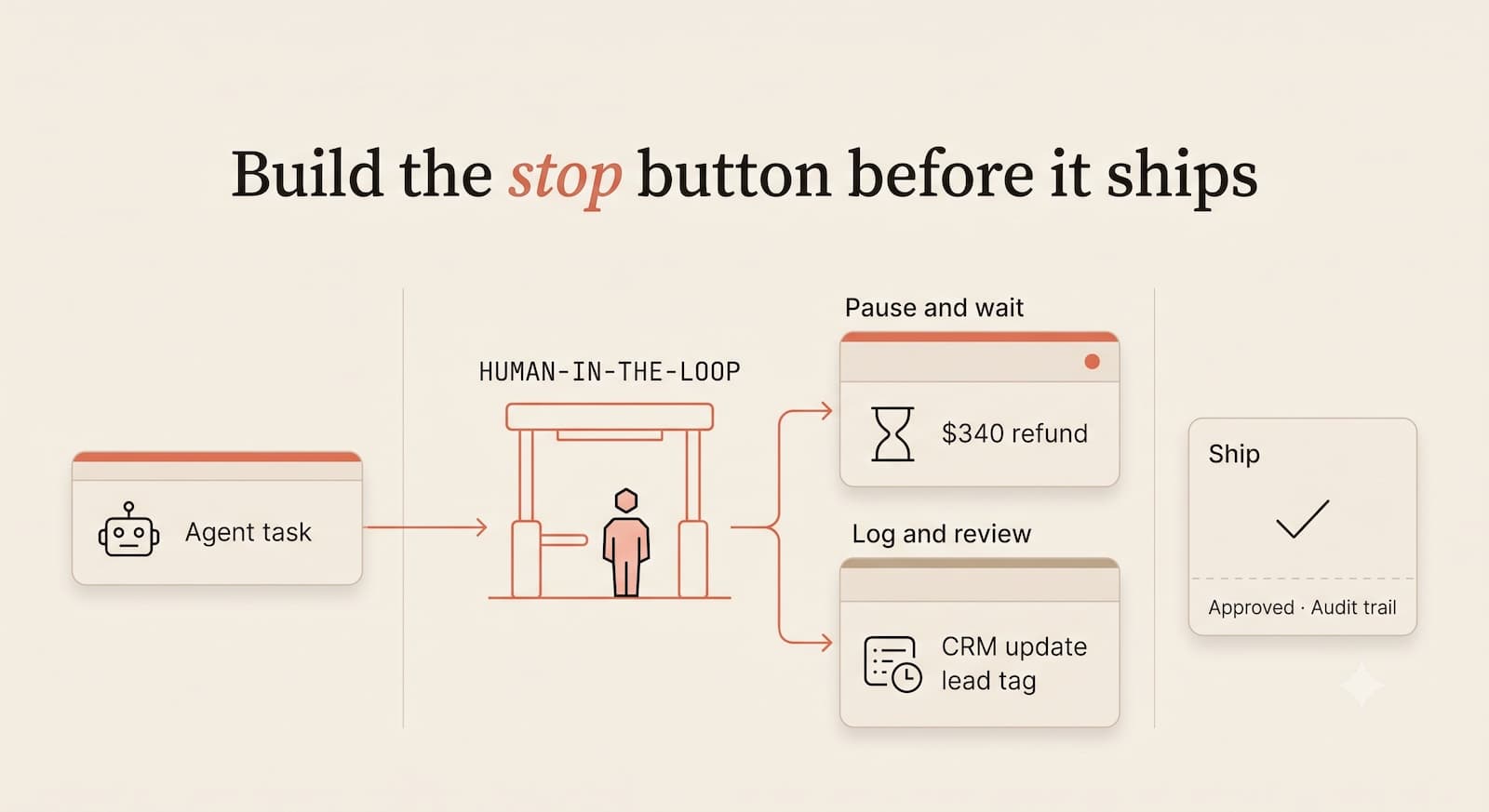
Release Gate: No move to the prod label unless: (1) Golden set passes, (2) Red-team pack passes, and (3) A rollback plan exists.
4. The Evaluation Pyramid
The biggest bottleneck is the reliance on manual "vibe checks." PEaC demands a layered testing strategy.
Unit Tests (Structural): Is the output valid JSON? Does it match the tool schema?
Security as Code: Automated probes for prompt injection, jailbreaking, and PII extraction.
Regression Tests (Semantic): Run the new prompt against the "Golden Dataset."
LLM-as-a-Judge: Use a calibrated model to grade qualitative aspects.
5. FinOps: Defense Against Denial of Wallet
"Denial of Wallet" loops are a genuine availability risk. PEaC integrates Cost Governance directly into the lifecycle using controls you already understand:
Rate Limits & Max Steps: Hard stops explicitly linked to agent loops. If an agent exceeds max_steps, the platform kills the process outside the agent's control plane.
Hierarchical Budgets: Enforce caps at the Organization, Team, and Prompt level.
Anomaly Detection: Use algorithms such as MAD (Median Absolute Deviation) to detect cost spikes.
6. Compliance: Necessary, But Not Sufficient
If you deploy AI systems in the EU, start with risk classification: Annex III lists use cases that are generally treated as high-risk, but classification must still be defensible in your specific context.
For high-risk systems, treat PEaC as a compliance enabler, not a compliance shortcut. It helps you operationalize traceability and controlled change management, but it must sit inside a broader program that covers risk management, transparency to deployers, human oversight, and robustness/cybersecurity.
Traceability Primitives: Version every behavior-relevant input (prompt template, model parameters, retrieval config, tool schemas/permissions, and policy rules) and log enough context to reconstruct why a given output occurred.
Log Retention: Providers must retain automatically generated logs under their control for a period appropriate to the intended purpose and for at least six months; deployers must also retain such logs for at least six months, unless another law requires otherwise.
Human Oversight Evidence: The Act requires effective human oversight; in practice, teams often operationalize this by defining review workflows and measuring reviewer agreement (e.g., IRR) so "oversight" is auditable rather than aspirational.
Measuring Success: The Engineering Scorecard
How do you justify the platform investment? Track these engineering baselines.
Metric | Baseline (The Pain) | Target (PEaC State) | How to Measure |
Regression Escape Rate | High/Unknown. Users report bugs ("bot is broken") after deployment. | < 5%. Regressions caught in CI/CD before merge. | % of PRs blocked by failed Eval gates vs. bugs reported in prod. |
Rollback Time | Hours. Requires full code revert. | < 5 Minutes. Instant label switch in the registry. | Time from incident detection to stable prod state. |
Human Escalation Rate | Variable. Low trust forces high human intervention. | Predictable. Confidence allows automation. | % of interactions requiring human takeover due to low confidence scores. |
The Bottom Line
The transition to AI is an organizational stress test. The teams that survive won't be the ones with the cleverest prompts; they will be the ones with the strongest engineering discipline.
Don't let "magic strings" dictate your production reliability.
Critical Path: Centralize Prompts → Implement Evals → Automate Governance.
Stop flying blind. Start with PromptMetrics today and get full observability in 15 minutes.