
Why CTOs and VPs of Engineering need to stop optimizing prompts and start engineering sovereign AI workflows.
If you are running an EU startup with €2k–€50k monthly LLM spend, the "prompt engineering" phase of your company is over.
In 2023, prompt engineering looked like a leveraged approach. In 2026, treating AI primarily as a text-in/text-out problem is a liability that guarantees three things: collapsing unit economics, brittle products, and a compliance fire drill before the August AI Act deadlines.
The pattern separating scaling startups from stalled experiments is clear: struggling teams treat AI as a "creative" writing task. Leading teams treat it as Sovereign Workflow Engineering, a discipline centered on routing, retrieval, strict data residency, observability, and auditability.
Here are the seven architectural problems separating production systems from expensive prototypes.
The Architecture Shift
Before diving into the problems, visualize the structural difference.
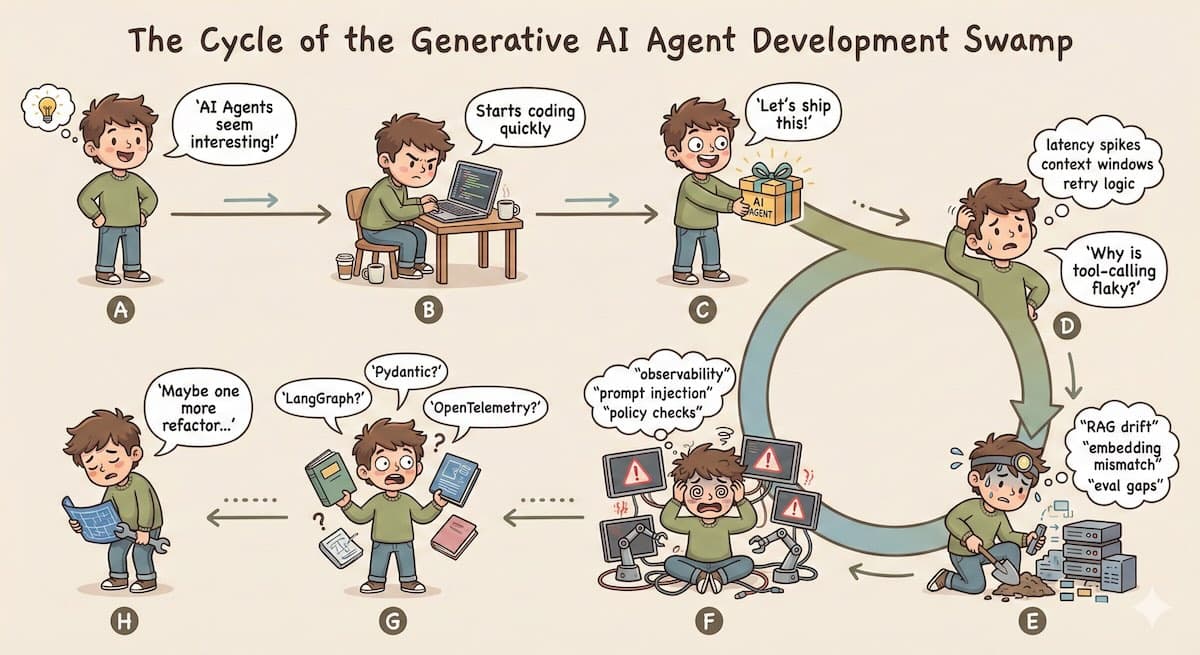
The "Prompt-Only" Trap (2023 Mindset)
Fragile, opaque, and expensive.

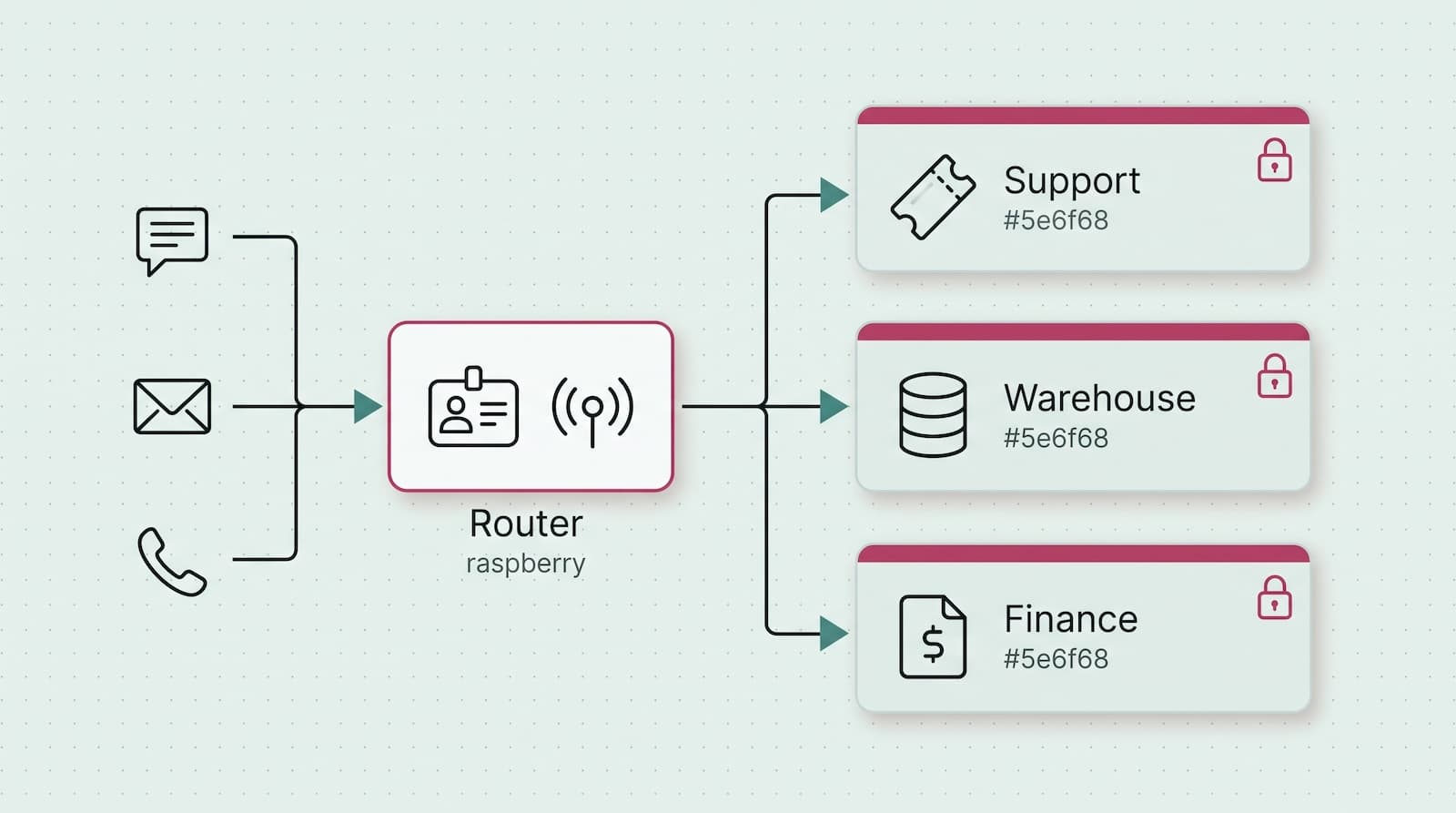
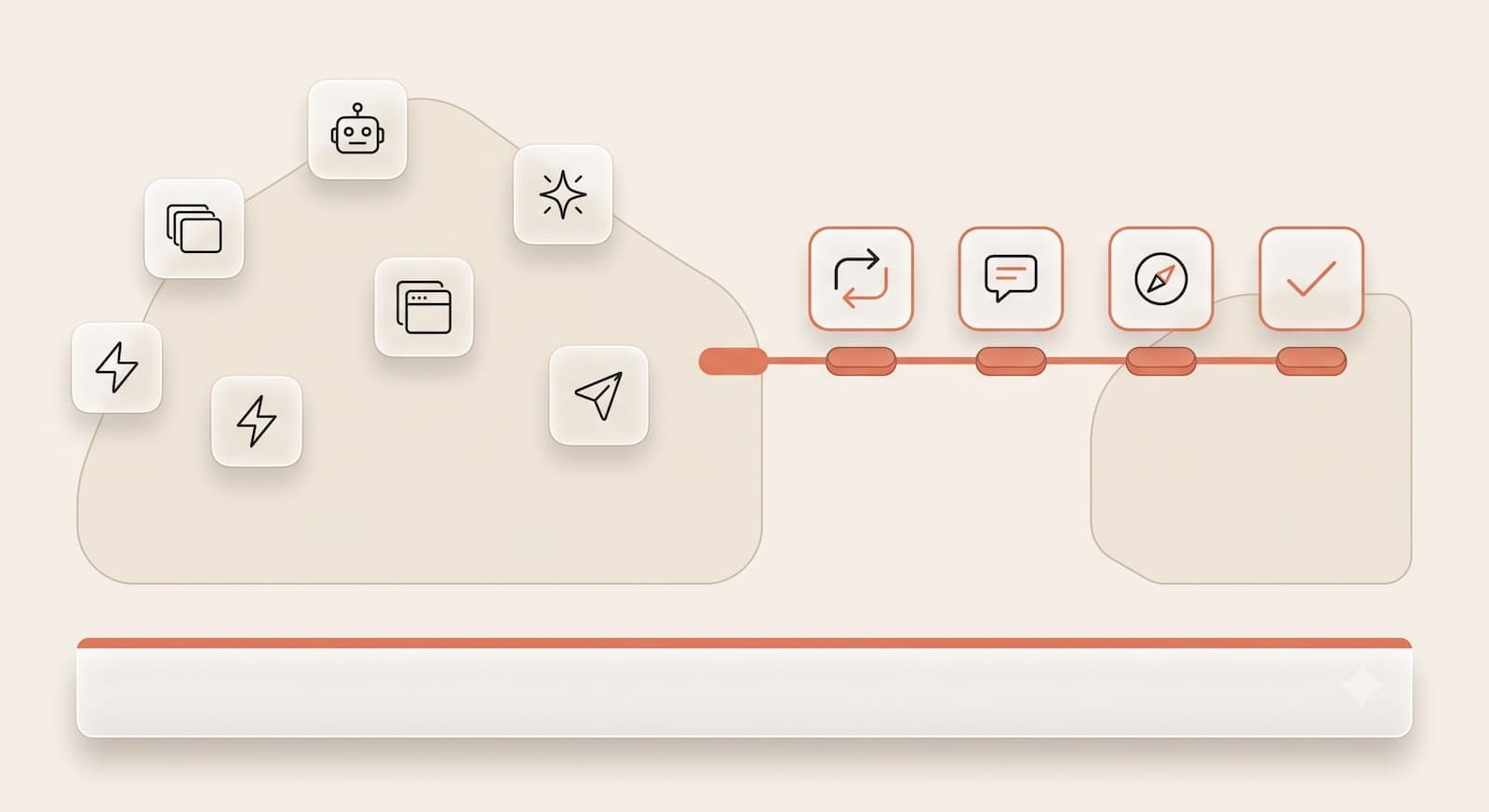
The Sovereign Workflow (2026 Standard)
Deterministic, observable, and compliant.

Problem #1: Your Unit Economics Collapse as Usage Grows
Most teams underestimate the cost multiplier of moving from chatbot UX to agentic workflows.
A single user interaction in an agentic system often triggers a fan-out of 4–6 background calls: a planner step, a retrieval/re-ranking pass, tool execution, and a synthesis call. This multiplies your per-request token cost by a factor of 3–5 compared to simple chat prototypes.
The Cost Reality:
Interaction Type | Steps involved | Estimated Tokens | Cost Impact |
Standard Chat | Input → LLM → Output | ~1.5k | Baseline |
Agentic Workflow | Plan → Search → Read → Tool → Verify → Reply | ~8k–12k | 5x–8x Baseline |
Why this happens
No semantic caching: You are paying to generate the same answer twice.
Model overkill: Using premium reasoning models for low-complexity formatting tasks.
Bloated context: Duplicating tokens across every step of the agent chain.
The Engineering Fix
Route by complexity: Use a router to send simple queries to smaller, cheaper models (SLMs) and escalate only complex reasoning to flagship models.
Cache aggressively: Implement Redis/Vector caching at the semantic layer.
Treat model choice as an SRE concern: Enforce per-workflow token budgets and hard caps.
Problem #2: "Prompt-Only" Architecture Breaks Under Multi-Step Work
The persistent mindset failure in 2026 is treating a single static prompt as the primary quality lever.
Prompts work for linear tasks. But once your product requires loops, branching, retries, and structured outputs, prompt quality is just one variable in a distributed system. This is why engineers are converging on orchestration-first stacks rather than monolithic chains.
Symptoms you likely see
"Works for this example, fails for adjacent cases."
Hidden state errors after retries or partial tool failure.
Fragile handoffs between retrieval, reasoning, and formatting.
The Engineering Fix
Move from "prompt engineering" to Workflow Contracts:
Typed inputs/outputs: Use validation layers like Pydantic AI to enforce schema at every boundary.
Explicit state transitions: Use orchestration frameworks like LangGraph to handle conditional branching (e.g., Action A must complete before Action B).
Deterministic fallbacks: If tool A fails or validation breaks, explicitly route to B.
Problem #3: You Can't Trust Your Output Quality (Because You Don't Measure It)
"No evals = no engineering control."
Many teams still test LLM features like UI features: a few manual checks, then ship. That is no longer viable. Behavior drifts across model versions, retrieval freshness, and changes to latent prompts. Without evaluation discipline, every "optimization" is a potential regression.
Common anti-patterns
No golden dataset per use case.
Relying on anecdotal Slack feedback as "monitoring."
Unquestioningly trusting "LLM-as-a-judge" without calibrating it against human labels.
The Engineering Fix
Define 20–50 must-pass eval cases per workflow.
Run offline evals on every prompt/routing/retrieval change (CI/CD integration).
Separate metrics: Track factuality, policy compliance, latency, and cost independently.
Problem #4: RAG Looks Fine in Demos, Fails in Production
RAG (Retrieval-Augmented Generation) failure is a top practitioner complaint. The issue is rarely the LLM; it is the retrieval precision.
If your retrieval quality is unstable, no amount of prompt engineering can save you.
Why teams struggle
Ingestion as a script, not a pipeline: Data becomes stale or poorly formatted.
Naive chunking: Splitting documents in ways that destroy semantic meaning (e.g., breaking tables or legal clauses).
No confidence calibration: The model answers confidently even when retrieval misses the relevant context.
The Engineering Fix
Domain-aware chunking: Respect document structure (headers, tables).
Retrieval Diagnostics: Measure hit rate, recall, and source overlap (using tools like RAGProbe).
Citation-backed generation: Force the model to link assertions to retrieved chunks, or refuse to answer.
Problem #5: Prompt Injection and Agent Security Are Underestimated
OWASP has consistently ranked Prompt Injection as the #1 LLM application risk (LLM01).
In a chat-only interface, injection is annoying. In an agentic system with tool access, injection is a security breach. If an agent can read emails and execute API calls, the "blast radius" of a successful injection is massive.
High-risk behaviors
Allowing untrusted content (e.g., incoming emails, web summaries) to influence system instructions.
Letting agents execute tools without scoped authorization.
Mixing private context with externally retrieved content in the same window.
The Engineering Fix
Security as Architecture: Treat all external text as untrusted input.
Scoped Permissions: Enforce strict read/write boundaries per workflow step.
Human-in-the-loop: Add policy gates before critical tool execution (e.g., "Approve Transfer").
Problem #6: You're Flying Blind Without Observability
As soon as systems become multi-agent, you lose causal visibility. You know the request failed or cost $4.00 to generate, but you don't know which step caused it. This is not standard APM; this is trace analysis.
What "blind" looks like
Failures are reported as "The AI was weird."
You have cost totals but no step-level attribution.
You cannot reconstruct the exact state of the system during a hallucination.
The Engineering Fix
OpenTelemetry-native tracing: Instrument every node (planner, tool, model) using open standards (e.g., OpenLLMetry) so your trace data isn't locked into a single observability vendor.
Structured error taxonomy: Distinguish between Retrieval Errors, Tool Errors, and Model Policy Refusals.
Immutable event logs: Essential for debugging and the audit trails required by EU regulation.
Problem #7: EU AI Act Readiness Is Treated as "Future Work"
For EU teams, this is the most dangerous blind spot.
The AI Act is not an abstract policy; it is a timeline. General Purpose AI (GPAI) obligations take effect in August 2025, and high-risk enforcement begins in August 2026.
The "Retrofit Trap": Many startups assume they can add compliance logging later. However, Article 12 of the AI Act requires the automatic recording of events throughout the system's lifetime to ensure traceability, specifically to identify situations that pose a risk and to monitor post-market operations. You cannot cheaply retrofit a monolithic prompt architecture to generate granular trace logs for data that no longer exists.
The Engineering Fix
Define lineage now: Map model versions and data sources.
Version control everything: Prompts, workflows, and policy rules must be versioned artifacts.
Compliance-by-design: Align engineering and legal on evidence requirements before building the next feature.
The "AI Platform Pod": A New Org Design
Where does this work live? In 2026, successful startups are moving these responsibilities out of feature squads and into a dedicated AI Platform Pod (often sitting within Infrastructure or Developer Experience).
This small team (often just 1–2 engineers at the Series A stage) doesn't build the chatbot; they build the paved road: the routing layer, the eval harness, the semantic cache, and the compliance telemetry that feature teams plug into.
30-Day Fix Plan
If you recognized your team in this post, here is the roadmap to stability.
Week 1: Instrument Reality
Add per-workflow cost + latency tracing (OpenTelemetry).
Establish top 20 "must-pass" eval cases for core user journeys.
Create a simple routing policy (cheap model first, escalate only on failure).
Week 2: Remove Fragility
Implement semantic caching (Redis/Vector).
Tighten agent tool permissions (least-privilege access).
Enforce structured outputs (JSON/Pydantic) for all internal steps.
Week 3: Stabilize retrieval + Governance
Audit ingestion: improve chunking and metadata strategies.
Require citation-backed answers where factual risk is high.
Log versioned changes to prompts and workflows.
Week 4: Compliance-Ready Baseline
Build a technical documentation pack (Model Cards/System Cards).
Map workflow risks to specific control points.
Run one internal audit simulation using the trace logs and evals built in Weeks 1–3.
This will not make your stack perfect. It will make it governable.
Final Take
The old prompt engineering narrative promised leverage through better phrasing.
The new reality demands leverage through better systems.
For EU engineering leaders, the strategic question is no longer:
"How do we write better prompts?"
It is:
"How do we engineer sovereign, auditable, cost-controlled AI workflows that survive scale and regulation?"
Teams that answer that question early will decide whether AI is a defensible capability for their business, or just an expensive feature.