
Why Your Observability Stack Might Be a Compliance Liability
If Google, with unlimited resources and armies of lawyers, faces ongoing scrutiny from EU regulators and class-action lawsuits over Gemini's data practices, where does that leave your observability vendor?
The Three-Layer Compliance Reality
Every company deploying AI in the EU now faces a triple compliance obligation:
Layer 1: GDPR. The foundational privacy law.
Layer 2: The EU AI Act. The world's first comprehensive AI regulation.
Layer 3: Sector-Specific Regulation. Financial services (DORA), healthcare (EHDS), and other regulated industries face additional strictures.
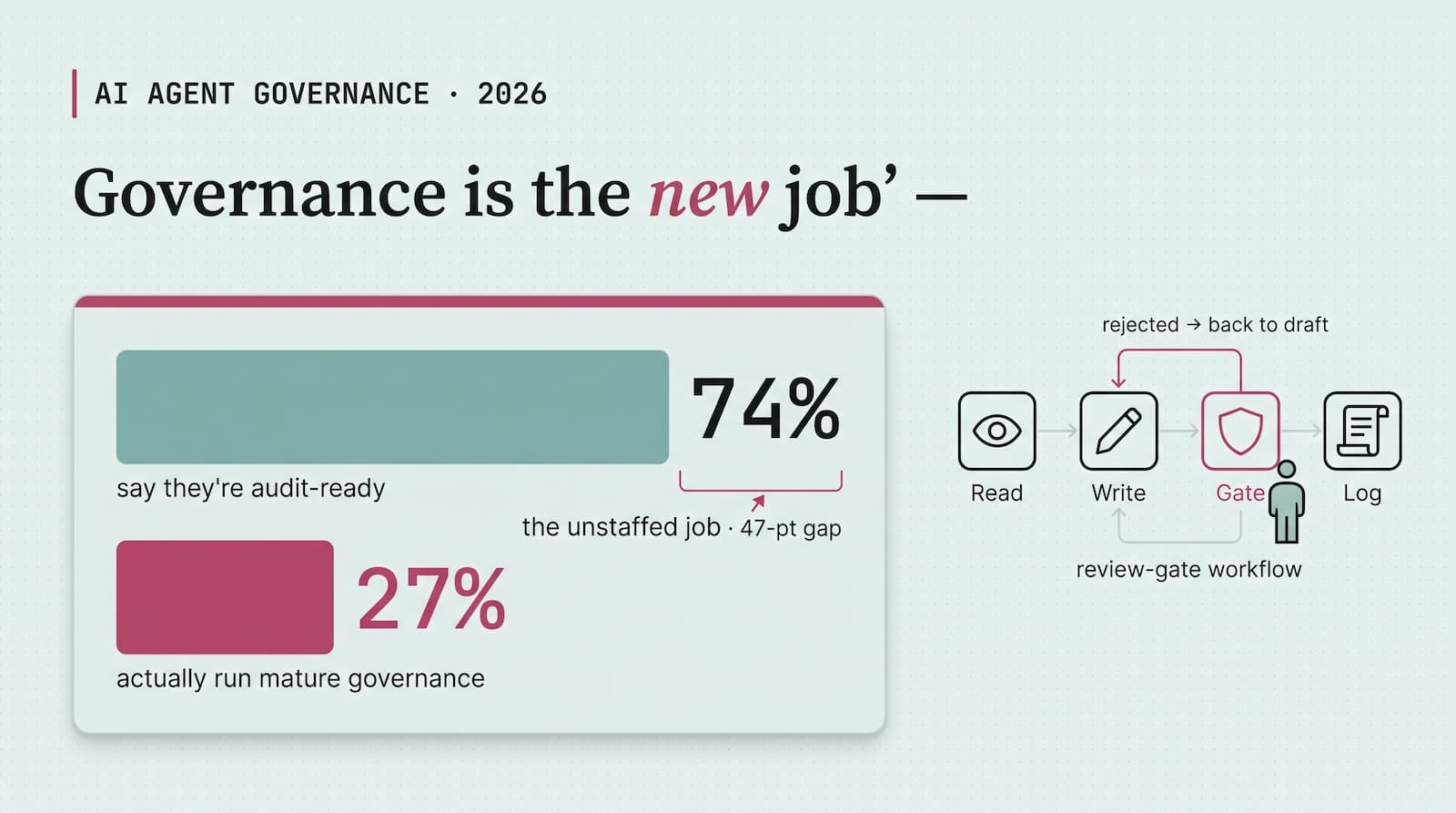
Here's the disconnect: While regulators are building this three-layer framework, most US-built observability vendors are still treating GDPR as a checkbox exercise rather than an architectural constraint. They optimize for developer experience and token costs, not for producing audit-grade evidence.
This creates five structural problems that become obvious the moment a regulator starts digging.
Problem 1: The Right to Erasure Doesn't Work for LLM Logs
Article 17 of the GDPR grants individuals the "Right to be Forgotten." In a traditional SQL database, this is a simple DELETE command.
In an AI observability platform, complying with Article 17 is not feasible without custom engineering.
When you log prompts, you're capturing unstructured PII that flows into search indices, backup systems, and analytics pipelines. Most tools lack a mechanism to trace and purge a specific user's data across downstream systems. You either spend engineering weeks building custom deletion scripts to hunt down every trace, or you remain non-compliant.
What compliant observability looks like: Automated data lineage tracking and "cascading purges" that allow you to delete a user's trace across the entire logging lifecycle with a single API call.
Problem 2: Data Residency Claims Without True Sovereignty
Many US vendors market "EU Data Residency" by hosting data in Frankfurt or Dublin. While physical location matters, it does not solve the legal jurisdiction problem.
As long as the vendor is a US-headquartered company, it remains subject to FISA Section 702 and the CLOUD Act, which can compel it to provide data to US agencies regardless of where servers are located. Privacy advocates warned in December 2025 that the current EU-US Data Privacy Framework is a "house of cards" that could collapse with any shift in US administration.
What compliant observability looks like: True data sovereignty requires EU-headquartered providers operating entirely within EU legal jurisdiction, an actual EU-first infrastructure where US surveillance laws have no reach.
Problem 3: Audit Trails That Fail the Human Oversight Test
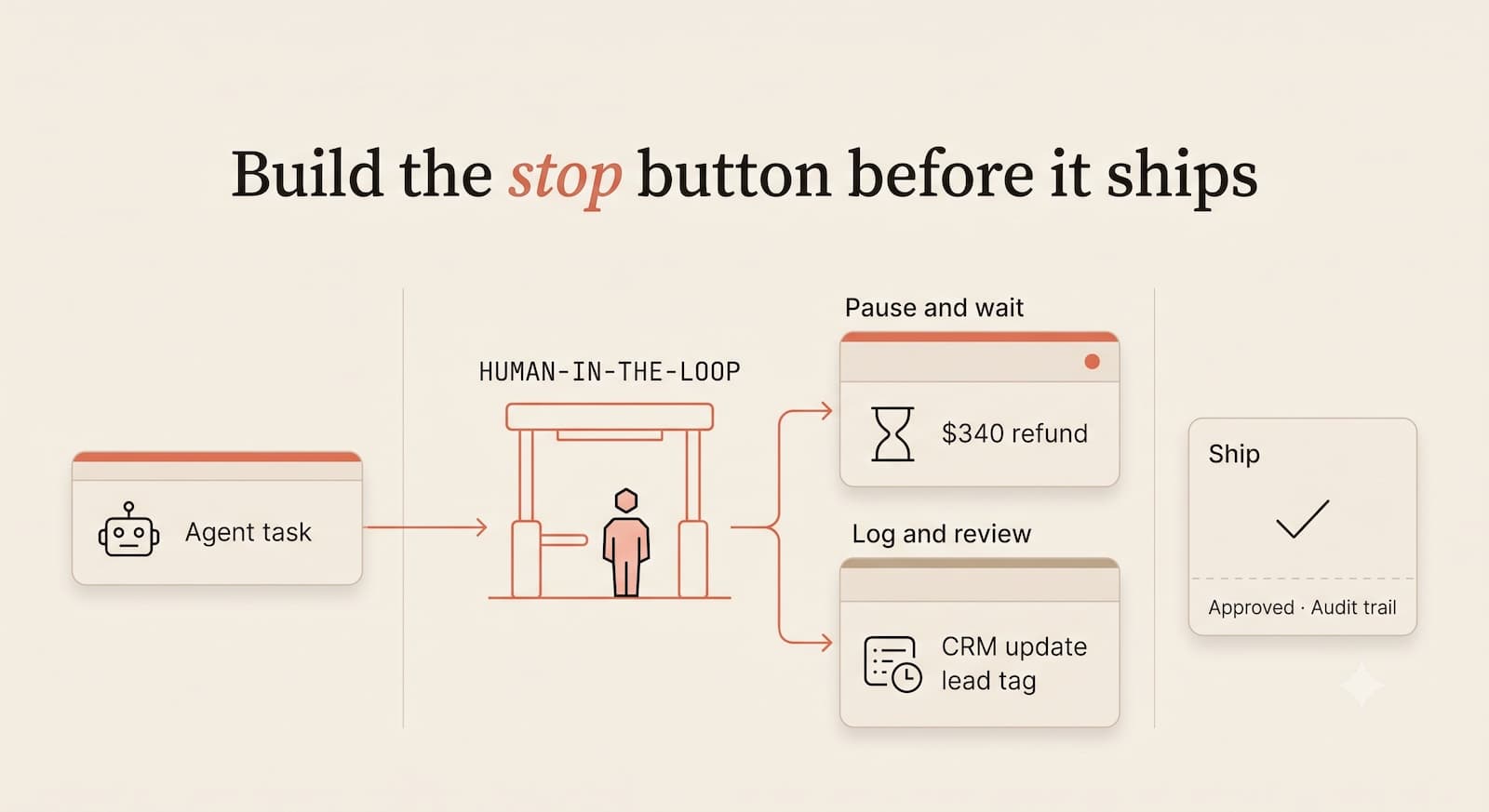
The EU AI Act requires high-risk systems to maintain logs that enable meaningful human oversight. Most tools log what happened; few log why in a way an auditor can interrogate.
Consider this scenario: A rejected job applicant files a complaint claiming your AI was discriminatory. The regulator requests documentation showing how your system made its decision. If your observability platform only logged "Gemini-3.0-pro returned a score of 6.2/10" without capturing the reasoning chain, you cannot demonstrate that the decision wasn't discriminatory. Under the EU AI Act, the burden of proof is on you, not the complainant.
What compliant observability looks like: Immutable audit logs with cryptographic signatures and queryable traces that capture the complete decision lineage, prompts, tool calls, and model parameters exportable in regulator-friendly formats.
Problem 4: Data Maximalism vs. Privacy by Design
Article 25 of the GDPR requires that privacy measures be integrated into the architecture from the outset. However, most AI tools are built on a premise of "collect first, filter later," ingesting every prompt and completion by default, then relying on post-processing to strip out PII.
This approach fundamentally violates Privacy by Design. By logging everything by default, you have violated the principle of data minimization. Before you even configure the dashboard, the burden of proof shifts to you to demonstrate why you collected that data in the first place.
What compliant observability looks like: Privacy-preserving defaults, such as PII redaction that occurs before data enters the logging system, and granular consent controls aligned with specific processing purposes.
Problem 5: Vendor Lock-In Becomes Compliance Lock-In
Under the EU AI Act, you may be required to maintain compliance history for the lifetime of your AI system. If that data lives in a proprietary format on a vendor's cloud, you are trapped.
If that vendor's compliance posture changes or a company with different policies acquires them, you face a choice: lose your compliance history (a regulatory violation) or stay with an exposed provider.
What compliant observability looks like: Open data formats and the ability to self-host or export your complete compliance history at any time.
Assessing Your Exposure
These aren't hypothetical risks. GDPR fines can reach €20 million or 4% of global revenue, and the EU AI Act carries penalties up to 7% of worldwide turnover for the most serious violations.
US-built observability might not be right for you if:
You can't guarantee zero EU citizen data in your AI inputs (whether thousands of customers or millions of API calls).
You operate in high-risk categories defined by the EU AI Act (hiring, credit scoring, healthcare, education).
You cannot afford the risk of a "Schrems III" ruling invalidating your data transfer mechanisms overnight.
When US tools might still work
If you are processing no EU data or have robust Standard Contractual Clauses (SCCs) and Transfer Impact Assessments (TIAs) in place, US providers may be viable. However, be aware that TIAs must be reviewed on a case-by-case basis and updated whenever legal or factual circumstances change, creating ongoing legal overhead that EU-first providers eliminate.
Where to Start
The EU AI Act's high-risk obligations are scheduled to take effect in August 2026, though implementation guidance remains fluid. Regardless of the exact date, the regulatory direction is clear and irreversible.
Audit your data flows: Map exactly where EU citizen data enters your AI stack.
Test deletion: Can you fulfill a GDPR erasure request across your logs today?
Review vendor jurisdiction: Does your provider fall under the scope of the CLOUD Act?
Evaluate EU-first alternatives: Consider whether architectural compliance is preferable to retrofitting.
For CTOs, the question isn't whether to achieve compliance, it's whether to build it into your infrastructure now or bolt it on later at a much higher cost.
Ready to see what EU-first AI observability looks like? PromptMetrics was built from the ground up for the GDPR and EU AI Act, not adapted for it after the fact.