
You don't need a list of the ten best AI agencies in Europe. You need a way to tell, in one sales call, whether the agency across the table will ship a system your team actually runs six months from now, or a strategy deck and an invoice.
This is the framework. Five service models, ten evaluation criteria, real price bands, and the EU AI Act questions to ask before you sign anything. To be upfront about our interest here: PromptMetrics is one of the companies competing for this work. That's exactly why we're not going to rank the market for you. We give you the scorecard; you run it yourself, on us or on anyone else sitting across the table. The only company we score in this post is our own.
Why most "AI agencies" disappoint
Most AI engagements fail after the pilot, not during it, because agencies are hired for the build and nobody owns what happens after.
Here's the pattern operators keep describing to us. An agency runs a discovery phase, produces a roadmap, and builds a demo that works in the demo. Then the engagement ends. A few weeks later, your CRM changes, or your team wants to tune a prompt, add an approval step, or extend the workflow to a second use case. And nobody in-house can touch it, because nobody in-house understands how it was built. The system doesn't have to break to fail you. It fails the day it stops being yours to improve.
The cost data explains why this keeps happening. easy.bi published a detailed breakdown of AI pilot costs in April 2026, and one number in it deserves to be famous: the visible build is only 30 to 40% of what a pilot really costs. The rest goes on preparing your data, wiring the system into your stack, and getting people to change how they work. Data preparation alone eats 60 to 80% of project time. Most providers underinvest in that unglamorous majority because decks and demos are what win the next client.
So the single most useful filter is this: does the agency's business model depend on you running the system without them? If the answer is no, everything else on their website is decoration.
The five types of AI implementation agencies
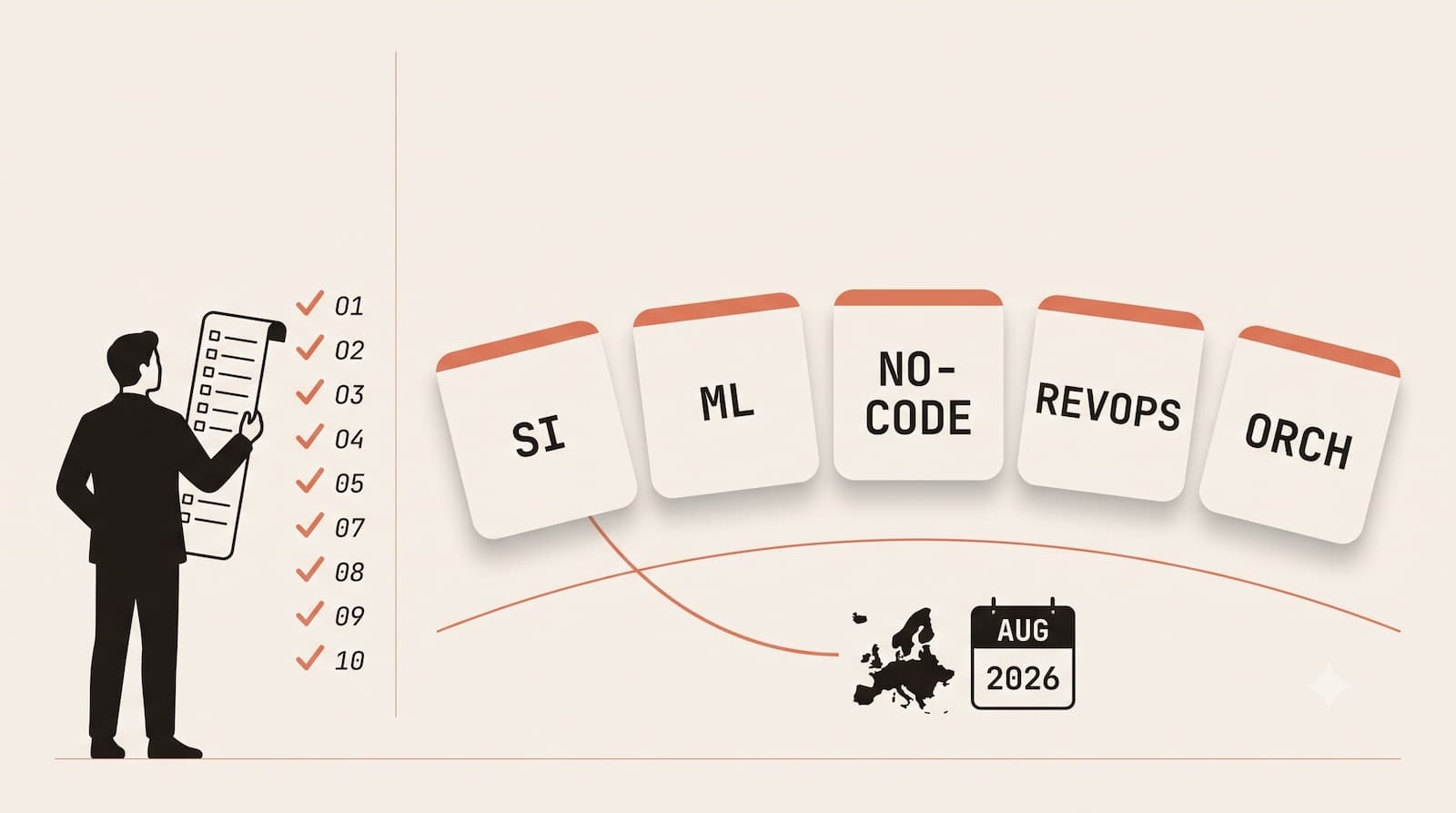
Every provider in this market works to one of five service models, and knowing which one is at the table explains their price, their speed, and how things go wrong.
Global systems integrators. Accenture, Deloitte, Capgemini etc. If you're a regulated enterprise with a 40-system estate and seven figures to spend, this is your lane. The trade you make at this tier is speed and overhead. Timelines run in quarters, and the people delivering the work are rarely the people who sold it.
Custom ML and data science firms. Think of Merantix Momentum in Berlin or deepsense.ai as the shape of this model: real research pedigree, teams that can train and operate models in production. You want this when your problem actually needs a trained model, like computer vision on a production line or forecasting on proprietary data.
No-code automation shops. These teams build on Zapier, Make, or n8n, and for simple, low-volume automations between standard SaaS tools, they are fast and affordable. The risk sits six months out. Every no-code platform has a ceiling, and per-task pricing that looked affordable at signup has a way of growing once the automations multiply.
RevOps and GTM consultancies. Firms like Artemis GTM come at this from the revenue-operations side and have added AI to the toolkit. When your problem lives in pipeline, outbound, or CRM hygiene, your ops fluency matters more than raw engineering, and it shows in the results. The limits appear when the work leaves the CRM and touches a data warehouse or a legacy system.
Orchestration-layer and coding-agent shops. The newest model, and the one we work in. These teams use coding agents like Claude Code or Codex to build a thin orchestration layer across the tools you already pay for, instead of selling you another platform. If you run three or more SaaS tools and want working automations in weeks, in plain files your team can read and change, this model was built for you.
Match the model to your problem before you compare providers within a model.
How to evaluate one: the 10 criteria
You do the scoring, not us. Take these ten criteria into your next call, give two points for a clear answer backed by evidence, one for a partial answer, zero for a dodge. Twenty points on the table.
Ships run systems, not decks. Ask what percentage of engagements end with software running in the client's environment.
Integration depth. Your CRM is not a stock install. It carries five years of custom fields and workflows built by someone who left. Ask the provider to describe the ugliest legacy integration they've shipped.
EU AI Act and GDPR governance. Not "are you compliant" (everyone says yes) but "walk me through how you classify a system's risk tier and what documentation you hand over." More on this below.
Data residency and no lock-in. Where does your data go, and what happens when you leave? If the answer to the second question is "the automations stop working," you're renting, not buying. Ask whether deliverables live in your infrastructure, in files your team can read.
Fixed scope vs. time and materials. T&M on a poorly scoped AI project is a blank cheque. Fixed-scope first engagements put the overrun risk on the agency, where it belongs
Who actually does the work? The partner who pitched you will not build your system. Ask who will, how senior they are, and whether you can talk to them before signing.
Real coding-agent expertise vs. GPT wrapper. If the agency claims to build with coding agents. Ask how they handle review gates, testing, and rollback.
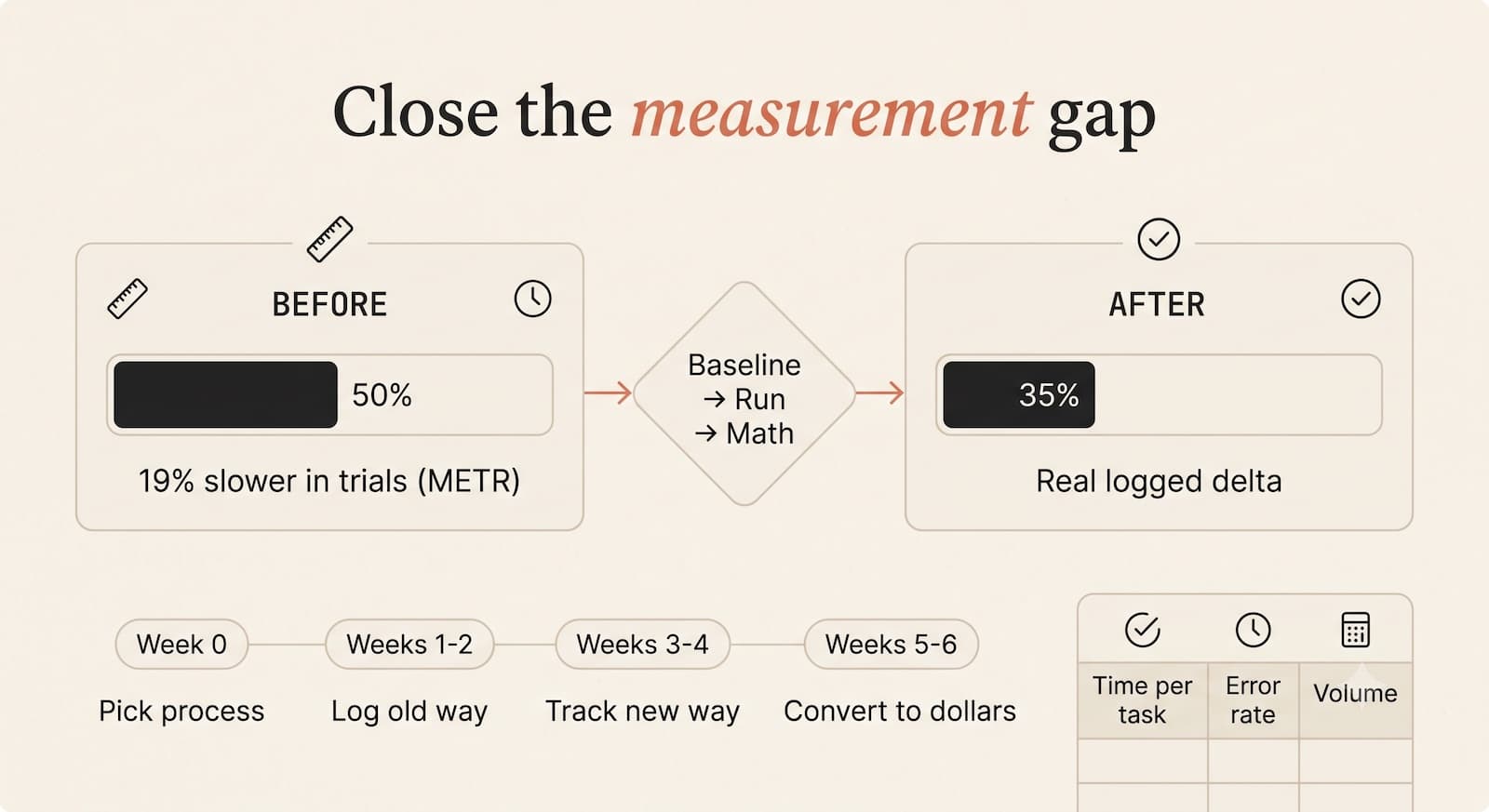
Measurement before deployment. If nobody timed the workflow before automating it, the case study number is fiction. Ask how they baseline. The honest answer involves a stopwatch and your team's calendar, not an industry benchmark.
Speed to production. Weeks, not quarters, for a first working system. Long timelines on small scopes usually mean discovery theatre. The counterpoint: anyone promising a full rollout in a week is skipping the 60 to 70% of the work that determines whether it survives.
Capability transfer. The engagement should end with your team able to run, modify, and extend the system. Ask what a handover looks like.
What it costs by tier
EU market pricing in 2026 clusters into four bands, and the band tells you the delivery model before the agency does.
Under €15k: fixed-scope entry engagements. Single workflow, fixed price, one to three weeks. For calibration: easy.bi's component pricing puts discovery at €3k to €6k and a full feasibility phase at €5k to €10k, so a scoped single-workflow build sits naturally in the €3k to €15k range. This is an honest transparency lane: what you can get done here is one real workflow, connected to your actual stack, with your team trained to run it. What you cannot get is a company-wide rollout, a custom model, or a 15-system integration.
€25k to €120k: pilots. The standard EU pilot band is easy.bi breaks it down by type: chatbot pilots €20k to €55k, process automation €30k to €80k, predictive analytics €40k to €120k. Sanity-check any quote against day rates: German freelance consulting benchmarks for 2026 put operational work from around €800 a day and a qualified consultant's average near €1,300, so a four-to-six-week two-person pilot lands at €25k to €40k of senior time.
€120k to €500k: multi-workflow programmes. Custom ML firms and mid-size consultancies live here. Justified when the problem actually needs custom modelling or deep multi-system work.
€500k and up: enterprise programmes. SI territory. If you're an operator at a mid-size company reading this, you're not this buyer, and an SI won't structure anything for your budget anyway.
One rule across every tier: the build is 30 to 40% of the true cost. Whatever you're quoted, the data prep, integration, and adoption work is where the money and the risk actually live.
EU AI Act: what to demand right now
The famous August 2, 2026, high-risk deadline just moved, but two things still land on that date.
Here's the state of play as of July 2026. The Digital Omnibus, formally adopted by the European Parliament on June 16 and the Council on June 29, 2026, pushed the high-risk system obligations back: standalone Annex III systems now comply by December 2, 2027, and AI embedded in regulated products by August 2, 2028.
What did not move, per the Commission's own timeline and the AI Act tracker:
Article 50 transparency obligations apply from August 2, 2026. If your system talks to customers, they must be told it's AI. If it generates synthetic content, that content must be marked machine-readably. Legacy systems will be in use until December 2, 2026, for the marking duty.
The Commission's GPAI enforcement powers switched on August 2, 2026, with fines up to €15 million or 3% of worldwide turnover.
What to actually demand from any agency, regardless of deadline shuffles:
Risk-tier classification in writing. Which tier does the proposed system fall into, and why?Most operator workflows (CRM enrichment, reporting, internal drafting) are limited or minimal risk..
Human oversight by design. A named human approval step before anything customer-facing or destructive executes. Not a philosophy, a step in the workflow you can point at.
Logging you can hand to an auditor. Every automated action is traceable: what ran, when, on whose approval.
Transparency compliance now. If anything you deploy generates content or talks to customers, the Article 50 duties are weeks away as this is published. Ask how the build handles disclosure and marking.
EU data residency, stated plainly. Which processors, which regions, wand hat leaves the EU.
Where PromptMetrics fits, and where we don't
We're not going to rate other companies by name. We compete in this market, which makes us a participant, not a referee, and you're holding the scorecard now anyway. If you want a named market overview, Context Studios publishes a comparison of Berlin AI agencies.
So here's the one profile we can write with full information: our own.
We're an orchestration-layer and coding-agent shop in Berlin. We build one workflow into one governed, auditable skill using coding agents, connected to the tools you already run, with a human approval step and files your team can read and change. Our entry engagement is a fixed-scope First Skill Sprint at €3,500 to €6,000; larger pilots are quoted on scope.
Where we're not the right fit: €500k enterprise builds, custom model training, or anything needing a 20-person bench. And we're building our first public case studies with our first customers right now. If you need someone else to have gone first, we're not the right choice yet, and we'd rather tell you that here than in month three.
Run us through the ten criteria like everyone else. That's what they're for.
The scorecard
Take this into every call. Two points per clear, evidenced answer, one for partial, zero for a dodge.
What to check | The question to ask |
|---|---|
1. Running systems | "What share of your engagements end with software running in the client's environment?" |
2. Integration depth | "Describe the ugliest legacy integration you've shipped." |
3. EU AI Act + GDPR | "Classify this system's risk tier and tell me what documentation we get." |
4. No lock-in | "What exactly stops working the day we leave?" |
5. Scope protection | "Will you fix the scope and price on the first project?" |
6. Delivery team | "Who builds this, and can we talk to them before signing?" |
7. Coding-agent depth | "Show us a live build on this call." |
8. Measurement | "How do you baseline the workflow before automating anything?" |
9. Speed | "What's running in week three?" |
10. Capability transfer | "What can our team change without you, after handover?" |
FAQ
How much does an AI implementation agency cost in Europe? Fixed-scope entry projects run €3k to €15k, pilots cluster at €25k to €120k depending on type, multi-workflow programmes €120k to €500k, enterprise work above that. Sanity-check quotes against 2026 German senior day rates, which run from about €800 for operational work to €1,300 average for a qualified consultant.
How do I know if an agency is EU AI Act compliant? Compliance belongs to systems, not agencies, so the test is whether they can classify your proposed system's risk tier in writing, show human oversight in the workflow design, and hand over audit-ready logs. Since the Digital Omnibus passed in June 2026, anyone still citing August 2026 as the high-risk deadline is out of date.
Should I hire an agency or build in-house? If AI orchestration is core to your product, hire. If it's how you run ops, a fixed-scope agency engagement with real capability transfer is faster and cheaper than a six-month search for a hybrid ops-engineering hire who may not exist in your market.
What's the difference between a strategy consultancy and an implementation agency? A consultancy's deliverable is a recommendation. An implementation agency's deliverable is running software. Both have their place, but only one of them breaks when your CRM changes a field name, and you want the people who priced that in.
How fast can an agency ship something usable? A single well-scoped workflow: one to three weeks with a coding-agent shop, four to six weeks as part of a standard pilot. Anything quoting months for a first deliverable is selling discovery, not delivery.
The short version
Match the service model to your problem, score the agency against the ten criteria on the first call, check their price against the band their model predicts, and make them show you their EU AI Act homework before you sign. If you want to see how we score against our own framework, ask us.