
42% of committed code is now AI-generated, projected to hit 65% by 2027 (Sonar, 2026). Most founders see that number and think, "hire fewer engineers." Ship faster. Add Copilot to every workflow.
YC Partner Diana Hu thinks that framing gets it exactly backwards.
In her April 2026 talk "How To Build A Company With AI From The Ground Up," Hu argues the real shift isn't productivity at all — it's an entirely new category of capability. One person with AI tools can now build what used to require a whole team, or was simply impossible. The question isn't "how do we make our existing processes faster?" It's "what can we build now that we couldn't before?"
That shift changes everything about how a startup should be run. Here's the framework.
Key Takeaways
AI-native companies generate 5.7x more revenue per employee ($3.48M vs $610K) than traditional software firms (AI Native Builders, 2026)
Diana Hu's framework: run your company as a closed loop, make every decision queryable by AI, and eliminate human middleware — information flow velocity becomes your only speed limit
The winning metric isn't headcount — it's token usage. Median AI spend per employee jumped from $40/month to $340/month in two years (culta.ai, 2026)
Startups have a structural advantage incumbents can't match: no legacy systems to unwind, no thousands of people to retrain
Why "AI Productivity" Is the Wrong Frame
90% of developers now use at least one AI tool at work (JetBrains, 2026). Every board deck and earnings call leads with AI productivity numbers. Hu's argument is that this framing misses the actual transformation.
She draws from control systems theory. Most companies today operate as open loops: you make a decision, execute it, and don't systematically measure the outcome to adjust the process. Information gets lost. Status updates go through lossy manager rollups. Decisions compound without feedback.
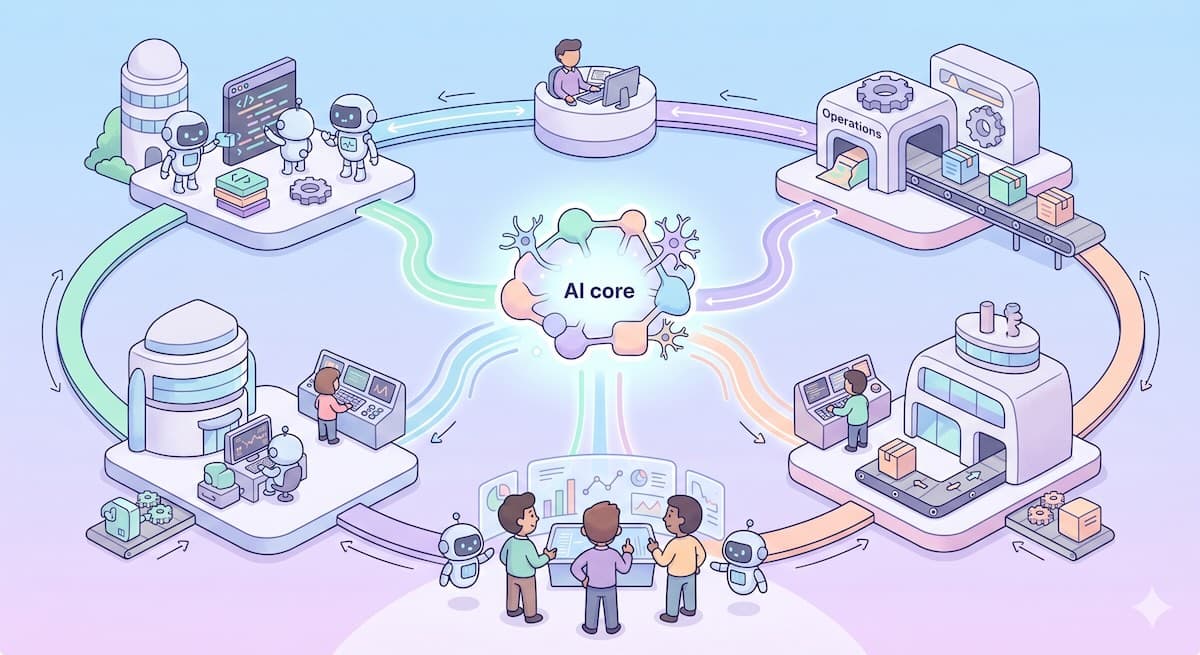
An AI-native company runs as a closed loop. Every important process captures information, feeds it back into an intelligent system, and improves over time. The organization becomes self-regulating — it continuously monitors its output and adjusts to meet stated goals.
Think about what this actually means for a startup. If every customer call, every shipped feature, and every support ticket automatically feeds into a system that adjusts sprint priorities, hiring needs, and product direction — your company isn't just faster. It's structurally different. The organization becomes a learning system, not a command hierarchy.
According to YC Partner Diana Hu's April 2026 framework, AI-native companies operate as closed-loop systems where every workflow, decision, and process flows through an intelligent layer that continuously monitors output and self-corrects — replacing the lossy open-loop decision-making that defines most organizations today.
How Do You Actually Make a Company "Queryable"?
67% of enterprises have now moved AI agents beyond pilot into production, up from 31% in 2024 (KXN Technologies, 2026). But enterprise adoption doesn't mean they're doing it right. Hu's framework is more specific: your entire organization has to be legible to AI.
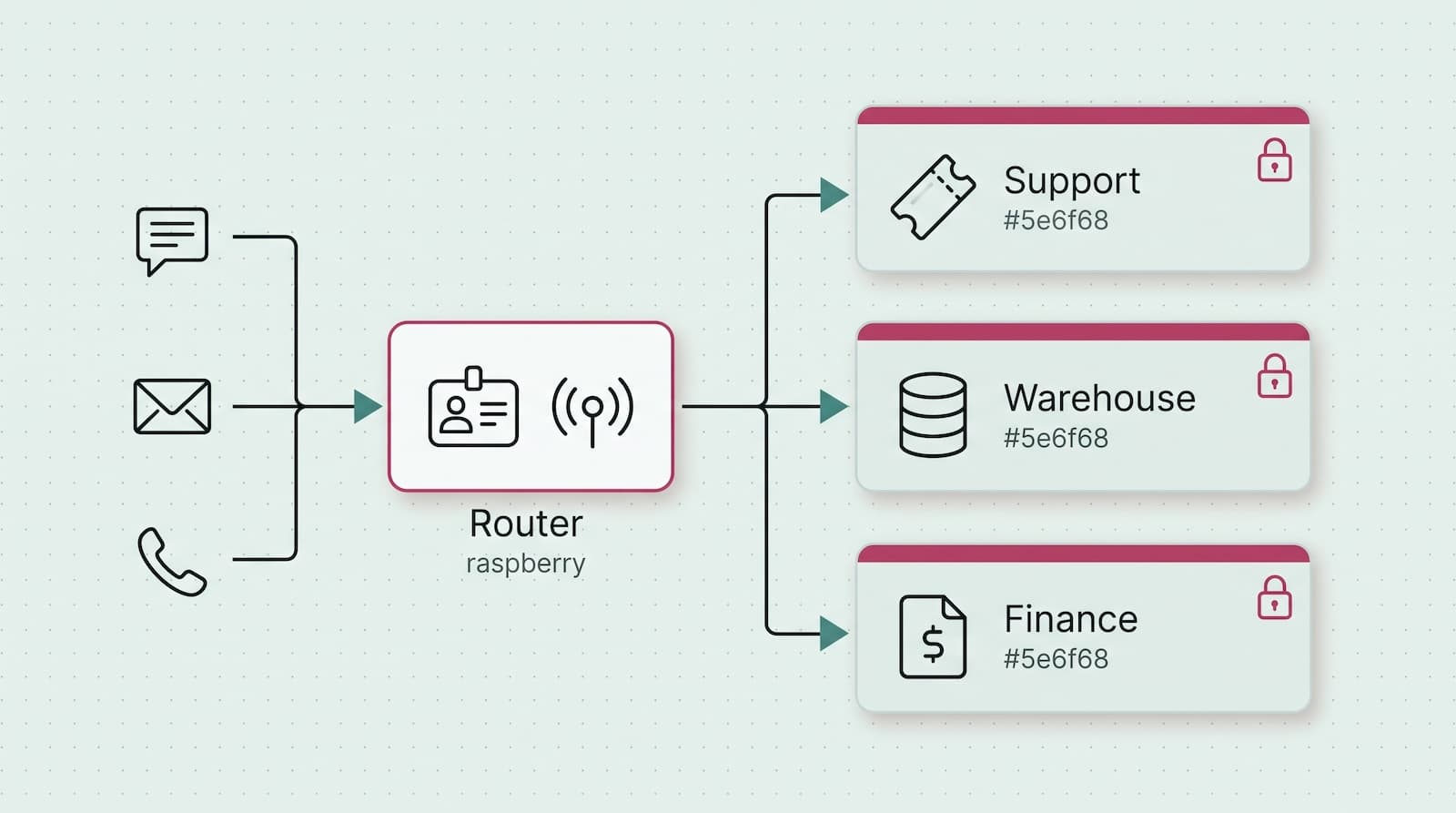
That means every important action produces an artifact that the intelligence layer can learn from. Record every meeting with an AI notetaker. Minimize DMs and private emails — they're information dead zones. Embed agents in every communication channel. Build custom dashboards covering revenue, sales, engineering, hiring, and ops — all of it, in one place.
Here's Hu's concrete example. Take sprint planning. An agent with access to your Linear tickets, Slack engineering channels, customer feedback from Pylon or email, GitHub activity, high-level plans in Notion, and recordings from sales calls and daily standups can do something no human EM can. It can analyze what actually shipped last sprint, cross-reference that with customer signals, and determine what genuinely met user needs. Then it proposes the next sprint plan — more accurately and predictably than a manager synthesizing fragmented status updates.
Hu says she's watched YC teams adopt this, cut sprint time in half, and ship nearly 10x more. Having managed engineering teams herself, she describes the shift from constant coordination overhead to legible-by-default operations as a fundamental unlock.
Middle managers were the information routers of the old world — and that routing function is being automated away. US middle-manager job openings have fallen by 42% from their 2022 peak (Revelio Labs, 2026).
Middle Management Job Openings Decline (2022-2025) Line chart tracking indexed middle management job openings: 2022 at 100, 2023 at 88, 2024 at 72, 2025 at 58. Key events annotated: Meta Year of Efficiency (2023), Klarna AI cuts (2024), Block 40% manager cuts (2026). Source: Revelio Labs via The Guardian, 2026.

What used to require constant coordination — the weekly manager status rollup, the cross-functional sync, the "let me check with my team" — becomes legible and queryable by default. That's the speed unlock. Not AI making individuals faster. AI removing the coordination tax entirely.
For a deeper dive on how AI agents process organizational context, read our analysis of why flow-based agents break down and context engineering wins.
AI Software Factories: What Comes After TDD
26.9% of production code is now purely AI-authored — not assisted, not suggested, but written entirely by machines — based on analysis of 4.2 million developers (ShiftMag, 2026). If you're familiar with test-driven development, the next evolution is already here. Hu calls it the AI software factory.
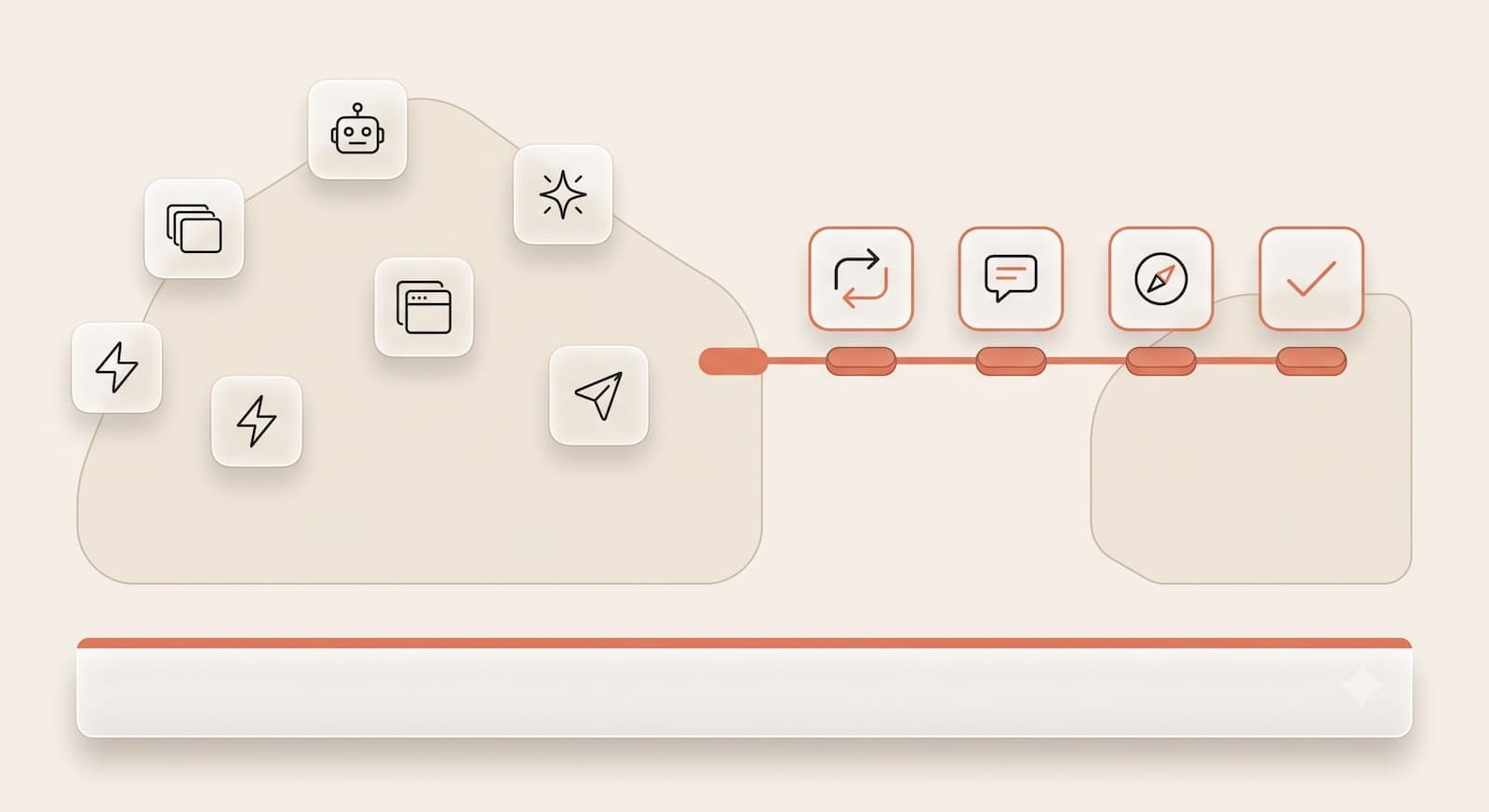
Here's how it works. Humans write a spec and a set of tests that define success. AI agents generate the implementation, run the tests, and iterate until everything passes. The human defines what to build and judges the output. The actual code generation is the agent's job.
Some companies have pushed this so far that their repos contain no handwritten code — just specs and test harnesses. Hu points to StrongDM's AI team as the example. They built a system in which scenario-based validations drive agents to write tests and iterate on code until it meets a probabilistic satisfaction threshold. Their end goal was to eliminate the need for a human to write or review code entirely. It works.
This is how you get the 1,000x engineer that YC's Steve Jay describes — not by making one person type faster, but by surrounding a single engineer with a system of agents that let them build things they'd never have been able to build before.
Engineering Org Size: Traditional vs AI-Native (Series B) Horizontal bar chart showing a traditional Series B engineering organization of approximately 35 people compared to an AI-native equivalent of 8-12 people. The 3.5x reduction comes from collapsing coordination roles (EMs, TPMs, QA cycles). Source: AI Native Builders, 2026.

The era of the 10,000x engineer is here. Not because anyone types 10,000x faster, but because the unit of output has changed. One person + an agent swarm produces what a 35-person engineering org used to deliver.
StrongDM's AI team built a software factory where specs and scenario-based validations drive AI agents to generate tests and iterate on code until a probabilistic satisfaction threshold is met, eliminating the need for humans to write or review code, creating the 1,000x engineer effect through agent orchestration rather than individual productivity (Y Combinator, 2026).
If you're ready to build your own software factory, start with our guide to restructuring your engineering org around spec-driven AI development.
The Three Archetypes That Replace Your Org Chart
Jack Dorsey has been quietly running one of the most radical organizational experiments in tech. At Block, he eliminated middle management layers and assigned engineering managers up to 175 direct reports (Bloomberg, 2026). His conclusion: if you keep the same org chart and management structure, you've missed the shift entirely.
Dorsey and Hu converge on the same vision. The company itself becomes an intelligence layer, with humans at the edge guiding it rather than routing information through it. Going forward, Hu and Dorsey suggest that every company needs three archetypes rather than a traditional hierarchy.
The IC / Builder-Operator. This person directly makes and runs things. And this isn't limited to engineers everyone builds. Marketing, ops, support, sales. Everyone comes to meetings with working prototypes, not pitch decks. In an AI-native company, the barrier between "builder" and "operator" collapses because the tools make both possible for the same person.
The DRI (Directly Responsible Individual). This isn't a classic manager. It's the person with unambiguous responsibility for a specific outcome. One person, one result, no hiding behind team structures or "let me align with stakeholders." When every part of the business is queryable, you don't need layers of people to interpret and route information; you need one person who owns the result.
The AI Founder. This person still builds and still coaches. If you're the founder, you have to be at the forefront showing your team what massive capability gains look like, not delegating your AI strategy to a "Head of AI." Your job is to break your team's priors about what's possible by demonstrating it yourself.
The pattern across all three archetypes is the same: information flow velocity replaces coordination as the core org design constraint. Every layer of human routing you remove is a direct speed gain. The intelligence layer serves the routing function that middle managers used to perform, but continuously, without loss, and with full context.
Block's Jack Dorsey and YC's Diana Hu converge on the same vision: every AI-native company needs three employee archetypes: the Builder-Operator, who directly makes things, the DRI with unambiguous outcome ownership, and the AI Founder, who leads by example rather than delegating AI strategy (Bloomberg, 2026; Y Combinator, 2026).
Token Max, Don't Headcount Max
The numbers are starting to tell a clear story. AI-native companies in the top quartile generate $3.48M in revenue per employee. Traditional software companies? $610K (AI Native Builders, 2026). That's a 5.7x gap, and it's widening.
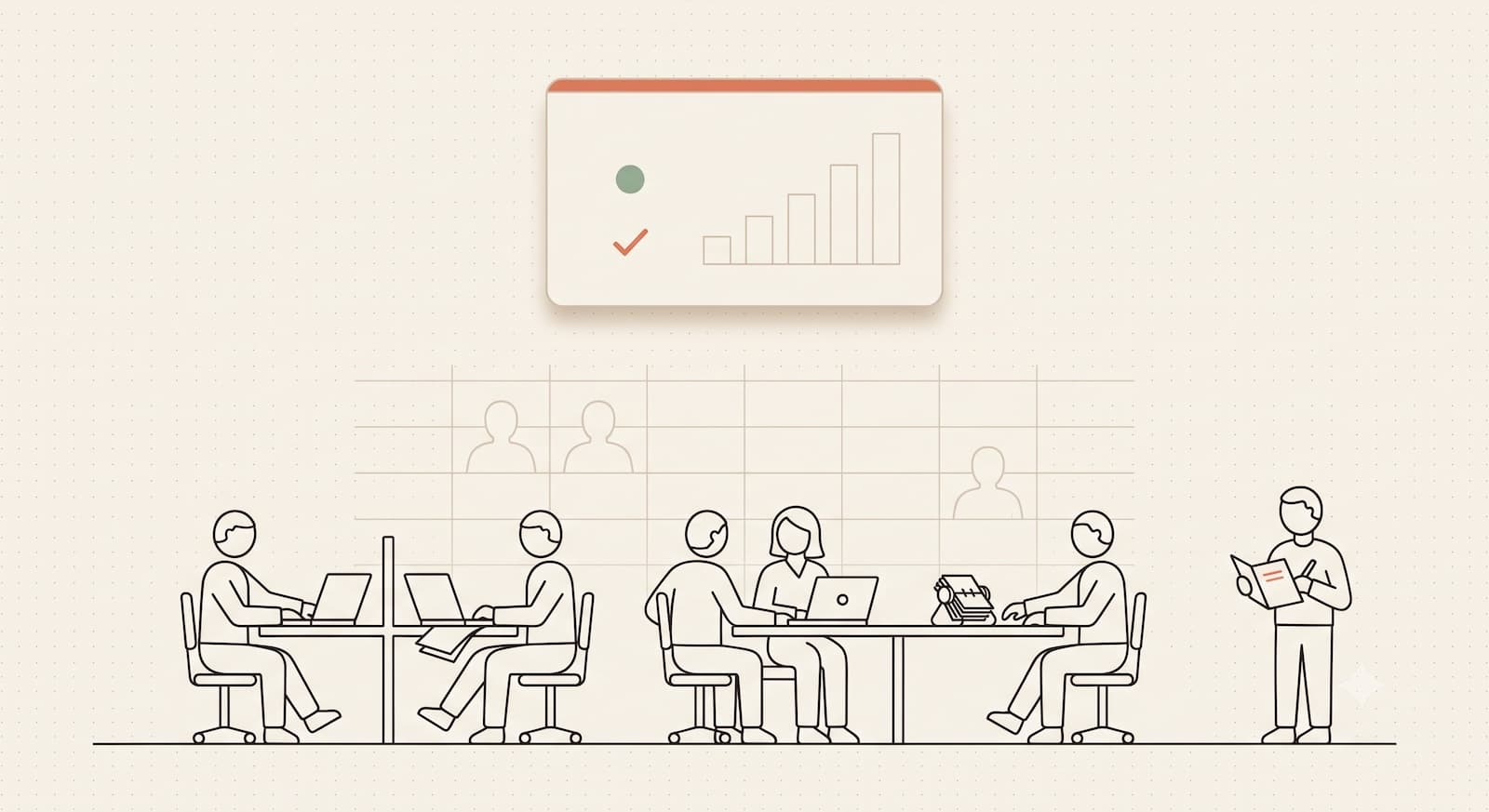
What does this look like in practice? A typical Series B engineering org of 35 people can shrink to 8-12 in an AI-native model. The coordination roles of EMs, TPMs, and QA cycles collapse because the agents handle them. What's left are builders.
Some startups are already living this. Swan AI, a four-person team, runs a $113,000 monthly API bill and calls it their "go-to-market team, engineering, support, legal" (404 Media, 2026). Median AI spend per employee jumped from $40/month in 2024 to $340/month in 2026, a 750% increase (culta.ai, 2026).
Revenue Per Employee: AI-Native vs Traditional Software Grouped bar chart showing revenue per employee comparison. AI-native companies in the top quartile generate $3.48M per employee, while traditional software companies generate $610K per employee, a 5.7x difference. Source: AI Native Builders, 2026.

Hu's advice is direct: run an uncomfortably high API bill. It's replacing what would have cost far more in inflated headcount. The best companies won't be the ones that optimized their per-seat SaaS spend. They'll be the ones who token maxed.
One person with AI tools now delivers what used to require a large engineering team at a pre-AI company. That means dramatically leaner engineering, design, HR, and admin. The trade-off isn't "do we spend on AI or on people?" it's "how much faster can we move with the same people plus an intelligence layer?"
Hu's "token maxing" strategy replaces headcount with AI capability: median AI spend per employee surged from $40/month to $340/month in two years, while AI-native companies in the top quartile generate 5.7x more revenue per employee, $3.48M versus $610K for traditional software (AI Native Builders, 2026; culta.ai, 2026).
Token maxing doesn't mean throwing money away. Here's how to cut your AI coding bill without sacrificing capability.
Why Startups Have the Edge (and What Incumbents Can Try)
47% of startup founders are actively freezing hiring or reducing team sizes due to AI capabilities (Elevation Capital, 2026). If you're an early-stage founder, you have an advantage that's nearly impossible for large companies to match. You don't have legacy systems to unwind. You don't have thousands of people to retrain. You're small enough to build your company AI-native from day one.
Large companies face the opposite problem. They have to maintain and grow a live product while unwinding years of standard operating procedures and core assumptions about how software gets built. Every change to a core process risks breaking something that already works. By their nature, incumbents will struggle to go AI-native.
Some companies are finding a workaround. Mutiny spun up a small internal Skunk Works team to build AI-native systems from scratch, separate from the core business. It's a pattern that can work, but it requires executive air cover and a willingness to let the new system cannibalize the old one. Most large companies can't stomach that.
84% of enterprise leaders say they'll increase AI agent investments in the next 12 months (Zapier, 2025). But spending money on AI tools isn't the same as becoming AI-native. The distinction Hu draws is fundamental: most enterprises are layering AI onto open-loop processes. That's productivity theater. The real transformation requires rebuilding the company as a closed-loop intelligence system, and that is far harder when you're already at scale.
Startups designed AI-native from day one will operate at speeds that look impossible to incumbents still routing information through human middleware. That's the structural edge (Y Combinator, 2026).
Ready to start building? Here's our practical guide to building Claude Code skills for your AI-native startup.
Don't Outsource Your Conviction
84% of enterprise leaders plan to increase AI agent investments in the next 12 months (Zapier, 2025). But Hu's closing argument isn't about spending more money. It's about where conviction comes from, and it can't be delegated. You can't delegate your AI strategy. You can't outsource your conviction about what these tools make possible. You need to develop it yourself.
Sit with coding agents. Use them until you break your own priors about what's buildable. If you're the founder, you have to be at the forefront, showing your team what massive capability gains look like, not hiring someone to figure it out and write you a memo.
The founders who will win aren't the ones who read the most AI strategy threads. They're the ones who built something last weekend that, six months ago, would've required a team of five and a quarter of a runway. Once you've done that yourself, the organizational implications of closed loops, queryable companies, and no human middleware — stop being abstract and start being obvious.
That first-hand conviction is what turns a framework into a company. Everything else is just watching YouTube videos about it.
The founder's AI conviction can't be outsourced; it must be developed first-hand by using coding agents until personal priors about what's possible to build are broken, at which point the organizational implications of closed-loop, queryable AI-native companies become obvious rather than theoretical (Y Combinator, 2026).
Frequently Asked Questions
How is an AI-native company different from a company that uses AI tools?
The difference is structural, not additive. Companies using AI tools layer Copilot or Claude onto existing workflows. An AI-native company rebuilds every process as a closed loop where information continuously feeds back into an intelligence layer. 67% of enterprises now have AI agents in production (KXN Technologies, 2026), but most are running open-loop processes with AI assistance, the opposite of what Hu describes.
What does "closed loop" mean in a business context?
In control systems theory, a closed loop continuously monitors its output and adjusts to meet a stated goal. In a company, this means every important process, such as sprint planning, hiring, customer success, captures data, feeds it into an AI system that learns from it, and improves the process over time. Traditional companies run as open loops: decide, execute, and rarely measure systematically.
Can large enterprises become AI-native, or is this only for startups?
It's harder but not impossible. The structural challenge is maintaining a live product while unwinding years of SOPs. Mutiny's approach to a separate Skunk Works team building AI-native systems from scratch is one path. But 25%+ of SaaS companies have already reduced headcount due to AI (High Alpha, 2025), suggesting the pressure to transform is becoming existential.
What's the first concrete step I can take to make my company more queryable?
Start with meeting capture and artifact creation. Deploy AI notetakers in every meeting. Move decisions out of DMs and into channels where agents can access them. Build a single dashboard that pulls revenue, engineering activity, customer feedback, and hiring into one view. The goal is to ensure that every important action produces a digital artifact from which the intelligence layer can learn.
For a step-by-step guide to building a queryable revenue organization, see our AI-native RevOps roadmap.
Building AI-Native from Day One
Diana Hu's framework boils down to three principles that reinforce each other. Run your company as a closed loop — every process captures data, feeds it back, and improves. Make the organization queryable; every decision and outcome produces an artifact that the intelligence layer can learn from. And token max, don't headcount max your API bill, should make you uncomfortable because it's replacing what used to cost far more in people.
The window is open right now for startups. You can design your systems, workflows, and culture around AI from the start. Incumbents can't do that without risking what already works. That's a structural advantage worth pressing.
But none of it matters if you haven't developed your own conviction. The framework is a map. You still need to walk the territory yourself.
Ready to start? Here's how to get started with AI RevOps and Claude Code, the practical next step for founders who want to build.