
The AI agent market reached $7.84 billion in 2025 and is projected to reach $52.6 billion by 2030 (MarketsandMarkets, 2025). Enterprises are pouring millions into agents, 84% of leaders plan to increase their investment this year (Zapier, 2026). But here's the problem: only 15% of organizations have the data foundation to run AI at scale (Fivetran, 2026).
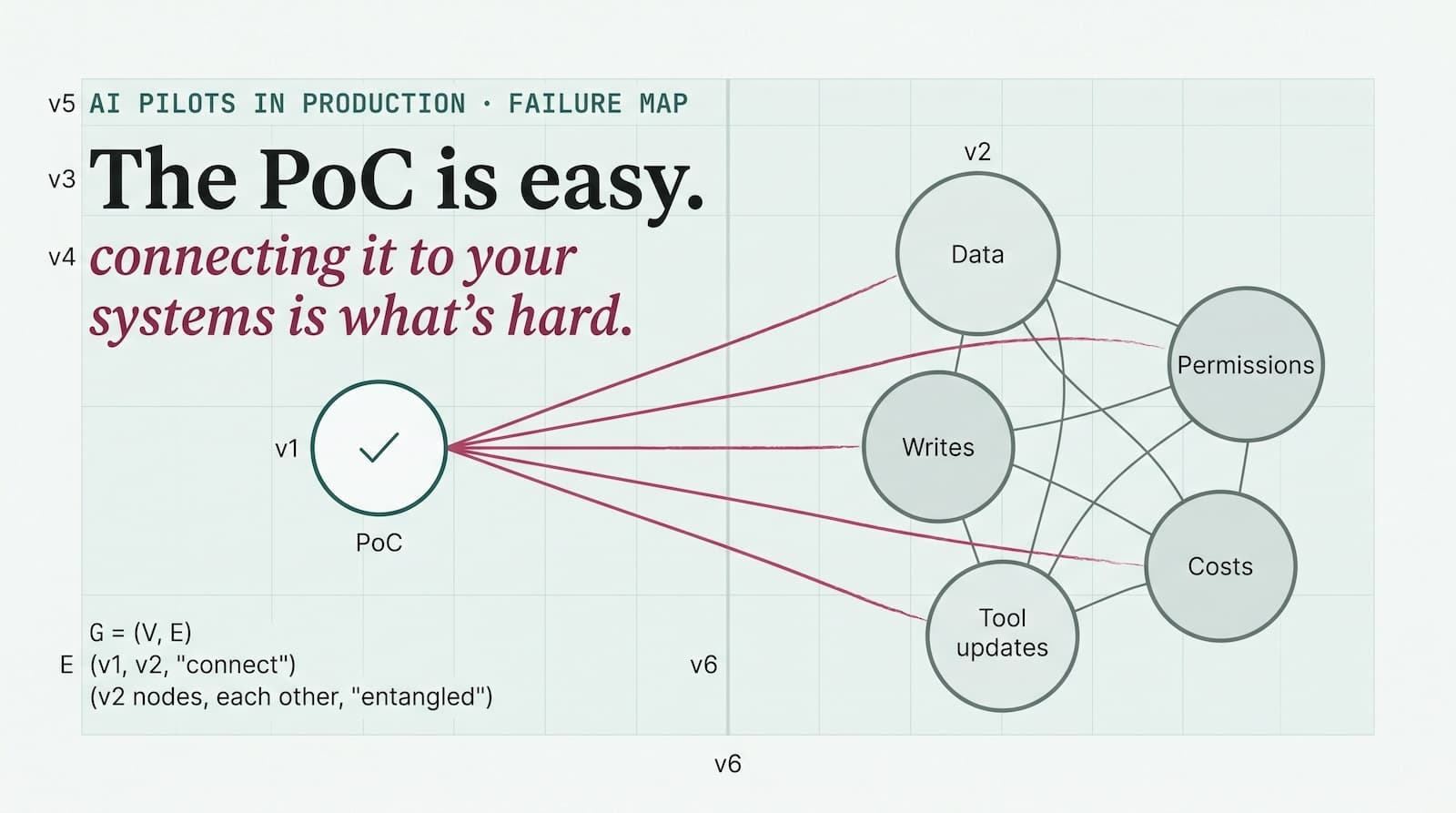
That gap, between ambition and infrastructure readiness, is where most AI agent projects die. This guide walks through the data architecture decisions, streaming patterns, and governance practices you need to move from pilot purgatory to production systems that actually deliver ROI.
Key Takeaways
Only 15% of enterprises have data infrastructure ready for AI at scale (Fivetran, 2026), yet 84% plan to increase agent investment this year
Real-time streaming pipelines (<50ms freshness) are the difference between agents that react and agents that guess, batch ETL creates unacceptable staleness for autonomous systems
A unified streaming platform with built-in vector support eliminates the need for separate vector databases and keeps enrichment data as fresh as trigger events
Organizations using AI governance tools ship 12x more projects to production than those operating without guardrails (Databricks, 2026)
Why Does AI Agent Infrastructure Matter Now?
The enterprise agent infrastructure market will reach $540 million in 2026, growing at 52% CAGR through 2031 (Mordor Intelligence, 2025). Multi-agent system deployments surged 327% in under four months (Databricks, 2026). We've crossed the threshold where agents are no longer experiments; they're making financial decisions, routing customer requests, and orchestrating supply chains.
But the infrastructure hasn't caught up. When I talk to engineering teams running agents in production, the story is the same: the model works fine, but the data pipeline is the bottleneck.
A well-reasoned decision based on stale facts still produces a wrong outcome. The model can't fix a data problem by reasoning harder. If your agent is pulling context from a warehouse that refreshes every four hours, it's effectively operating blind to anything that happened since the last ETL run.
The Real Cost of Bad Data Infrastructure
When data pipelines fail, the failures are quiet. You don't get a crash log; you get a customer service agent that confidently gives wrong information, a procurement agent that approves a purchase based on last week's inventory levels, or a fraud detection system that misses a pattern because the enrichment data arrived 20 minutes late.
According to a 2026 Jitterbit survey of 1,500+ IT leaders, only 15% cite budget as their primary blocker to agent adoption. The real barrier? Infrastructure and data readiness (Jitterbit, 2026). The money is there. The pipelines aren't.
What Does the Data Stack for AI Agents Actually Look Like?
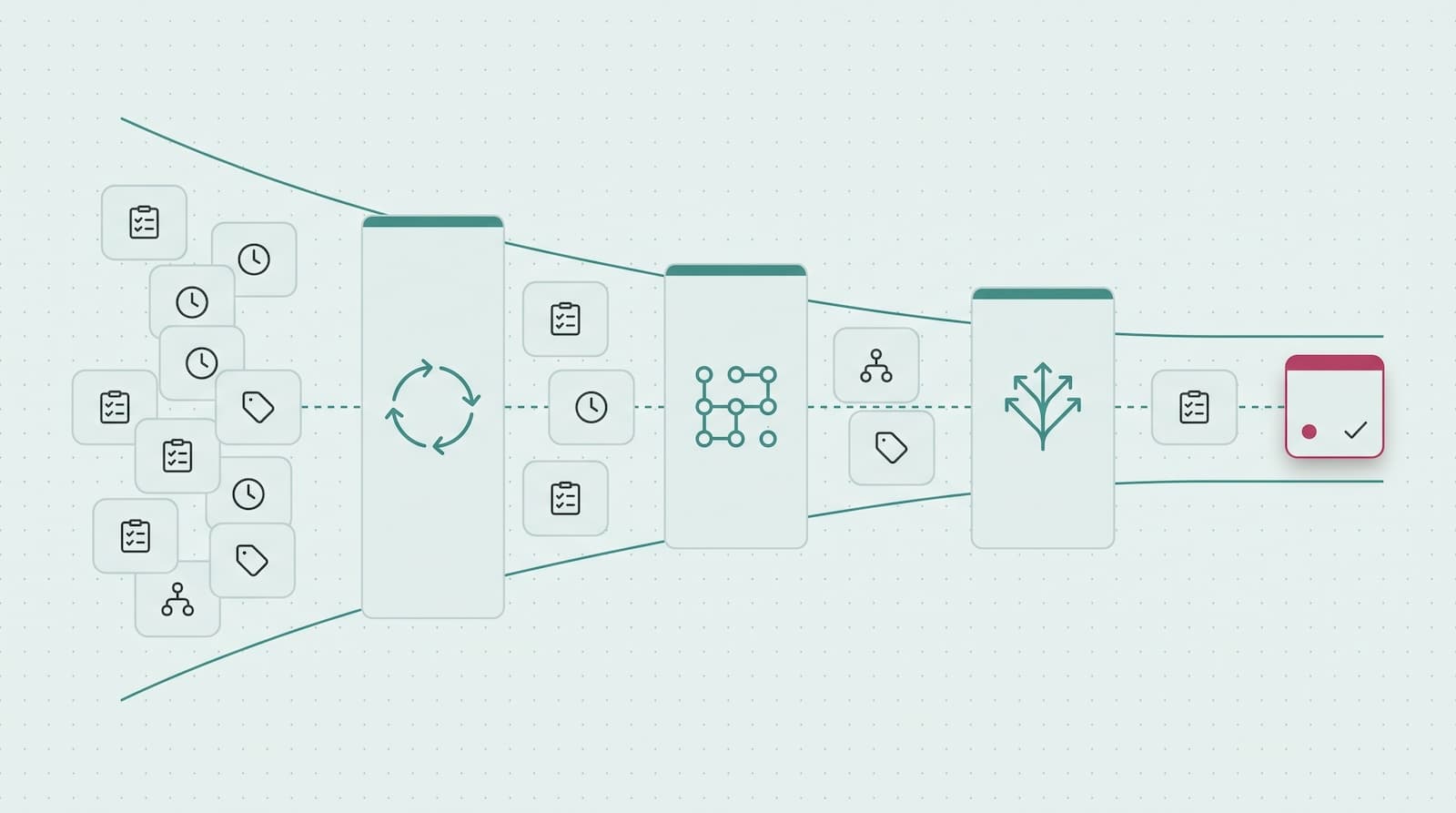
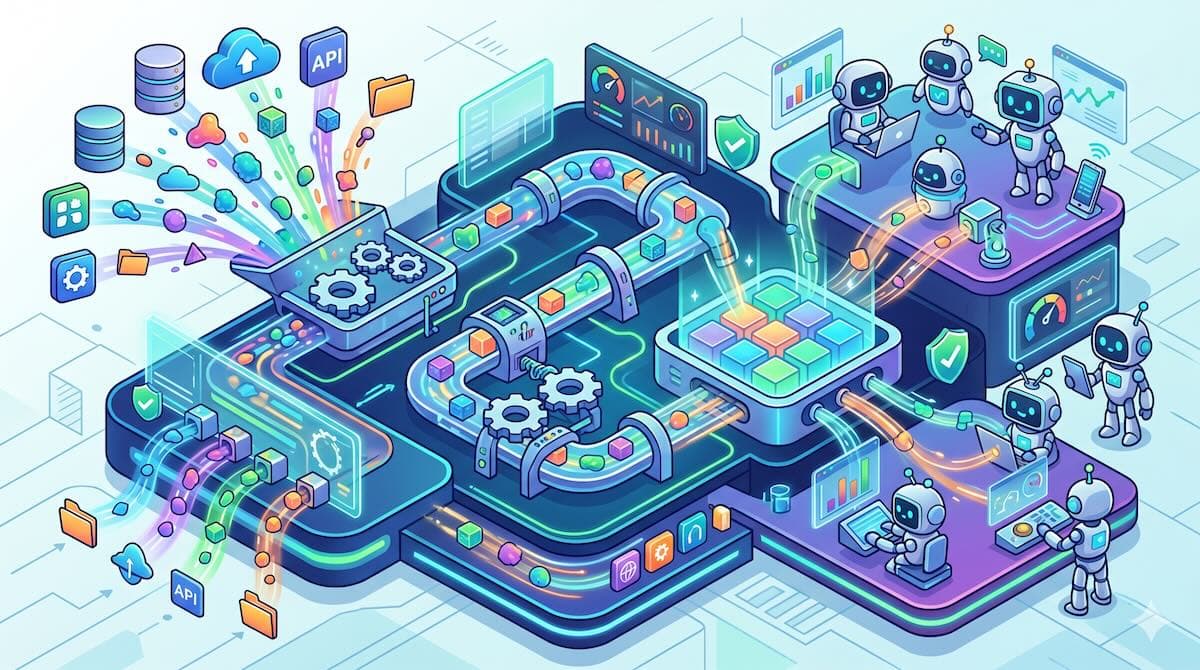
Production AI agents need five distinct infrastructure layers (RisingWave, 2026). Skip any one of them, and you'll find out in production, usually at 3 AM.
Layer 1: Ingestion and Change Data Capture
This is where fresh data enters the system. CDC (Change Data Capture) pulls changes from PostgreSQL, MySQL, MongoDB, and SQL Server directly from transaction logs, no polling, no batch windows. You're also ingesting from Kafka streams, REST APIs, cloud storage events, and application logs.
The ingestion layer has to handle schema evolution without breaking downstream consumers. When a source team adds a column, your agent shouldn't start hallucinating values for it.
Most teams over-invest in the model layer and under-invest in ingestion. I've seen teams spend six figures on fine-tuning while their ingestion pipeline silently drops 3% of events during peak load. The model can't compensate for missing data.
Layer 2: Streaming Transformation and Normalization
Raw change events aren't useful to agents. You need a continuous transformation engine, RisingWave, Kafka Streams, or Apache Flink, that converts raw database changes into incrementally maintained materialized views.
This layer also handles format normalization: PDF invoices are converted to structured JSON, call transcripts to timestamped text chunks, and HTML product pages to clean descriptions. The agent should never see raw formats.
A streaming database that computes embeddings in-line, like openai_embedding(), called directly in a materialized view, eliminates the need to maintain a separate embedding pipeline that can drift out of sync with the source data.
Layer 3: The Context Store (Serving Layer)
This is where agents query for the information they need at inference time. It must serve structured SQL queries and semantic vector searches from the same system, returning results in milliseconds (Redis, 2026).
The critical architectural rule: feed your context store from the same streaming pipeline that processes trigger events. When an agent receives an event at T+40ms and queries for enrichment context, that context must also reflect the world at T+40ms, not T-4 hours from the last batch run.
Freshness mismatches are the most common production failure mode I see. A real-time trigger enriched with four-hour-old context produces decisions that look correct but aren't.
Layer 4: Agent Runtime
This is where the LLM calls happen. The runtime consumes events, queries the context store, runs inference, and executes actions, whether that's calling an API, updating a record, or routing to a human.
The runtime pattern you choose, ReAct (iterative reasoning), Plan-and-Execute (upfront planning), or multi-agent orchestration, determines how frequently and in what pattern the agent hits your data layer. Multi-agent systems amplify every infrastructure weakness because each agent in the chain depends on the output of the previous one.
Layer 5: Governance and Observability
Every agent action needs a complete decision trace: event received → context queried → decision made → action taken. Without this, you have autonomous systems making unexplainable choices with real business consequences.
Organizations using AI governance tooling ship 12x more projects to production than those without (Databricks, 2026). Governance isn't a brake on velocity; it's what lets you move fast without breaking things.
Why Can't You Use Your Existing Data Warehouse?
This is the question every data team asks, and it's a fair one. You already have Snowflake or BigQuery. Why build something new?
The answer is freshness. Batch ETL warehouses operate on 1- to 24-hour refresh cycles. Micro-batch approaches might get you down to 5-15 minutes. Neither is adequate for an agent with authority to make financial decisions or interact with customers in real time.
Compare the architectures:
Architecture | Data Freshness | Agent-Ready? |
|---|---|---|
Batch ETL + warehouse | 1–24 hours | No |
Micro-batch (5-min intervals) | 5–15 minutes | No |
API polling (60s intervals) | 1–2 minutes | Borderline |
Webhook-triggered | 1–10 seconds | Getting close |
Event-driven streaming | <50ms | Yes |
(Streamkap, 2026)
API polling seems appealing, but it creates a vicious cycle: the fresher you need the data, the more you poll, the more load you generate, and the slower everything gets. Webhooks are event-driven but unreliable, have no replay capability, no ordering guarantees, and no fan-out. When a webhook fails, that event is gone.
Streaming provides three properties you can't get elsewhere: guaranteed delivery with replay, total ordering within partitions, and fan-out to multiple consumers without additional load on the source. For agents, these aren't nice-to-haves. They're the difference between a system you trust and one you constantly second-guess.
What Are the Memory Requirements for Agent Data Systems?
Agents need more than just fresh data; they need memory. Five distinct types, each with different infrastructure implications (Redis, 2026):
Memory Type | What It Stores | Infrastructure Pattern |
|---|---|---|
Short-term | Current conversation, recent actions | Context window + Redis for sub-ms access |
Long-term | User preferences, historical patterns | Persistent storage + vector embeddings |
Episodic | Specific past events with temporal context | Ordered event stores with timestamps |
Semantic | Factual knowledge, product catalogs | Dense + sparse hybrid vector search |
Procedural | Learned behaviors, tool definitions | Tool registries, fine-tuned routing models |
The infrastructure implication is significant: you can't serve all five memory types from a single database. Short-term memory needs sub-millisecond latency. Semantic memory requires an approximate nearest-neighbor search over millions of vectors. Episodic memory needs time-ordered event replay.
Semantic Caching: The Hidden Cost Lever
Here's something most teams discover too late: semantic caching can cut your LLM API costs by up to 70% while making responses up to 15x faster on cache hits (Redis LangCache, 2026).
Unlike exact-match caching, semantic caching recognizes that "what's the status of order #12345" and "has my package shipped yet, order 12345" are the same question. For customer-facing agents handling thousands of similar queries daily, this is the difference between a manageable bill and a CFO intervention.
How Do Real-Time Agents Actually Process Events?
Every real-time agent follows a five-stage loop: sense, contextualize, decide, act, learn (Streamkap, 2026). Each stage has specific latency targets that compound into the total decision time.
Stage 1: Sense (<50ms)
Receive the streaming event from the source system, a payment processed, an inventory level changed, or a customer message arrived. The event must reach the agent within 50ms of the source change.
Stage 2: Contextualize (~5ms)
Enrich the event with fresh context from your serving layer. Who is this customer? What's their order history? What's the current inventory position? This lookup must complete in single-digit milliseconds.
Stage 3: Decide (30ms–2s)
Run inference, LLM call, rules engine evaluation, or model scoring. This is the most variable stage. A simple classification model might return in 30ms. A multi-step LLM reasoning chain could take two seconds.
Stage 4: Act (Varies)
Execute the decision: update a record, call an API, send a message, or escalate to a human. Latency depends entirely on the target system.
Stage 5: Learn (Async)
Log the full decision trace for auditing, monitoring, and model improvement. This is asynchronous; it shouldn't block the response path.
What This Looks Like in Practice
A fraud detection agent at a payment processor handles the loop like this:
T+0ms: Payment authorization request arrives via Kafka
T+40ms: Event reaches agent runtime
T+45ms: Context enriched, customer profile, device fingerprint, recent transaction patterns
T+75ms: ML model returns risk score
T+80ms: Decision, approve, flag for review, or decline
That's under 100ms end-to-end. The company reported a 62% reduction in fraud losses after moving from a batch-scoring system to this streaming architecture (Streamkap, 2026).
The same pattern applies to customer service agents, supply chain optimizers, and dynamic pricing systems—the domain changes. The loop doesn't.
What Are the Most Common Infrastructure Mistakes?
After talking to dozens of teams building agent infrastructure and watching our own deployments evolve, we've seen these mistakes keep showing up.
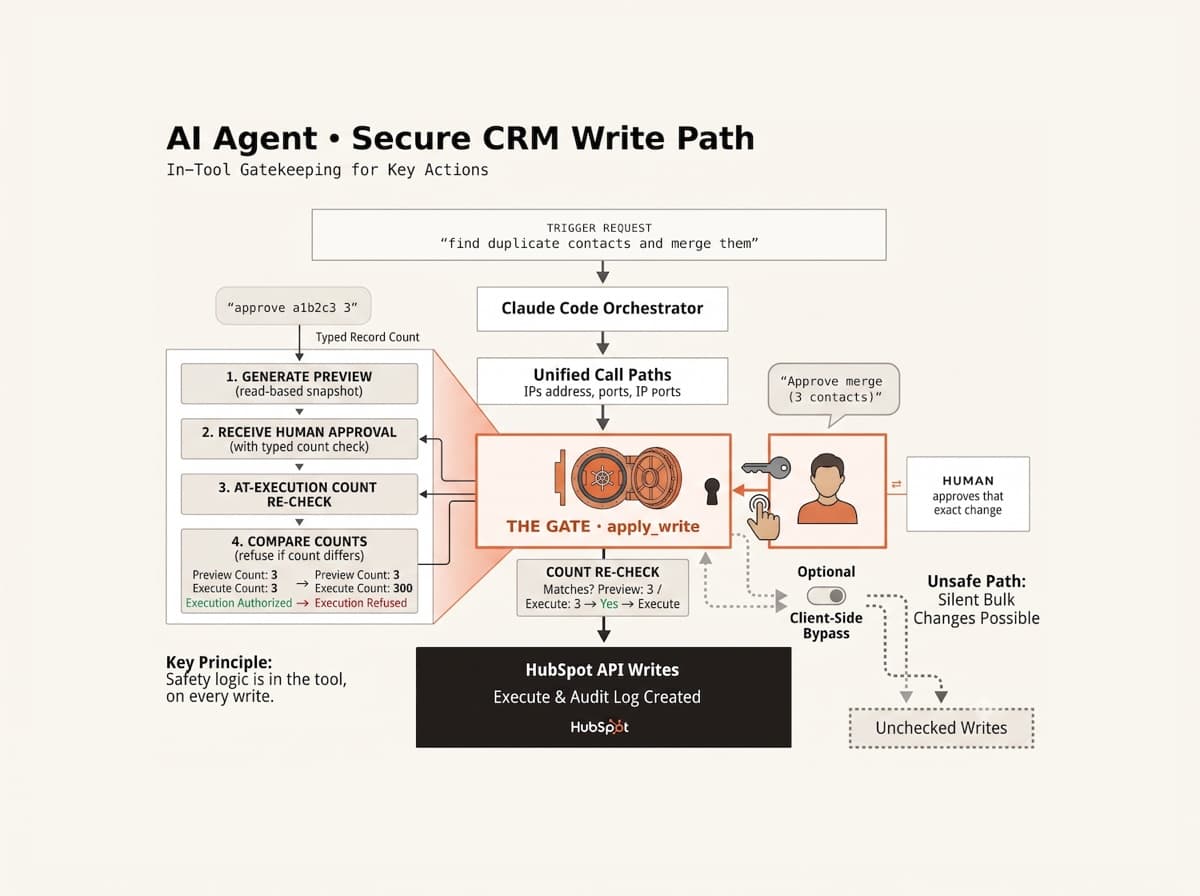
Giving agents direct write access to production databases. If an agent can write to your primary PostgreSQL instance and it hallucinates aDELETE FROM orders, you're having a very bad day. Always use CDC to replicate to a read-only serving layer that agents query. Write-backs go through validated API endpoints with guardrails.
Building a separate vector database alongside your streaming infrastructure. If your streaming database has native vector support, and RisingWave and Redis both do in 2026, maintaining a separate vector DB doubles operational complexity. More importantly, it creates freshness gaps between your structured data and your embeddings.
Treating real-time as a feature flag. You can't build a batch system and toggle it to real-time later. Real-time is an architectural property; the data model, delivery guarantees, and failure modes are fundamentally different.
Running without decision traces. When an autonomous agent makes a $10,000 procurement decision at 2 AM, and your CFO asks why, "the model decided" is not an acceptable answer. Every decision needs a trace: event, context snapshot, model response, action taken.
Ignoring backpressure. When events arrive every 10ms, but LLM inference takes 2 seconds, you need a buffering strategy. Without it, you'll silently drop events or blow out memory. Neither is visible until it's a production incident.
How Do You Get Started Without Rebuilding Everything?
You don't need to rip out your existing data stack. The pragmatic path is incremental:
Week 1-2: Audit your freshness. For each data source your agents will query, measure actual end-to-end latency from source change to agent availability. Most teams are surprised by how stale their "real-time" data actually is. If you find 4-hour gaps (and you will), you've identified your first project.
Week 3-4: Add CDC to one critical source. Pick the data source where staleness causes the most pain, customer profiles, inventory levels, order status, and add Change Data Capture to stream changes to a lightweight serving layer. You don't need a full streaming platform on day one.
Month 2: Implement decision tracing. Before you give any agent more autonomy, make sure every decision is logged: event, context, decision, action. This unblocks debugging, compliance, and trust. It's also how you'll justify the infrastructure investment to leadership, with real data on what the agents are doing.
Month 3: Add semantic caching. If you're running LLM-based agents, semantic caching delivers the fastest ROI. Set it up, measure the cache hit rate, and watch your API bill drop.
Month 4+: Expand the streaming layer. Once you've proven the pattern with one source and one agent, expand. Add more CDC sources. Build more materialized views. The infrastructure grows with your confidence, not ahead of it.
The organizations winning with AI agents aren't the ones with the best models. They're the ones that got the data plumbing right first.
Frequently Asked Questions
Do I really need streaming infrastructure, or can I start with batch?
If your agents only need historical analytics, batch is fine. But if they're making real-time decisions like routing customers, detecting fraud, or adjusting prices, batch staleness leads to incorrect decisions. Start with a single CDC pipeline for your most latency-sensitive source and expand from there.
What's the difference between a vector database and a streaming database with vector support?
A dedicated vector database only handles embeddings. A streaming database with vector support (RisingWave, Redis) handles both your structured operational data and embeddings in the same system, keeping them synchronized. This eliminates the most common production issue: fresh structured data paired with stale embeddings.
How do MCP and agent data infrastructure relate to each other?
MCP (Model Context Protocol) standardizes how agents discover and query data sources. Instead of writing custom connectors for every database, MCP-compatible agents can auto-discover available data and query it through a standard interface. It's the protocol layer between agent runtime and data infrastructure.
What governance do I need before putting agents in production?
At minimum: decision traces for every action, human-in-the-loop thresholds for high-risk decisions, rate limits and spending caps, and audit trails that connect agent decisions to specific context snapshots. Organizations using governance tooling ship 12x more projects to production (Databricks, 2026).
How much does this infrastructure cost to run?
The compute cost of a streaming pipeline is typically 10-20% of the LLM API costs it supports. But semantic caching alone can cut LLM costs by 70% (Redis, 2026), making the infrastructure effectively free. It pays for itself through reduced inference spend. The real cost is the engineering time to set it up, and the incremental approach above keeps that manageable.
The Data Layer Is the Moat
LLMs are commoditized. Every agent builder has access to the same models: GPT, Claude, and Gemini. What they don't have is your data, your real-time context, your decision traces, your governance patterns.
The teams treating data infrastructure as a prerequisite rather than an afterthought are the ones shipping agents that actually work in production. The rest are running expensive demos.
Start with freshness. Add CDC to one source. Trace every decision. The model can wait, the pipeline can't.