
On this page
Why Prompt Engineering Projects Fail: 7 Critical Mistakes That Kill Enterprise AI Initiatives
95% of AI pilots fail. Learn the 7 critical prompt engineering mistakes that kill enterprise AI initiatives and get actionable frameworks to fix them now.

The potential for generative AI to deliver trillion-dollar economic value is well-documented, but so is the difficulty of capturing it. The hard truth is that the vast majority of enterprise AI pilots fail to reach production and deliver measurable business value. For many organizations, the story is a painful composite of common failure patterns: a promising prompt engineering initiative, backed by an 18-month timeline and a multimillion-dollar budget, gets quietly shelved after its flashy demo proves too brittle in the real world. The enthusiasm evaporates, stakeholders lose confidence, and the AI transformation stalls.
The problem isn't the technology—it's that enterprises' approach to prompt engineering is experimental "prompt hacking" rather than a mature production discipline. The gap between a clever proof of concept and a resilient, scalable AI application is where most initiatives fall apart. This analysis breaks down the seven critical mistakes that create that gap and provides a clear framework for building AI systems that last.
The Hidden Cost of Prompt Engineering Failures
Enterprises are drawn to prompt engineering for good reason. It promises speed, flexibility, and a lower barrier to entry for building sophisticated AI capabilities. But this initial success is often a mirage. When it comes time to scale, integrate, and govern these systems, a lack of engineering discipline creates high hidden costs—from spiraling operational expenses to the high cost of building robust evaluation datasets and observability tooling.
These costs aren't just financial. They manifest as project delays, reputational damage from public failures, compliance breaches, and a loss of competitive momentum. The seven mistakes detailed below represent the systematic failure to treat prompts as mission-critical software assets. Understanding them is the first step to avoiding them.
Sidebar: Hidden Costs to Expect
Successful PromptOps isn't free. As you mature, be prepared to budget for:
Evaluation & Data Creation: Building and maintaining high-quality test suites is a significant, ongoing effort.
Observability Tooling: Logging, tracing, and monitoring tokens, latency, and costs at scale requires dedicated tools.
Governance Overhead: The time spent on reviews, approvals, and compliance checks is a real cost that ensures safety and stability.
Talent & Training: Upskilling teams to treat prompts like code requires investment in training and the creation of new roles.
The 7 Critical Mistakes
Mistake #1: Treating Prompts as Documentation Instead of Code
The Problem:
Your most critical prompts—the logic dictating your AI's behavior—are scattered across Slack, Google Docs, and Confluence. There's no single source of truth. The "last person to edit wins" is the unofficial change management policy, and different teams unknowingly use outdated or modified prompts, leading to confusion.
Business Impact:
This "prompt anarchy" makes consistent performance impossible. One department achieves excellent results, while another consistently experiences failures. When performance suddenly degrades after a model update, you have no way to diagnose the issue because you can't trace the change history. Your team spends countless hours recreating prompts that worked last week, and you have no audit trail, making compliance a non-starter.
The Fix:
Stop treating prompts like sticky notes and start treating them like code.
Implement a risk-based version control policy. Mandate that all production-bound prompts live in a Git-based repository or a dedicated prompt management platform where every change is tracked, commented on, and auditable.
Establish tiered change management workflows. Not all changes need a full pipeline. Use risk tiers to determine the required gates and reviewers—a typo fix is different from a logic overhaul.
Link prompt versions to performance baselines. Each version should include associated documentation, evaluation results, and the business use case it supports.
Build automated rollback capabilities. When a new prompt version causes a regression, you need the ability to revert to a previous, stable version in seconds.
Mistake #2: No Systematic Evaluation or Quality Assurance
The Problem:
Success is measured by whether the output "looks good" in a handful of cherry-picked demos. There are no standardized test suites, no evaluation against edge cases, and no benchmarking to prove a new prompt is actually better. Quality assurance is entirely subjective, leaving your production systems vulnerable to silent failures.
Business Impact:
This lack of rigor is a ticking time bomb. Subtle hallucinations and factual errors slip through the cracks and are only discovered by frustrated customers. A routine update to a foundational model causes performance drift that goes unnoticed for weeks. Without quantitative metrics, you can't prove ROI, making it impossible to justify continued investment.
The Fix:
Embed evaluation into every step of the prompt lifecycle.
Develop comprehensive evaluation datasets. Start with a seed set of 50-100 high-quality examples, but plan to scale this to hundreds or thousands for critical applications. This must include adversarial examples and regression suites to prevent old bugs from reappearing.
Implement automated testing pipelines. Integrate prompt evaluation into your CI/CD process. Each time a prompt is updated, it should automatically run on your evaluation datasets using clear pass/fail criteria.
Use contract tests for model updates. Before adopting a new model version, run it against a suite of tests that verify its outputs for known failure modes. This catches regressions before they hit production.
Monitor for drift—track KPIs like latency, cost-per-task, and quality scores in real-time. Tie alerts to vendor model version changes to immediately flag performance degradation.
Sidebar: What is Systematic Prompt Engineering?
This isn't just about writing clever text. It's a data-driven discipline focused on optimizing prompts based on performance against objective metrics. It involves:
Creating structured test cases (evaluation sets).
Defining clear success metrics (e.g., accuracy, F1 score, pass rate).
Iterating on prompt variations and measuring which changes improve performance.
Automating this process to ensure quality and consistency at scale.
Mistake #3: Accumulating Technical Debt Through Ad-Hoc Prompt Chaining
The Problem:
Your first multi-step workflow was a simple two-prompt chain. Now, it's a tangled web of interconnected prompts, each hard-coded to expect a specific output from the previous one. The system is a brittle, monolithic mess that no one is willing to touch.
Business Impact:
Innovation grinds to a halt. A simple change to one prompt requires manually updating five others, and the risk of breaking the entire chain is enormous. New team members are lost, as the workflow is undocumented and unintelligible. The system is too fragile to scale or enhance with new features.
The Fix:
Apply software architecture principles to your prompt designs.
Use abstraction layers. The most critical fix is to decouple your business logic from the prompts themselves. This allows you to swap out prompts, tools, or models without rewriting your core application code.
Refactor chains into modular components. Break down complex workflows into smaller, reusable prompts that perform a single, well-defined task.
Standardize I/O formats. Use consistent data structures (e.g., JSON) for each prompt's inputs and outputs to create a stable, testable interface.
Create shared prompt libraries. Build a centralized library of tested, versioned, and reusable prompt components that teams can import into their workflows.
Mistake #4: Governance and Compliance Gaps
The Problem:
Multiple teams are building AI features in silos. There is no central oversight or consistent process for identifying and mitigating risks. Each team negotiates its own vendor contracts, resulting in a complex web of security policies and procedures. When auditors ask for a record of how a specific output was generated, you have no answer.
Business Impact:
This governance vacuum exposes the organization to significant regulatory risk. Inconsistent safety filters create a chaotic user experience. More importantly, it leaves you vulnerable to attacks like prompt injection, data exfiltration, and jailbreaking. Vendor sprawl introduces security vulnerabilities and cost inefficiencies, and a lack of audit trails can block deployment in regulated industries.
The Fix:
Establish a centralized governance framework grounded in shared standards, with decentralized ownership.
Form an enterprise AI governance committee. This cross-functional group should set clear, neutral policies for data handling (e.g., data minimization, retention), access controls, and acceptable use.
Implement centralized, automated safety checks. Mandate that all prompts undergo automated scanning for PII, toxicity, bias, and security vulnerabilities before deployment.
Standardize vendor management. Consolidate AI service procurement to improve security posture, leverage volume discounts, and ensure consistent contractual terms.
Build comprehensive audit logging. Log every prompt, its version, the input data, and the final output to create an immutable record for compliance and debugging.
Mistake #5: Choosing the Wrong Use Cases for Initial Implementation
The Problem:
Your first project is an ambitious, customer-facing chatbot sold with unrealistic expectations of near-perfect accuracy. The team focuses on a "cool" application rather than a high-impact internal problem. There's no clear framework for measuring ROI, so success is subjective.
Business Impact:
This high-stakes gamble almost always fails. A public failure destroys internal confidence in the entire AI program. Unrealistic expectations lead to disillusionment when the pilot doesn't perform flawlessly. Resources are squandered, and without a clear ROI, the team can't make the business case for scaling its efforts.
The Fix:
Be strategic and start with internal, high-value problems.
Prioritize back-office automation. Focus first on internal productivity use cases where you can learn and iterate in a lower-risk environment.
Select applications where 80% accuracy is a win. Select repetitive tasks where automating most of the work provides immediate and measurable value.
Define task-appropriate metrics and SLAs. Ditch vague goals like "99.9% accuracy." Instead, use metrics such as evaluation set pass rates, F1 scores for structured extraction, or cost per successful outcome.
Build internal expertise first. Use initial projects to build skills and establish best practices before tackling more complex, customer-facing applications.
When Not to Use LLMs
To build credibility, know when to say no. LLMs are a poor fit for problems requiring:
Strict Determinism: If you need the same output for the same input every time.
Hard Real-Time Constraints: When millisecond-level latency is non-negotiable.
Absolute Factual Correctness: For tasks where even a single hallucination is unacceptable and cannot be mitigated by guardrails.
Mistake #6: Ignoring Change Management and User Adoption
The Problem:
A new AI tool is built and thrown over the wall to the business unit with little to no training or support. End users, who were never included in the design process, see the tool as a threat and actively resist using it. There are no internal champions to drive adoption.
Business Impact:
The result is a technically successful project that is a complete business failure. Adoption rates are near zero. Worse, this creates "Shadow AI," where employees use unapproved public tools, thereby bypassing all your security and governance measures. The investment is wasted, and cultural resistance kills future initiatives.
The Fix:
Treat every AI project as a socio-technical challenge from day one.
Secure line-manager ownership. Adoption isn't just an IT problem. Business managers must own the rollout, align team incentives, and create formal enablement plans to ensure success.
Provide a "paved road." To combat Shadow AI, provide teams with approved, easy-to-use tools and sandboxes. Make the official path the easiest path.
Design for augmentation, not replacement. Frame AI tools as assistants that handle tedious tasks, allowing humans to focus on strategic work. This reduces fear and increases buy-in.
Involve users in the design and testing process to build a sense of ownership.
Mistake #7: Vendor Lock-in and Model Dependency Risks
The Problem:
Your entire application is built around prompts finely tuned for a single proprietary model. You have no fallback strategy. Migrating to a new, better model from a different provider would require a complete rewrite because of provider-specific tokens and function-calling conventions.
Business Impact:
You've handed all your leverage to a single vendor. When an outage occurs, your business comes to a halt. When they announce a price increase, you have no choice but to pay. You are trapped, unable to capitalize on the rapid innovation happening across the AI landscape.
The Fix:
Build a model-agnostic architecture from the start.
Use an abstraction layer with per-model adapters. This is non-negotiable. This layer normalizes inputs and outputs, so your business logic doesn't care which model is being called.
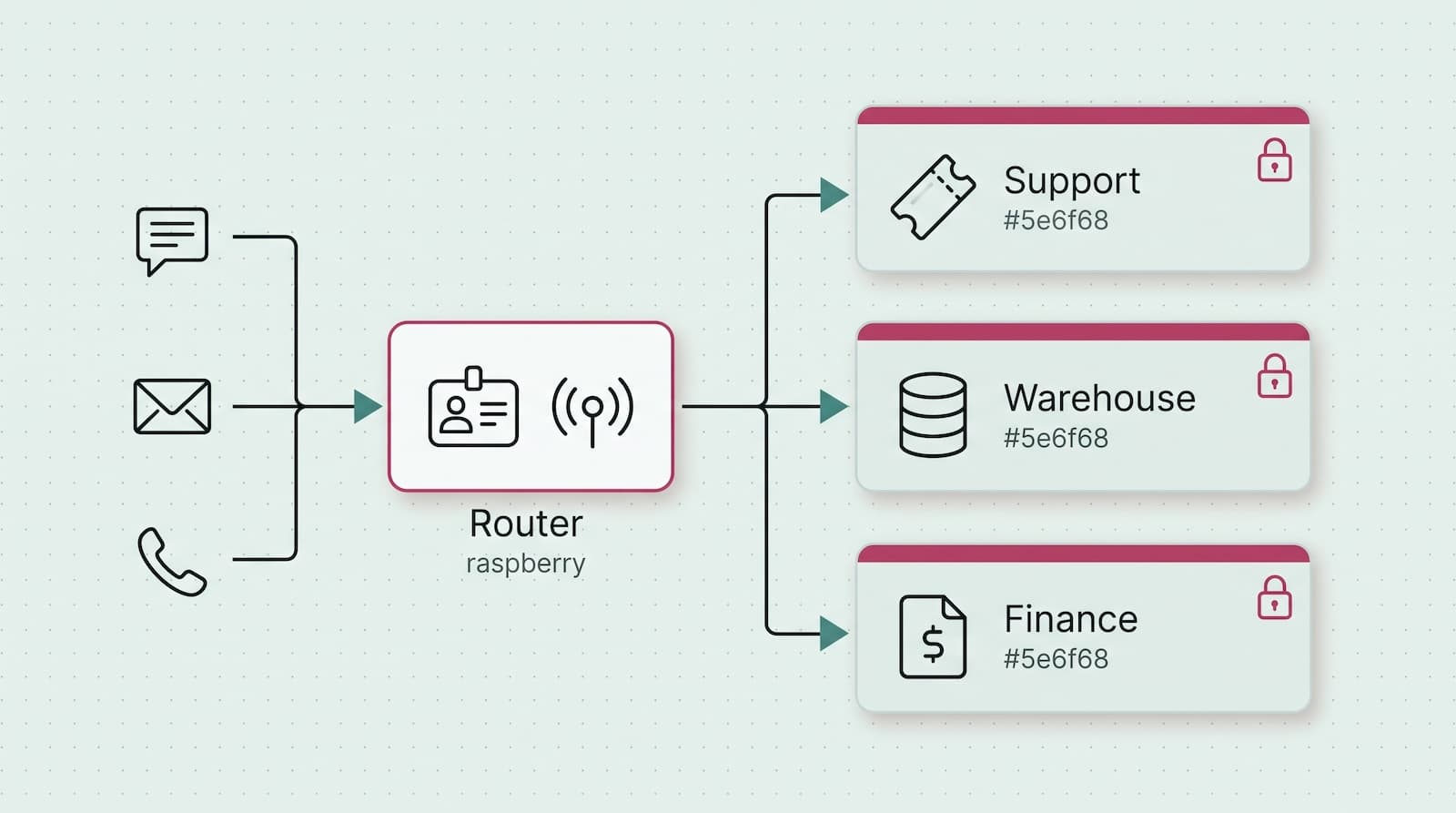
Implement intelligent multi-model routing. But be aware of the pitfalls: interface drift, inconsistent rate limits, and cost overruns. Your router needs per-model budget guards and health checks.
Strengthen your vendor contracts. Demand change-notification clauses, backward-compatibility windows, access to evaluation sandboxes before new models are released, and a precise data and artifact egress strategy.
Continuously benchmark models to identify opportunities to improve performance or reduce cost.
Recovery Strategies Section
The 30-Day Prompt Engineering Recovery Plan
If you recognize these mistakes, you can recover from them. This plan converts guidance into execution.
Week 1: Stabilize and Assess
Action: Freeze all non-critical prompt changes. Conduct a rapid audit of all production prompts to identify owners, dependencies, and business impact.
Accountability (RACI): AI Platform Lead (Accountable), Eng Managers (Responsible), Product (Consulted).
Exit Criteria: A prioritized risk register of all prompt-powered systems is complete and signed off.
Week 2: Implement Basic Governance
Action: Move all production prompts into a version control system. Establish a baseline change approval process (e.g., PR with one reviewer) for the top 5 most critical systems.
Accountability: Eng Manager (Accountable), Tech Leads (Responsible).
Exit Criteria: 100% of production prompts are in version control.
Week 3: Build the Technical Foundation
Action: Implement basic cost, latency, and error monitoring for the top 3 systems. Document and test a manual rollback procedure. Create a seed evaluation set (50+ examples) for the #1 highest-risk system.
Accountability: MLOps/Platform Team (Accountable), App Team (Responsible).
Exit Criteria: A live performance dashboard is in place, and a rollback has been successfully tested in a staging environment.
Week 4: Scale and Standardize
Action: Automate the evaluation pipeline for the #1 system. Publish the first official prompt development template and host a training session for all teams.
Accountability: AI Platform Lead (Accountable), All Eng Teams (Responsible).
Exit Criteria: At least one prompt is being automatically evaluated on every change, and the training session has been completed.
Emergency Protocol: The Production Fire Drill
Your recovery plan needs a "break glass" procedure. Define it now:
Feature Freeze Criteria: If key quality metrics (e.g., evaluation pass rate) drop by more than X% or latency increases by more than Y%, all deployments are automatically halted.
Emergency Rollback: A one-click, no-approval-needed process to revert a critical system to its last known good state, triggered by the on-call engineer.
Building a Prevention Framework: PromptOps Best Practices
Recovery is the first step. Prevention is the goal. Adopt a "PromptOps" mindset to build resilient, scalable AI systems.
Development Standards:
Prompts as Code: All prompts are versioned, peer-reviewed, documented, and tested.
Component Libraries: A central library of reusable, tested, and versioned prompt components is available to all teams, providing a consistent foundation for development.
Mandatory Testing: No prompt is deployed without passing an automated suite of unit, integration, and regression tests.
Operational Excellence:
Automated Monitoring: Real-time monitoring of prompt performance, cost, and quality metrics with computerized alerts for anomalies.
Incident Response: Defined on-call responsibilities and runbooks for responding to AI system failures.
Disaster Recovery: Tested plans for failing over to backup models or providers.
Governance and Compliance:
Clear Ownership: Every prompt and system has a defined business and technical owner.
Regular Audits: Periodic reviews of prompt performance, safety, and compliance.
Immutable Logging: All prompt executions are logged to provide a complete audit trail.
Conclusion and Next Steps
The Path Forward
These mistakes are the predictable growing pains of a new engineering discipline. The organizations that gain a true competitive advantage from AI won't be the ones that never stumble. They will be the ones who recognize these challenges early, address them systematically, and build the operational maturity to manage prompts at scale. The race is not to create the cleverest demo; it's to make the most resilient and well-governed production system.
Immediate Next Steps
Ready to move from chaos to control? Here are a few ways to start:
Download our Prompt Engineering Maturity Assessment to benchmark your current practices against the PromptOps framework.
Schedule a free 30-minute consultation with our experts to diagnose the most significant risks in your prompt engineering lifecycle.
Access our template library for ready-to-use frameworks, evaluation datasets, and governance policies, all designed for prompt version control.
Final Thought
The question isn't whether your prompt engineering initiatives will face these challenges—it's whether you'll recognize and address them before they kill your AI transformation. The enterprises that succeed are those that learn from others' failures and build robust systems from day one.