
Databases Aren't Systems of Record Anymore
The database has been the most boring, stable layer in the stack for 40 years. That's over.
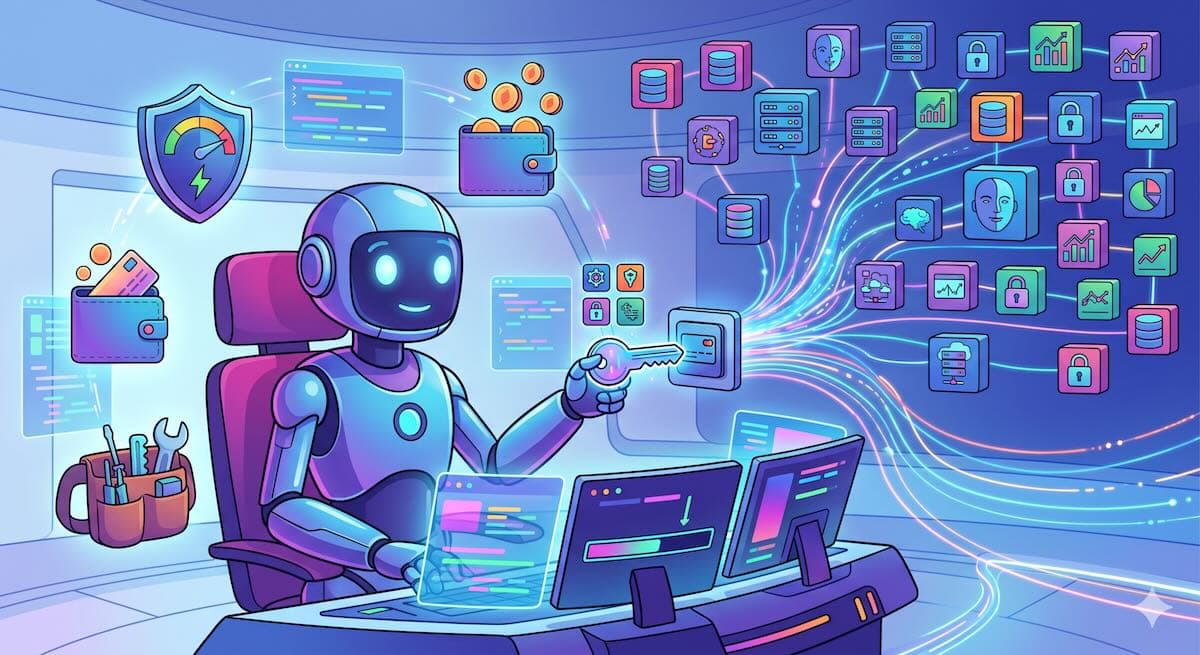
54% of organizations are now actively deploying AI agents, up from just 11% in early 2024 (KPMG, Q1 2026). These aren't chatbots, they're autonomous workers making financial decisions, modifying production schemas, and orchestrating supply chains without a human in the loop. And they're running on infrastructure that was never designed for them.
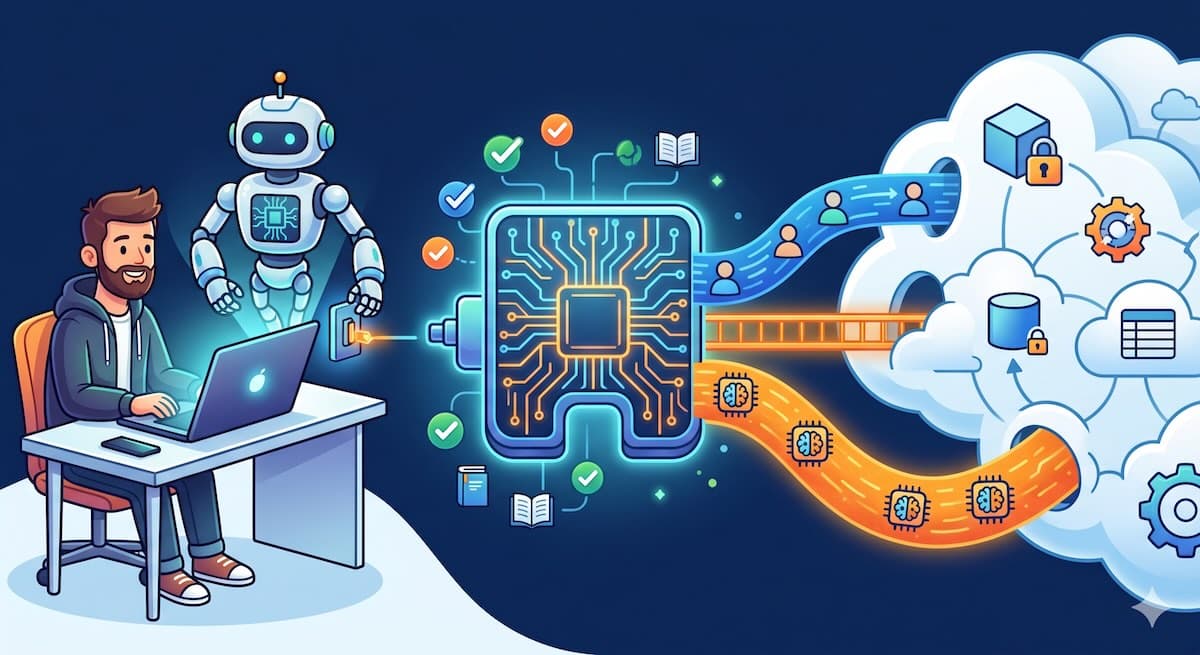
The database wasn't built for agents. It was built for slow, deliberative, UI-bound people who click buttons and fill forms. When you swap the consumer of data from a human to a fleet of machines that never pause, never second-guess, and never sleep, the entire contract between application and data layer breaks. This piece maps the five shifts that redefine what a database actually is in the agentic era, and what RevOps teams and AI builders need to do about it.
Key Takeaways
Agents create 20x more database branches and 50x more rollbacks than human developers (Neon/UC Berkeley, 2025), forcing a move from passive storage to programmable infrastructure
80% of organizations still rely on stale data for decisions. In agentic systems, eventual consistency means eventual cascade failure
96.5% of enterprises let AI touch production databases, but only 28.1% have mature governance. Automated policy enforcement needs to replace manual approval gates now
Video: AWS re: Invent 2025 - Databases made effortless, so agents and developers can change the world, by AWS Events. G2 Krishnamoorthy (VP Database Services) lays out the agentic database vision: MCP servers for all AWS databases, agentic memory frameworks, semantic caching, and a projection of 1.3 billion AI agents in production by 2028.
How Have We Thought About Databases for the Last 40 Years?
The relational database arrived in the 1970s and hasn't fundamentally changed its posture since. It stores data. It answers queries. It waits. The implicit assumption baked into every major database architecture, Oracle, PostgreSQL, MySQL, is that the thing on the other end of the connection is a human being. Humans are slow. They type at 40 words per minute. They read results, think about them, have lunch, come back, and run another query.
This model worked because the bottleneck was always the user. You could get away with batch processing windows, nightly ETL jobs, and eventually consistent replicas because the human on the other end wouldn't notice a five-minute lag. They probably wouldn't even notice a four-hour lag.
The entire edifice of modern data engineering, data warehouses, ETL pipelines, materialized views, and caching layers is an architecture built around the assumption that the consumer of data is the slowest component in the system. That assumption is now inverted. The consumer is the fastest component. And it has no intuition.
Building the data infrastructure that powers AI agents explores the pipeline architecture decisions that make or break autonomous workflows.
Why Does the CRUD Model Break in an Agentic World?
AI agents don't use databases the way people do. They create and destroy schemas. They branch execution contexts. They retry failed operations at machine speed. And when they read stale data, they don't pause and wonder if something's off. They execute.
Agents create 20 times more database branches and trigger 50 times more rollbacks than human developers, according to research from UC Berkeley's Sky Computing Lab analyzing internal data from serverless database provider Neon (UC Berkeley / Neon, 2025). The same research found agents drove a 5x increase in database creation rates.
The scale gets wilder when you look at production platforms. AI agents, rather than humans, now create more than 90% of new TiDB Cloud clusters each day. A platform with 100,000 users, where each runs 10 agent tasks with 10 branches, produces 10 million database instances (PingCAP, 2026). That's not a traffic spike. That's a fundamentally different operational model.
What makes this dangerous isn't the volume alone. It's that agents lack the human intuition to pause when something looks wrong. If a procurement agent ingests inventory data that's 20 minutes stale, it doesn't sense the discrepancy. It approves the purchase order. If a customer service agent reads a policy document that was updated four hours ago but hasn't propagated through the warehouse, they confidently give incorrect information. The failure mode isn't a crash; it's confident execution on bad data.
I've watched this play out in production RevOps environments where agentic pipelines touch CRM data. An agent queried a stale read replica of the opportunity table, saw a deal stage that was two hours old, and triggered a renewal sequence with outdated pricing terms. The model wasn't wrong. The pipeline wasn't broken. The data was just old enough to be dangerous, and the agent had no mechanism to detect that.
Why Are Databases Becoming Programmable Execution Environments?
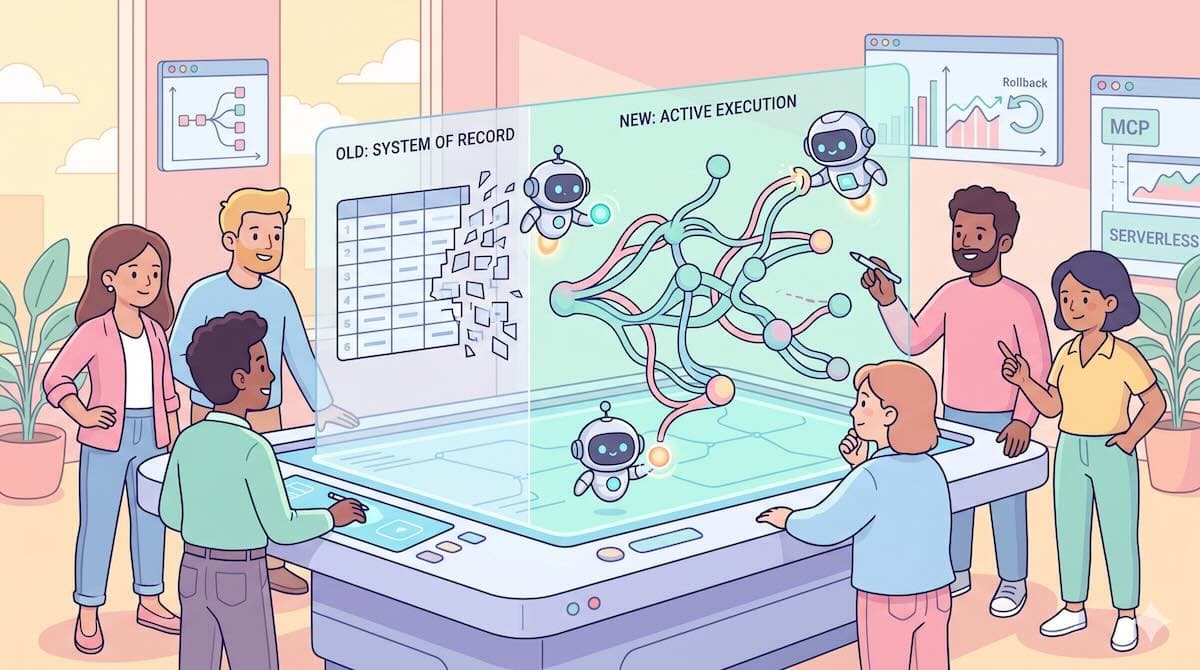
Databases are becoming execution environments, not filing cabinets. In a multi-agent architecture, the database isn't just where state gets persisted; it's where agents manage working memory, branch their logic, create ephemeral sandboxes for experimentation, and destroy them when the task completes.
This is a different paradigm than "database as persistence layer." It's closer to "database as an operating system for agent workflows." The system needs to spin up thousands of lightweight, isolated contexts at machine speed, each with its own schema state, transaction boundaries, and lifecycle. When the agent finishes, that context disappears. The data that matters persists; the scaffolding dissolves.
AI Agents vs Humans: Database Operation Volume Comparison AI Agents vs Humans: Database Operation Volume Sources: Neon/UC Berkeley (2025), PingCAP (2026)

Sources: Neon/UC Berkeley Sky Computing Lab, 2025; PingCAP, 2026
Think about what this means for RevOps architecture. Your CRM database isn't just where deal records live. It's where agentic pipelines will fork the opportunity table, run what-if analyses across thousands of parallel branches, merge winning paths, and roll back dead ends, all without a human clicking "Create new sandbox." If your database can't do this, your agents can't either.
But branching creates a second-order problem most teams overlook: consistency. When an agent merges a branch, every downstream agent in the pipeline needs to see the merged state immediately, not only when the replica catches up. The execution model and the consistency model aren't separate concerns. They're the same problem.
Why Is Eventual Consistency Dead in the Agentic Era?
Here's a statement that would have gotten you laughed out of a distributed systems conference five years ago: in the agentic era, eventual consistency is a liability, not a feature.
Agents read and react to data instantly. In a distributed architecture where specialized worker agents orchestrate complex tasks across multiple systems, they don't wait for replicas to catch up. They read whatever the nearest node returns and act on it. If that data is stale, the agent doesn't know. It executes. And in a multi-agent pipeline, one agent's wrong output becomes the next agent's input, creating cascading failures that are nearly impossible to trace back to the root cause.
80% of organizations still rely on stale data for decision-making, and 85% of data leaders admit outdated data has directly cost their companies money (IBM, 2025). That's the human cost of stale data: bad decisions made by people who at least have the capacity to notice something's off. Now remove the human from the loop and multiply throughput by a thousand.
The dirty secret of the agentic architecture movement is that most teams are building autonomous systems on eventually consistent foundations, and they won't find out until a cascade failure takes down something that matters. The fix isn't adding more caching or faster replication. It's serializable consistency as a baseline requirement, designed into the database layer rather than bolted on after the fact.
Consider a revenue operations pipeline where an agent reads a customer's current contract value from a read replica that's 12 minutes behind the primary. It calculates an upsell offer based on that stale number, triggers a Slack message to the account team, and updates the CRM with a proposed deal that's now wrong by $40,000. The sales rep acts on it. The customer sees the wrong number. Trust erodes. Not because anyone made a mistake, but because the database allowed a read that wasn't up to date.
This is the fundamental tension. Distributed systems taught us to trade consistency for availability. Agentic systems can't make that trade.
What's Driving the Great Unbundling Reversal Toward Multi-Modal Fabrics?
For the past decade, the database market rewarded specialization. You had your transactional database (PostgreSQL), your analytical database (Snowflake), your vector database (Pinecone), your graph database (Neo4j), and a Kafka cluster gluing them together with brittle ETL pipelines. Each tool was purpose-built for one workload.
Agents don't care about your architectural purity. They need to run a semantic search, traverse a relationship graph, pull real-time operational metrics, and write a transaction, all within a single reasoning pass. Making four round-trip queries to four different database systems, each using a different query language, isn't just slow. It breaks the agent's context.
The vector database market is projected to reach $2.6– $3.0 billion in 2025 and is growing at roughly 23% year-over-year (Fortune Business Insights, 2025). But the long-term trend isn't toward more specialization, it's toward convergence. AWS is projecting 1.3 billion AI agents in production by 2028 (AWS re: Invent 2025), and all of them will need multidimensional context from a single query surface.
SurrealDB, which raised a $23 million Series A extension in February 2026 to position itself as the first AI-native multi-model database, is betting that the next generation of applications won't ask "which database should I use for this feature?" They'll ask, "Can my database handle vector, graph, relational, and temporal queries in the same transaction?" It's a bet worth watching: 2.3 million downloads and 31,000 GitHub stars suggest the market agrees (SurrealDB, 2026).
Understanding how multi-agent systems reason, route, and execute gives you the architectural foundation these database shifts depend on.
Practical implication for AI builders: if you're evaluating a database for an agentic workload and it only does one thing well, you're building technical debt into your architecture from day one.
But architecture isn't the only thing that breaks when agents replace humans as the database's primary consumers. The economics break, too, and in ways that can blindside a P&L if you're not watching for them.
What Happens to Database Costs When Agents Never Sleep?
Human traffic patterns are predictable. People sleep. They take weekends off. Your database knows when peak load is coming, and autoscaling can handle it with reasonable headroom.
Agent traffic patterns are chaotic. Fleets of agents retry, branch, validate, and re-execute their own work. They don't observe business hours. They don't get tired. They can generate massive, unpredictable surges: a thousand agents all deciding to retry a failed operation simultaneously, or a recursive reasoning loop spawning hundreds of parallel branches.
AI and machine learning costs have already hit 5.86% of total cloud spend, up from roughly 1.5% in January 2025 (CloudZero, May 2026). That's a 4x increase over 16 months, and it doesn't include the database costs incurred by downstream agent workloads.
AI/ML Costs as a Share of Total Cloud Spend (2025-2026) AI/ML Costs as Share of Total Cloud Spend Source: CloudZero Cloud Economics Pulse (May 2026), based on $1.5B+ anonymized cloud spend

Source: CloudZero Cloud Economics Pulse, May 2026
The economic model that matters isn't "how much does the database cost at steady state." It's "what happens when 500 agents all decide to run parallel what-if analyses simultaneously?" The answer has to be: the database scales up instantly, serves every request with consistent performance, then scales back to near-zero when the burst ends. AWS's Aurora Serverless v4, launched in December 2025, delivers 45% faster scaling and explicitly targets scale-to-zero for agentic workloads (AWS, 2026). That's the pattern every agentic database will need to follow.
For RevOps teams building on usage-based pricing models, this is especially acute. If your agents' database costs scale linearly with their activity, you've just tied your margins to agent utilization, which is the opposite of the efficiency story you sold to the CFO.
The ROI case for AI revenue tools walks through the frameworks RevOps teams need when the CFO asks why the database bill just doubled.
Video: AI-Powered Autonomous Databases (Ep 53 with guest Miran Badzak) by It's About Data. IBM's Executive Director of Databases presents a five-level autonomous database roadmap with swarms of AI agents targeting a 95% reduction in manual database management by 2026.
Elastic scaling solves the cost problem. But it creates a governance problem. When your database can spin up and down in milliseconds, and agents are modifying schemas inside those ephemeral instances, who's keeping track of what changed, why, and whether it should have happened at all?
How Do You Govern a Database That Agents Modify in Milliseconds?
96.5% of enterprises now let AI and LLMs interact with production databases. But only 28.1% have reached what Liquibase calls "Managed" or "Optimized" governance maturity. Worse: 64.3% are already experiencing data quality failures as a direct result of poor governance (Liquibase, 2026).
Those numbers should terrify anyone running agents in production. We've handed autonomous systems the keys to our most critical data stores, and two-thirds of us are watching them drive into ditches without guardrails.
Traditional database governance is built around the pull request. A human writes a migration, a human reviews it, a human approves it, and a CI pipeline applies it. That process takes hours or days. Agents modify schemas in milliseconds. You cannot insert a manual approval gate into a loop that runs at machine speed; you'll either block the agent entirely or, more likely, the agent will route around your process and make the change anyway.
The replacement isn't "no governance." It's continuous, policy-as-code enforcement that runs at the same speed as the agents themselves. Schema drift detection is built into the database engine. Audit trails that capture every autonomous change with full provenance. Scoped rollbacks that can undo an agent's mistake without affecting concurrent operations. These aren't nice-to-haves; they're the minimum viable governance surface for any database that agents can touch.
Gartner predicts over 40% of agentic AI projects will be canceled by the end of 2027 due to escalating costs, unclear business value, or inadequate risk controls (Gartner, 2025). Governance isn't the exciting part of the AI strategy deck. But it's the part that determines whether your initiative survives 2027.
Strategic knowledge management in the agentic era holds that what you govern matters more than what you document, and that the database is where governance is actually enforced.
What Does This Mean for RevOps Teams and AI Builders?
If the database is becoming the active surface area of your application rather than its quiet foundation, your evaluation criteria need to change. Here's what to look for when assessing whether a database can handle agentic workloads, whether you're selecting one for a new AI-native product or auditing the one your RevOps stack already runs on.
Branching and context isolation. Can the database create thousands of lightweight, isolated execution contexts at machine speed and destroy them cleanly? If you're building multi-agent systems, this is table stakes. If your CRM database can't branch, your agents can't experiment safely.
Consistency guarantees. What are the actual consistency semantics under concurrent agent workloads? "Eventually consistent with a 50ms lag" might work for dashboards. It doesn't work for agents making pricing decisions.
Multi-modal query surface. Can a single connection handle vector search, graph traversal, relational queries, and time-series analysis without context-switching? Every additional database you introduce is another failure mode and another latency hit in the agent's reasoning loop.
Elasticity and cost model. Does the database scale to zero or near-zero when agents aren't hammering it? What does the cost curve look like at 10x, 100x, and 1000x the baseline query volume? Agent workloads are inherently spiky, so your pricing model needs to match.
Governance primitives. Are policy enforcement, drift detection, and audit trails built into the database, or do they require external tooling? If it's the latter, you'll be patching governance onto a system that moves faster than your tools can keep up with.
The common thread: database selection ceases to be an infrastructure decision and becomes a product decision. The capabilities of your database directly constrain the capabilities of your agents. Pick wrong, and you won't find out in the architecture review; you'll find out in production when your agents hit a wall that your database can't scale past.
Frequently Asked Questions
Isn't this just database marketing wrapped in AI hype? PostgreSQL has worked fine for decades.
PostgreSQL is an extraordinary database. But it was architected when the primary consumer of data was a human typing SQL. The branching, consistency, multi-modal, and elasticity requirements of agentic workloads aren't incremental improvements on a relational core; they're fundamentally different primitives. PostgreSQL will evolve (extensions like pgvector point the way), but the architectural assumptions of the 1970s don't map cleanly onto workloads driven by autonomous machines operating at 1,000x human speed.
We're not running agents in production yet. Can't I defer this decision?
The infrastructure decisions you make today determine what your agents will be capable of tomorrow. 84% of leaders plan to increase AI investment this year, but only 15% have the data foundation in place. If you select a database now that can't handle branching, multi-modal queries, or elastic scaling, you're committing to a migration project the moment your agent initiative gets greenlit. Evaluate for agentic workloads before you need them.
What about existing database investments do we need to rip and replace?
No. The shift is architectural, not binary. Start by auditing your current database against the five criteria above. Identify the gaps that matter for your specific agent roadmap. In many cases, you can layer agentic capabilities alongside existing systems using a serverless database with native branching for agent execution contexts while keeping your operational store on PostgreSQL. The key is recognizing that the database you use for dashboards and CRUD may not be the right substrate for autonomous agents, and planning the coexistence strategy now rather than discovering the mismatch in production.
What should RevOps teams specifically watch for?
CRM databases like Salesforce, HubSpot, and Microsoft Dynamics were designed for human sales motion. Their APIs assume a person clicking buttons. As RevOps adopts agentic pipelines for lead routing, enrichment, forecasting, and renewal management, the database underneath becomes the bottleneck. Watch for branching support (can agents experiment with pipeline changes in isolation?), consistency (is your enrichment agent reading current or cached data?), and governance (who audits what 50 autonomous agents changed in your CRM this morning?). The answer to all three is usually "not yet ready."
How agentic architectures are reshaping CRM and revenue operations examines the same shift from the sales stack side.
The Database Is Now the Product
The database spent 40 years as the most stable, predictable layer in the stack. That era is over.
When AWS projects 1.3 billion agents by 2028, IDC forecasts $487 billion in AI infrastructure spending for 2026, and 54% of organizations are already deploying agents into production, the database isn't just keeping up, it's becoming the surface where the application actually happens. Agents reason, branch, and execute inside the database, not on top of it.
For RevOps teams building agentic revenue pipelines and AI builders shipping multi-agent products, the database you choose today defines the ceiling for what your agents can do tomorrow. It's not plumbing anymore. It's the product.
The five shifts active substrates, strong consistency, multi-modal fabrics, hyper-elastic economics, and automated governance aren't a future roadmap. They're the evaluation criteria for any database that's going to survive the agentic transition. If your current database can't check these boxes, start planning the coexistence strategy now. Your agents won't wait.
Restructuring engineering orgs for the agentic era because the database shift demands organizational change, not just infrastructure change.